

More news on this day
Hundreds of passengers across Japan faced major disruptions after a wave of delays and cancellations hit flights at Tokyo, Narita, Fukuoka, Osaka Itami, and Sendai airports, affecting operations by ANA, Japan Airlines, Skymark, Peach Aviation, and several international connections.
Get the latest news straight to your inbox!
Widespread Disruptions Across Japan’s Air Network
Publicly available flight-tracking data and domestic media reports indicate that 363 flights experienced delays and 18 were canceled across several of Japan’s busiest airports. The disruption affected services at Tokyo’s main gateway, as well as Narita, Fukuoka, Osaka Itami, and Sendai, creating knock-on effects for both domestic and international travelers.
The majority of affected services were short-haul domestic routes that form the backbone of Japan’s internal air network, linking major metropolitan centers with regional cities. However, the impact extended beyond Japan’s borders as delayed and canceled domestic flights undermined carefully timed connections to long-haul services operated by ANA, Japan Airlines, and partner carriers.
Operational data show that flight irregularities were not confined to one carrier or one airport, suggesting a system-wide strain. Low-cost carriers such as Skymark and Peach Aviation, which rely on tight turnarounds and high aircraft utilization, were particularly exposed when early delays cascaded through the day’s schedules.
While the exact distribution of the 18 cancellations varied by airport, even a small number of outright cancellations required extensive rebooking efforts, as peak-season flights in and out of major Japanese hubs typically operate close to capacity.
Impact on Major Carriers and Low-Cost Operators
Japan’s two largest airlines, ANA and Japan Airlines, bore a substantial share of the disruption. Their dense networks between Tokyo, Fukuoka, Osaka Itami, and Sendai meant that any schedule instability quickly rippled across multiple routes. Available timetables show that these trunk routes normally support dozens of daily frequencies, so even modest interruptions can translate into large numbers of stranded or delayed passengers.
Skymark, which focuses heavily on domestic services and maintains important bases at airports such as Kobe and Fukuoka, also saw its operations affected. As a carrier that positions itself between full-service airlines and ultra-low-cost competitors, Skymark’s customers often use its flights as vital feeders to larger hubs, heightening the impact of prolonged delays.
Peach Aviation, a leading low-cost brand within the ANA Group, was similarly caught up in the disruption. The airline operates key routes from Narita and regional airports including Sendai, and its point-to-point model depends on punctuality to keep aircraft rotations on schedule. Industry observers note that when Peach or other low-cost carriers encounter network-wide delays, options for reaccommodation can be limited, since they typically do not interline with other airlines in the same way as full-service carriers.
Collectively, the operational challenges across these carriers complicated airline efforts to protect onward journeys for passengers booked on connecting itineraries, particularly where minimum connection times were already tight.
Stranded Passengers and Broken Connections
Travelers at Narita and Tokyo’s main international gateway reported missed connections to long-haul flights, particularly those bound for North America, Europe, and Southeast Asia. Because many itineraries rely on a domestic leg into Tokyo before an overnight or early-morning departure abroad, delays of even one to two hours on domestic segments were enough to break carefully planned connections.
At regional hubs including Fukuoka, Osaka Itami, and Sendai, passengers encountered long queues at check-in counters and customer service desks as they sought rebooking options. With aircraft already heavily booked during the busy summer travel period, seats on alternative flights were limited, forcing some travelers to accept next-day departures or reroute through different airports.
International visitors, in particular, faced additional complications when domestic irregularities disrupted multi-stop itineraries involving rail passes, hotel reservations, and tour schedules. Travel agents and online booking platforms reported increased demand for last-minute changes as customers attempted to salvage their plans.
For some travelers whose long-haul flights were unaffected but whose domestic feeders were significantly delayed, rail alternatives such as the shinkansen became a fallback. However, switching from air to rail on short notice often incurred additional costs and logistical hurdles, especially for those carrying large luggage or traveling with families.
Ripple Effects on Airport Operations and Local Transport
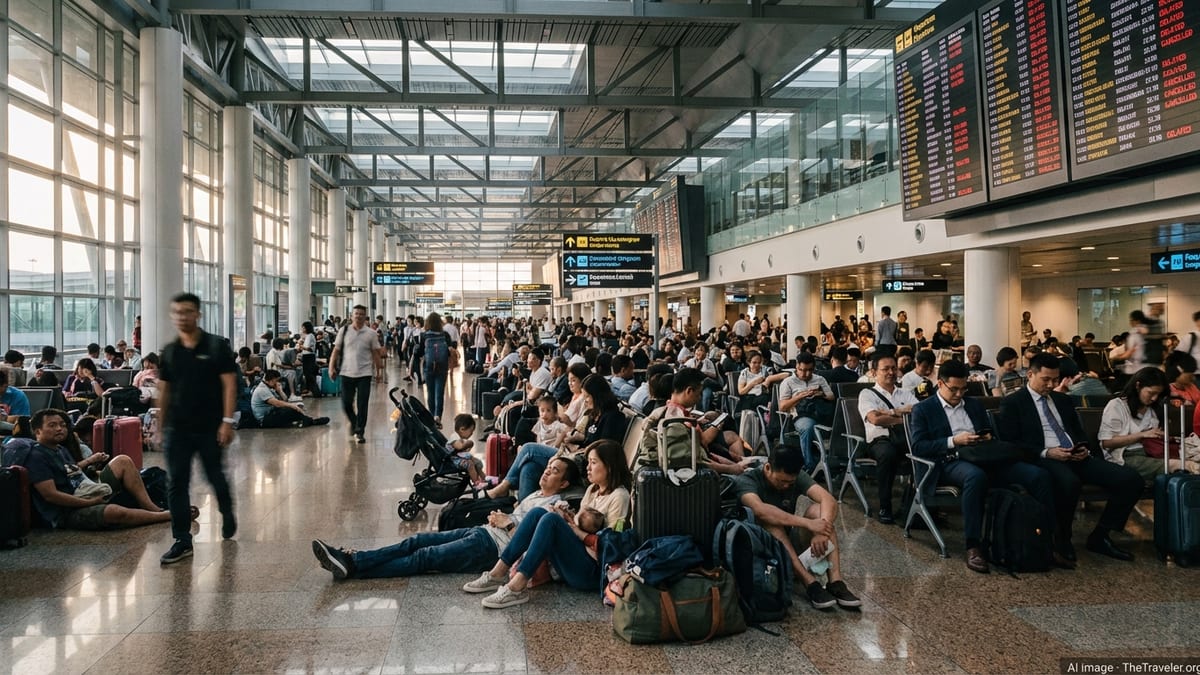
The wave of delayed departures and arrivals also placed additional pressure on airport infrastructure. Congested departure lounges, extended security lines, and crowded baggage claim areas were reported at the affected airports as passengers waited for updated departure times or rebooked flights.
Ground transport links around major hubs such as Narita and Fukuoka experienced higher-than-usual passenger volumes as some travelers opted to leave the airport and seek accommodation in nearby cities. Airport rail lines and highway buses saw surges in ridership at times that typically fall outside peak commuting hours, reflecting the irregular timing of delayed flights.
Local hospitality businesses near Osaka Itami and Sendai reported increased same-day demand for hotel rooms from stranded passengers looking for overnight stays. This unplanned demand added pressure to accommodation markets already tightened by seasonal tourism and business travel.
Operationally, the backlog of flights created challenges for airport slot management and ground handling. As arrivals bunched together after periods of delay, ground crews were required to turn aircraft and clear gates more quickly to prevent further knock-on delays later in the day.
What Travelers Can Do When Disruptions Hit
The latest disruptions highlight the vulnerability of tightly timed itineraries in Japan’s interconnected air and rail network. Travel specialists often recommend building longer connection buffers between domestic and international segments when traveling through major hubs such as Tokyo, Osaka, and Fukuoka, particularly during typhoon season and other periods when weather-related disruptions are more common.
Passengers are advised to closely monitor their flight status through official airline channels and airport information boards, as schedules can change with little notice. Where possible, same-day rail alternatives can provide a backup for domestic legs, especially on popular routes between Tokyo and Osaka, where high-speed trains operate at frequent intervals.
For those already stranded, experts suggest documenting expenses and keeping records of delays and cancellations, as some passengers may be eligible for assistance or partial reimbursement under carrier policies or travel insurance plans. However, coverage and compensation vary widely by ticket type, airline, and jurisdiction, so travelers are encouraged to review their policy details carefully.
The recent wave of delays and cancellations at Tokyo, Narita, Fukuoka, Osaka Itami, and Sendai underscores that even in one of the world’s most punctual aviation markets, large-scale disruptions can and do occur, particularly when multiple carriers and airports are affected simultaneously.