

More news on this day
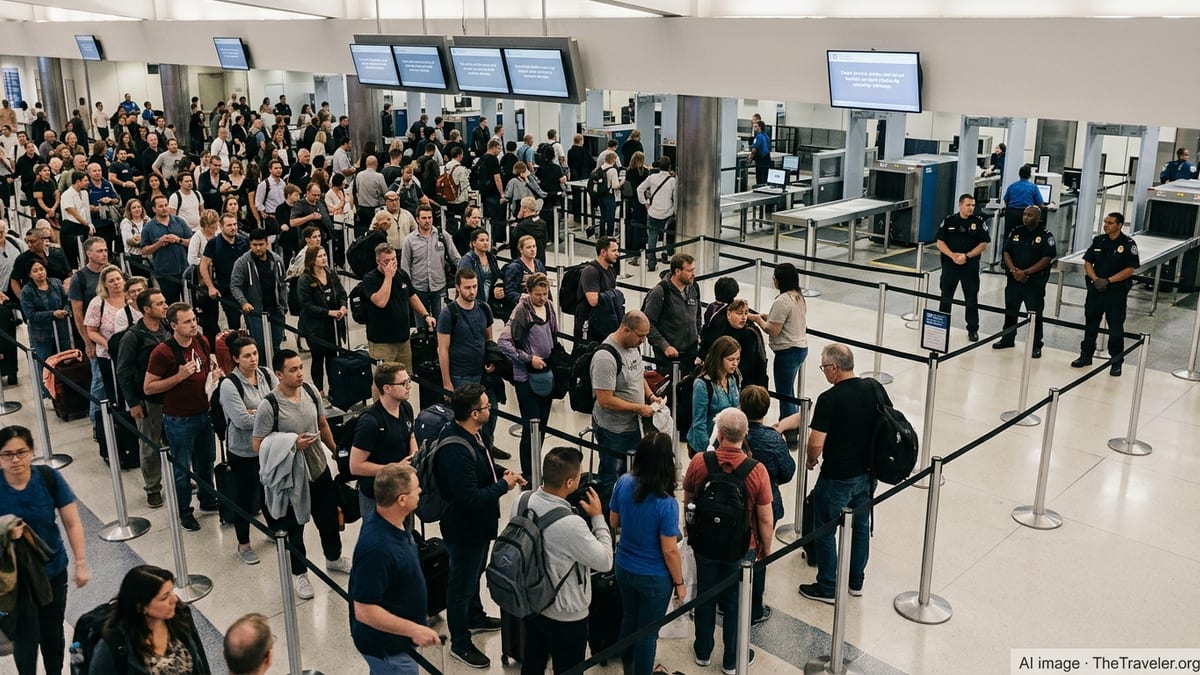
Hundreds of passengers were left stranded at Luxembourg Airport over the weekend after widespread disruption saw dozens of flights delayed or canceled, snarling connections to major European hubs and forcing travelers to abandon or hastily rebook their trips.
Get the latest news straight to your inbox!
Severe Operational Disruption Hits Luxair and Major European Carriers
Operational data and airport information screens indicated that at one point 76 flights linked to Luxembourg Airport were delayed, while 9 were canceled outright, affecting both departures and arrivals. The disruption rippled through services operated by Luxair and a range of partner and competitor airlines, including Lufthansa, Air France, KLM and British Airways, as well as several low cost and regional carriers.
The affected flights covered a dense network of short haul European routes, with particular pressure on services to and from Paris, Frankfurt, London and Amsterdam. These airports function as key hubs for onward intercontinental travel, meaning that the impact extended well beyond point to point passengers and into long haul itineraries scheduled to depart later in the day.
Publicly available schedules showed that some aircraft remained on the ground far beyond their planned departure times, while others were held in holding patterns or diverted as operations struggled to stabilize. For many travelers, what began as a late afternoon or evening delay quickly evolved into an overnight stay, with limited options for same day rerouting.
According to published coverage and airline updates, the combination of late arriving aircraft, crew rotation challenges and congestion at partner hubs contributed to a complex pattern of primary and reactionary delays. Once turnaround times began to slip, the knock on effects spread across the network, leaving airlines with few spare aircraft or crew to absorb the disruption.
Weather, Airspace Constraints and Network Knock On Effects
The disruption in Luxembourg did not occur in isolation. Recent reports across Europe and beyond have highlighted how thunderstorms, strong winds, low visibility procedures and air traffic control capacity issues can quickly cascade into widespread delays. Weather alerts for parts of Western Europe in recent days created difficult operating conditions for airports and airlines already working close to capacity during the busy summer travel period.
Industry performance reports have also pointed to a gradual increase in average delay minutes per flight at many European airports this year, reflecting tighter staffing levels, periodic industrial action and infrastructure work at several major hubs. When a smaller airport like Luxembourg suffers even a brief operational constraint, the effect can be magnified if nearby hubs are simultaneously managing their own constraints.
Travel data and airport monitoring platforms showed that flights linking Luxembourg with larger hubs such as Frankfurt and Paris experienced rolling delays, which in turn disrupted carefully timed connection banks. With aircraft and crews rotating between multiple cities in a single day, a delay on an early sector can easily push subsequent flights beyond their scheduled windows.
Analysts note that even when the immediate cause of disruption is localized, the highly interconnected nature of European air travel means passengers in multiple countries can feel the consequences. In this case, travelers connecting through London and Amsterdam on services marketed by British Airways and KLM were among those reporting missed onward flights and unplanned overnight stays.
Passenger Experience: Long Queues, Missed Connections and Limited Information
Travelers caught in the disruption at Luxembourg Airport reported long queues at check in and transfer desks as they sought rebooking options, vouchers and information. With multiple airlines affected at once, ground staff and call centers came under heavy pressure, and some passengers described waiting extended periods before receiving confirmation of new itineraries.
Publicly accessible social media posts and travel forums described a familiar pattern of rolling delay notifications, with departure times pushed back in small increments before some flights were ultimately canceled. This practice can make it difficult for passengers to make informed decisions about whether to wait at the gate, seek alternative transport or arrange overnight accommodation independently.
For many travelers, the greatest frustration stemmed from uncertainty around onward connections. Those relying on tight transfer windows at major hubs to reach long haul flights to North America, the Middle East or Asia faced particular stress, as missed connections often require more complex rebooking and may involve multiple airlines operating on a single ticket.
Reports from affected passengers suggested that, while some travelers were offered rerouting via alternative hubs or granted hotel and meal vouchers, others struggled to obtain clear guidance on their entitlements. Differences between airlines in how they interpret and apply passenger rights regulations added to the sense of confusion.
Implications for Passenger Rights and Compensation
The wave of delays and cancellations at Luxembourg Airport also revived debate about the scope and application of European Union air passenger protections. Under EU Regulation 261, travelers departing from an EU airport or flying into the bloc on an EU carrier may be entitled to assistance and, in some cases, financial compensation when their flights are heavily delayed or canceled.
Legal and consumer advocacy commentary stresses that the specific cause of disruption is crucial in determining eligibility. Events considered to be outside an airline’s control, such as severe weather or certain types of air traffic restrictions, may limit compensation, although carriers are still expected to provide care in the form of meals, refreshments and accommodation when necessary.
Recent judgments from European courts have further clarified that long delays can, under particular circumstances, be treated similarly to cancellations for compensation purposes. However, passengers must often document their experiences carefully and submit formal claims to airlines, a process that can be time consuming and occasionally contentious.
Given the scale of the disruption and the mix of potential underlying causes, consumer organizations are advising passengers affected by the latest problems at Luxembourg Airport to retain boarding passes, booking confirmations and receipts, and to check individual airlines’ guidance on how to submit claims. Travelers connecting through multiple carriers may need to work with the airline that issued the ticket rather than the one operating a specific flight segment.
Planning Ahead: Lessons for Summer Travelers
The events in Luxembourg highlight the broader vulnerability of European air travel during peak season, when tight schedules and high load factors leave little room for error. Travel experts frequently recommend that passengers build additional buffer time into their itineraries, particularly when relying on a single short haul sector to connect to an important long haul flight.
Suggestions commonly offered by experienced travelers include allowing several hours between flights at major hubs, traveling with carry on luggage where possible to increase flexibility, and monitoring flight status and airport conditions regularly in the days leading up to departure. Booking earlier departures during the day can also slightly reduce the risk of being affected by knock on delays that accumulate over time.
For those planning trips through Luxembourg and other regional airports, reviewing alternative routing options in advance can provide useful fallback strategies if disruption occurs. In some cases, rail connections to nearby major cities or hubs can offer an escape route when flights are significantly disrupted.
While airlines and airports continue to invest in resilience measures and enhanced communication tools, the latest disruption underscores that even relatively small disturbances can have an outsized impact on passengers. For travelers passing through Luxembourg Airport in the coming weeks, staying informed and building flexibility into travel plans may be the most effective way to reduce the risk of becoming stranded.