


More news on this day
Hundreds of travellers were left stranded across Europe this week as operational data showed 2,862 flights delayed and 104 cancelled in a fresh wave of disruption affecting major carriers including Ryanair, Lufthansa and Eurowings at hubs in Spain, France, the United Kingdom and the Netherlands.
Get the latest news straight to your inbox!
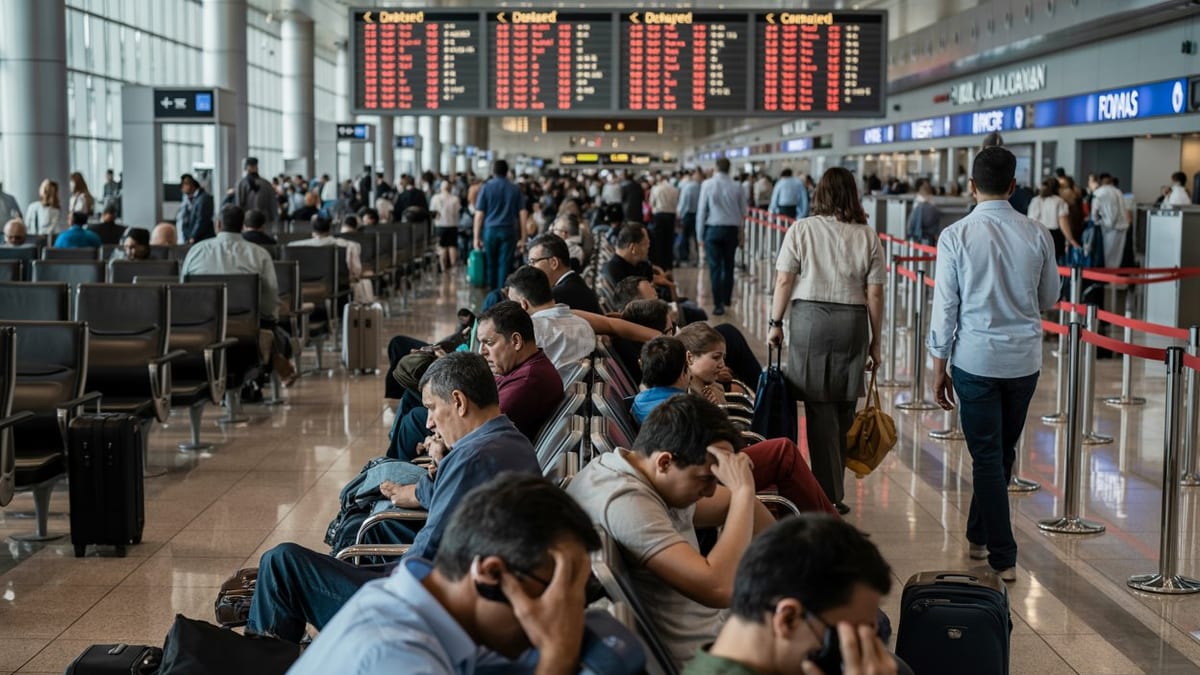
Major Hubs From Amsterdam To London Buckle Under Strain
Operational summaries for early June indicate that disruption has swept across key European airports, with delays and cancellations concentrated at major hubs such as Amsterdam Schiphol, London Heathrow and Gatwick, Paris Charles de Gaulle and Frankfurt. Published monitoring for the latest 24 hour period points to 2,862 delayed flights and 104 cancellations across European airspace, highlighting the scale of the knock-on effects for passengers starting or ending their journeys in Spain, France, the UK and other countries.
Coverage focused on Amsterdam shows Schiphol coping with hundreds of delayed flights on consecutive days, with cancellations compounding the impact for connecting passengers. Publicly available disruption trackers describe rows of delayed departures and arrivals, along with a smaller but highly disruptive band of outright cancellations that left travellers racing to secure alternative routings or overnight accommodation.
In the UK, London Heathrow, Gatwick and other airports have appeared repeatedly among the hardest-hit hubs in recent European disruption snapshots. Reports indicate that dense schedules, limited spare capacity and the ripple effects of late-arriving aircraft from continental Europe combined to create further waves of delay affecting both short haul and long haul services.
France and Spain have also featured prominently in network overviews, with traffic through Paris Charles de Gaulle and Spanish holiday gateways adding to the complexity of managing aircraft rotations and crew duty limits. As delays accumulated through the day, minor timetable slippages in one country frequently translated into missed connections and forced rebookings in another.
Ryanair, Lufthansa, Eurowings And Others Caught In The Turbulence
Ryanair, Lufthansa and Eurowings rank among Europe’s most active carriers, and current traffic and performance data suggest they have been heavily exposed to this week’s operational turbulence. Recent aviation monitoring for 2026 places Ryanair consistently at the top of the European league table by number of flights, with Lufthansa and Eurowings also operating dense networks across Germany, the UK, Spain and other markets. When disruption spreads across the continent, such carriers tend to feel a disproportionate share of the impact in missed slots, diverted aircraft and crew rescheduling.
Public flight-status records for individual services show a pattern of late departures and arrivals on multiple days for routes touching key hubs, including London, Amsterdam and German bases. For Lufthansa and Eurowings, even modest delays on feeder legs into Frankfurt, Munich, Cologne or Düsseldorf can cascade through complex banked schedules, turning a single late arrival into a string of missed onward connections.
For Ryanair, which operates an extensive point to point network from secondary airports across Spain, Italy, France, the UK and Eastern Europe, reactionary delays remain a recurring operational challenge. Analysts note that high daily aircraft utilisation and relatively tight turnaround times leave limited room to absorb disruption originating from air traffic control restrictions, weather or congestion at crowded hubs used for connections by other airlines.
Other carriers operating at the affected airports, including low cost and full service airlines based in France, the UK and the Netherlands, have also recorded significant numbers of delayed flights in recent days. Publicly available information highlights that while cancellations have remained in the low hundreds, the far larger volume of delays has created extensive inconvenience for passengers and additional complexity for airline operations teams.
Why 2,862 Delays And 104 Cancellations Rippled Across Europe
Aviation performance data and network analyses for the 2026 summer build up point to a combination of structural and short term drivers behind the latest wave of disruption. Traffic across European airspace has continued to grow, with Eurocontrol reporting daily flight volumes above recent years and persistent minutes of air traffic flow management delay attributable to capacity constraints, weather and reactionary effects.
On the ground, airports in Spain, France, the UK and the Netherlands have faced their own operational pressures. These range from localized weather and low visibility procedures to staffing constraints in air traffic control, security and ground handling. When such issues coincide with peak travel periods, they can quickly translate into long queues, aircraft waiting for stands, and missed departure slots that push schedules further off track as the day progresses.
Published coverage has also highlighted the role of tightly optimised airline schedules in amplifying the effects of any disturbance. With carriers such as Ryanair, Lufthansa and Eurowings seeking to maximise utilisation of aircraft and crew during the busy summer season, an initial delay on a morning rotation can trigger a chain reaction affecting multiple subsequent flights. In network models centered on European hubs, one cancelled or heavily delayed leg can lead to connection banks unravelling and hundreds of passengers needing rebooking.
Industry analyses of recent months indicate that Europe’s air traffic system continues to operate close to capacity on many days, particularly on core routes linking the UK, France, Spain, Germany and the Benelux countries. Under such conditions, even moderate surges in demand or localized disruptions may be sufficient to produce continent wide statistics of thousands of delays and more than a hundred cancellations in a single operational day.
Passengers Face Missed Connections, Overnight Stays And Long Queues
The immediate human impact of the latest disruption has been visible at airports from Amsterdam and London to regional gateways across Spain and France. Travellers reported on social platforms that information screens were dominated by delay notifications, while clusters of cancellations left some passengers stranded without immediate alternative options. At hub airports, missed connections forced travellers into long lines at airline service desks, with many seeking rerouting via different cities or even different countries.
Reports indicate that at Amsterdam Schiphol, passengers connecting from short haul European services onto long haul flights to North America, the Middle East, Africa and Asia were particularly vulnerable. A delay of less than an hour on an inbound European leg could result in missed long haul departures, often requiring rebookings a full day later once spare seats became available.
In London and other UK airports, disruption to both inbound and outbound services created challenges for travellers heading to Mediterranean holiday destinations and city break hotspots in Spain and France. Publicly available commentary suggests that while many flights ultimately operated, schedule changes, gate swaps and rolling departure times contributed to confusion and stress for those already in crowded terminals.
For airlines, the surge in delayed and cancelled services implies additional costs for care and assistance, including hotel accommodation, transport and refreshments where required under European regulations. It also adds pressure to customer service channels as passengers seek clarification on their rights and the fastest available rebooking options for onward travel.
What Travellers Can Do As Summer Disruption Persists
With traffic across Europe running at high levels and recent statistics underscoring how quickly disruption can spread, aviation analysts expect further days of elevated delays through the summer season. Public advisories from airlines and airports increasingly encourage passengers to monitor flight status closely via official applications, subscribe to notifications and check terminal and gate information on the day of travel.
Consumer rights information widely available online reminds travellers departing from or arriving into the European Union, the United Kingdom and associated territories that they may be protected by air passenger regulations when flights are significantly delayed or cancelled. These frameworks can, in some circumstances, provide for compensation as well as care and assistance, depending on the cause and length of the disruption and the carrier involved.
Travel specialists also point to the value of building extra time into itineraries that rely on tight connections through major hubs such as Amsterdam, London, Paris or Frankfurt, particularly when onward segments involve long haul or once daily services. Booking flexible or changeable fares, where affordable, can offer additional protection if schedules shift at short notice.
As the latest figures of 2,862 delays and 104 cancellations demonstrate, even a single day of operational strain can leave hundreds of travellers stranded across multiple countries. For those planning trips in the coming weeks, staying informed, allowing for contingency time and understanding available rights and options remain key strategies for navigating an increasingly crowded European sky.