


More news on this day
Residents near Lee High School are being advised not to be alarmed on Wednesday, when a full-scale emergency drill built around a simulated train derailment is scheduled to unfold in the area as part of a regional safety exercise.
Get the latest news straight to your inbox!
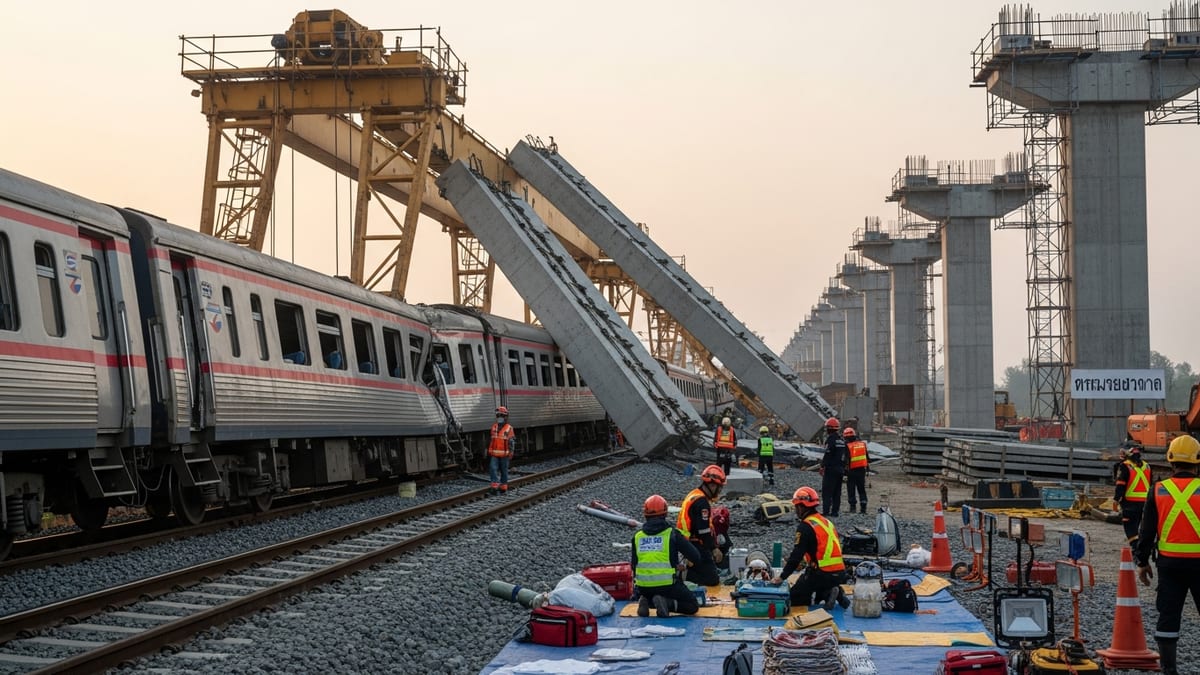
Planned Exercise to Simulate Train Derailment Scenario
According to publicly available information, local agencies are coordinating a training exercise that will recreate the response to a freight train derailment in the vicinity of Lee High School. The drill is scheduled for Wednesday and is expected to involve a significant presence of emergency vehicles, staged damage, and role players acting as passengers or nearby residents.
Reports indicate that the exercise has been in development for several months as part of a wider push to strengthen regional readiness for transportation incidents. Rail corridors often run close to neighborhoods, schools, and commercial areas, and communities are increasingly using scenario-based drills to test how quickly multiple agencies can work together if a real derailment occurs.
Planners have emphasized through public outreach that the activity is a drill, not a real emergency. Residents in the surrounding area are being encouraged to factor the training into their midweek routines and to expect temporary traffic adjustments or detours as the scenario plays out.
What Residents Can Expect on Wednesday
The simulated derailment is expected to unfold in stages, beginning with the mock incident near the tracks and expanding outward as emergency crews arrive and establish a command post. Observers may see fire engines, police units, ambulances, and specialized hazmat teams converging near Lee High School, along with volunteer participants made up to resemble injured passengers.
Publicly available guidance for similar exercises notes that drills of this scale can involve sirens, loudspeaker announcements, and smoke effects to create realistic conditions. Organizers typically coordinate with nearby schools, bus routes, and businesses to reduce disruption, but short-lived road closures and limited access to certain parking areas are common as part of the training perimeter.
Families with students at or near Lee High School are being advised to watch for messages from school administrators regarding any schedule adjustments, pick-up and drop-off changes, or modified after-school activities. While classroom instruction usually continues inside the buildings during such exercises, arrival and dismissal patterns can be temporarily altered to keep students away from active training zones.
Why Schools Feature in Rail Safety Drills
Hazard planning documents for school districts and community colleges highlight that rail lines frequently pass within a short distance of campuses, making transportation-related emergencies a key focus for preparedness efforts. In many communities, schools are both population centers and designated shelters, so their staff and facilities play a central role in any large-scale response.
Recent planning guides recommend that administrators work with public safety agencies to practice how they would secure buildings, shelter students in place, or relocate classes if a derailment occurred nearby. By staging the drill close to Lee High School, participating agencies can test how effectively they communicate with administrators, manage campus access, and move students and staff away from potential hazards while maintaining instruction where possible.
Exercises like the one planned for Wednesday also give school personnel a chance to rehearse internal procedures, from taking quick attendance during an alert to relaying accurate information to families. The setting near a busy campus provides a realistic test of how emergency plans hold up under time pressure and crowding.
Growing Focus on Rail and Hazardous Materials Preparedness
Across the United States, concern about freight rail safety and hazardous materials transport has prompted renewed attention to emergency planning. National research efforts focused on hazardous materials and train derailment preparedness for schools encourage communities to schedule regular drills that mirror the complexities of real incidents, including coordination with hospitals, transit agencies, and public works departments.
Published guidance notes that even when trains passing near schools do not carry hazardous cargo, derailments can block major roadways, damage infrastructure, and disrupt power or communications. Full-scale simulations help responders practice traffic control, patient triage, and information sharing while also revealing gaps in equipment, staffing, or radio coverage.
The planned drill near Lee High School reflects this broader emphasis on proactive training. By simulating a derailment in a controlled setting, participating agencies can trial advanced tools, such as mapping software, drones, or unified communication platforms, in conditions that resemble an actual emergency without the associated danger.
How the Drill May Affect Travel and Daily Plans
Travelers passing through the Lee High School area on Wednesday may notice detours around the drill site and slower traffic near intersections where emergency vehicles are staged. Public notices for similar exercises often advise drivers to allow extra time, follow posted directions, and avoid attempting to enter cordoned-off areas, even if the activity appears to be a training scenario.
For local residents and visitors, this may briefly affect access to nearby parks, side streets, or commercial areas, particularly during the busiest phase of the drill. Organizers typically schedule such exercises during late morning or midday hours to reduce the impact on commuter peaks, but some overlap is still likely as students, staff, and families move in and out of the campus.
Travel-related disruption is expected to be temporary, with normal patterns resuming once the exercise concludes and vehicles clear the scene. Community messaging around the event stresses that the short-term inconvenience is intended to support long-term safety benefits, giving responders the chance to refine how they would manage traffic, evacuation routes, and communication if a real derailment were to affect one of the region’s busiest school zones.