


More news on this day
Air travel across the United States faced another punishing day of disruption on June 9, as more than 380 flight cancellations and 7,800-plus delays rippled through major and mid-sized airports from Chicago to Evansville.
Get the latest news straight to your inbox!
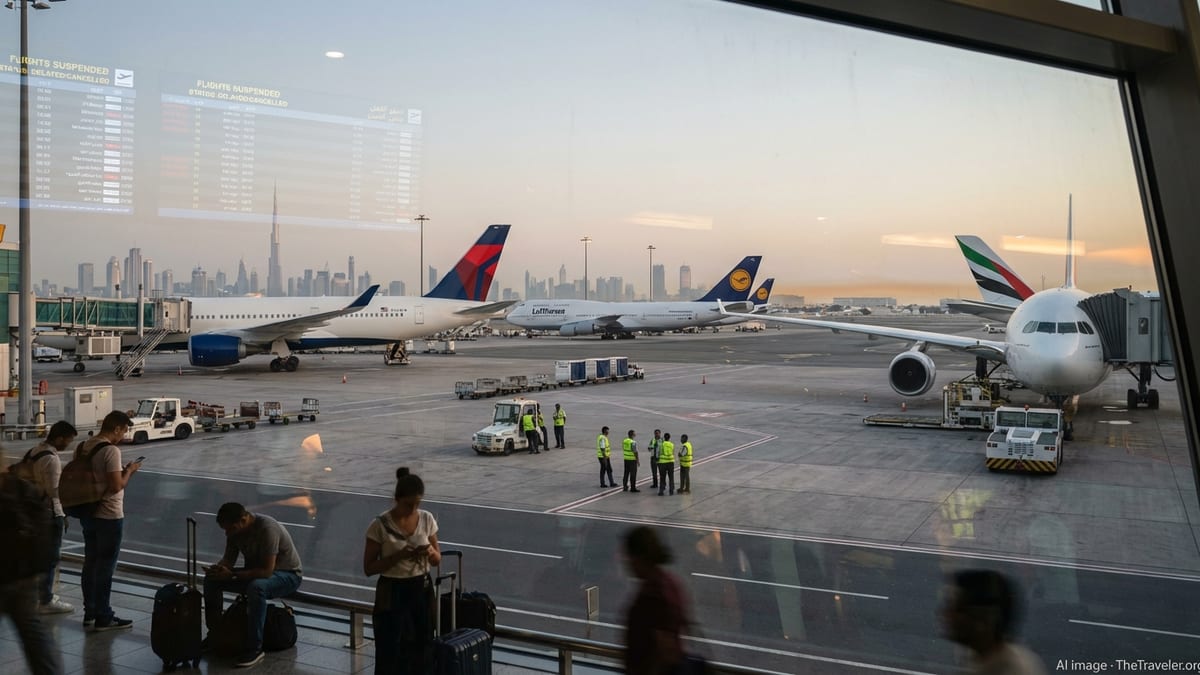
Midwest Hubs Bear the Brunt of Disruptions
Publicly available flight-tracking dashboards for June 9 show operations at several Midwestern airports coming under acute strain, with Chicago emerging as a focal point. Chicago O'Hare and Chicago Midway together registered scores of delayed and canceled departures, affecting connections throughout domestic networks and into Canada and Mexico.
Further west, Des Moines and Minneapolis reported elevated levels of schedule disruption, with multiple services pushed back by more than an hour and a series of regional routes scrubbed entirely. These delays compounded as the day progressed, creating increasingly long lines at check-in, security, and rebooking desks.
To the north, Madison recorded a smaller but still notable wave of interruptions, particularly on short-hop services linking Wisconsin to Chicago and other nearby hubs. Farther south, Evansville saw knock-on effects as inbound aircraft from larger hubs arrived late or failed to operate, leaving several outbound flights either significantly delayed or canceled.
In Hebron, Kentucky, the Cincinnati/Northern Kentucky International Airport experienced its own share of congestion as regional and mainline services attempted to recover lost time. The clustering of delays across this belt of airports effectively strained the resilience of the broader Midwest aviation network.
Regional Airlines at the Center of Operational Strain
Regional carriers operating flights for major U.S. airlines featured prominently in the day’s disruption tallies. Data from tracking services indicated that SkyWest, Envoy Air, Republic Airways and GoJet all recorded clusters of cancellations and extended delays on June 9, particularly on short- and medium-haul routes feeding larger hubs.
These operators, which typically fly under the branding of larger network airlines, are especially exposed when conditions tighten. With smaller fleets and more concentrated route structures, the removal of even a handful of aircraft from rotation can trigger schedule gaps that are difficult to plug quickly.
Southwest Airlines, which does not rely on regional affiliates but operates a dense point-to-point network, also faced a notable number of delayed flights across its system. Persistent congestion at several airports and rolling knock-on effects from earlier departures contributed to late arrivals that cascaded into evening services.
Historical performance data published by the U.S. Department of Transportation show that carriers such as SkyWest, Envoy and Republic typically maintain on-time rates broadly in line with the industry average, yet remain vulnerable to spikes in cancellations when tight crew scheduling or maintenance issues intersect with adverse conditions. The pattern seen on June 9 is consistent with this structural fragility.
Weather, Congestion and Operational Complexity Combine
While no single nationwide weather event was solely responsible for the June 9 disruptions, scattered storms and low ceilings in parts of the Midwest and Great Lakes region contributed to air-traffic flow restrictions. When combined with already busy summer schedules, even moderate operational constraints translated into longer taxi times, airborne holding and gate bottlenecks.
Flight-performance analyses and previous transportation reports indicate that air-carrier issues, such as aircraft maintenance and crew availability, often account for a significant portion of delays on high-traffic days. Once rotations start running late, subsequent flights frequently depart behind schedule, even if weather has improved.
National Airspace System constraints, including congestion in key en route sectors and at oversubscribed hubs, further limit an airline’s ability to recover. On days when multiple hubs experience overlapping pressure, regional spokes such as Des Moines, Madison and Evansville can see disproportionately high disruption rates relative to their size.
Aviation analysts note that the intricate web of regional feed, hub connections and point-to-point services leaves U.S. carriers particularly exposed to cascading effects. June 9’s statistics on cancellations and delays illustrate how local problems at a handful of airports can quickly translate into systemwide disruption.
Passenger Impacts Across the Country
The immediate impact for travelers was felt in missed connections, last-minute rebookings and extended time in terminals as airlines worked through mounting backlogs. In some cases, passengers faced overnight stays or long ground transportation journeys after regional flights into smaller cities, including Evansville and Madison, failed to operate.
Published coverage of recent disruption days at other major U.S. airports, such as Dallas-Fort Worth and LaGuardia, highlights how quickly disruption at a single hub can ripple through multiple regions as aircraft and crews fall out of position. The June 9 figures indicate a similar pattern, with Midwest interruptions contributing to delays and cancellations on routes well beyond the region.
Travel advisers typically recommend that passengers build extra connection time into itineraries during peak summer and holiday periods and monitor airline apps or airport information screens frequently. On days with elevated cancellations, same-day standby options and alternative routings can fill quickly, leaving limited flexibility for those who react late.
Consumer advocates also point to longstanding guidance from the U.S. Department of Transportation outlining circumstances in which passengers may be eligible for refunds when flights are canceled or significantly changed. However, compensation for delays remains limited in the United States compared with some other regions, prompting recurring calls for stronger passenger protections.
Ongoing Pressures as Summer Traffic Builds
The June 9 disruptions come as U.S. airlines move deeper into the busy summer travel period, when schedules are near peak capacity and tolerance for operational shocks is slim. Recent days have already brought notable disruption episodes at other major hubs, underscoring how sustained demand is testing both infrastructure and staffing.
Industry data compiled in federal reports show that, even in typical years, summer months tend to produce higher volumes of delays and cancellations than quieter shoulder seasons. Heavy thunderstorms, heightened air-traffic congestion and the cumulative impact of minor maintenance issues all play a role.
Observers note that regional carriers like SkyWest, Envoy, Republic and GoJet are likely to remain under particular scrutiny, given their central role in providing connectivity to smaller and mid-sized communities. Any prolonged shortage of pilots, aircraft or maintenance capacity could magnify the sort of disruption seen on June 9.
With travelers continuing to return to the skies in large numbers, the combination of full flights, tight schedules and intermittent weather challenges suggests that further days of heavy disruption are possible. Passengers planning trips through hubs such as Chicago, Minneapolis and Cincinnati/Northern Kentucky may benefit from early-morning departures and flexible itineraries as the season progresses.