


More news on this day
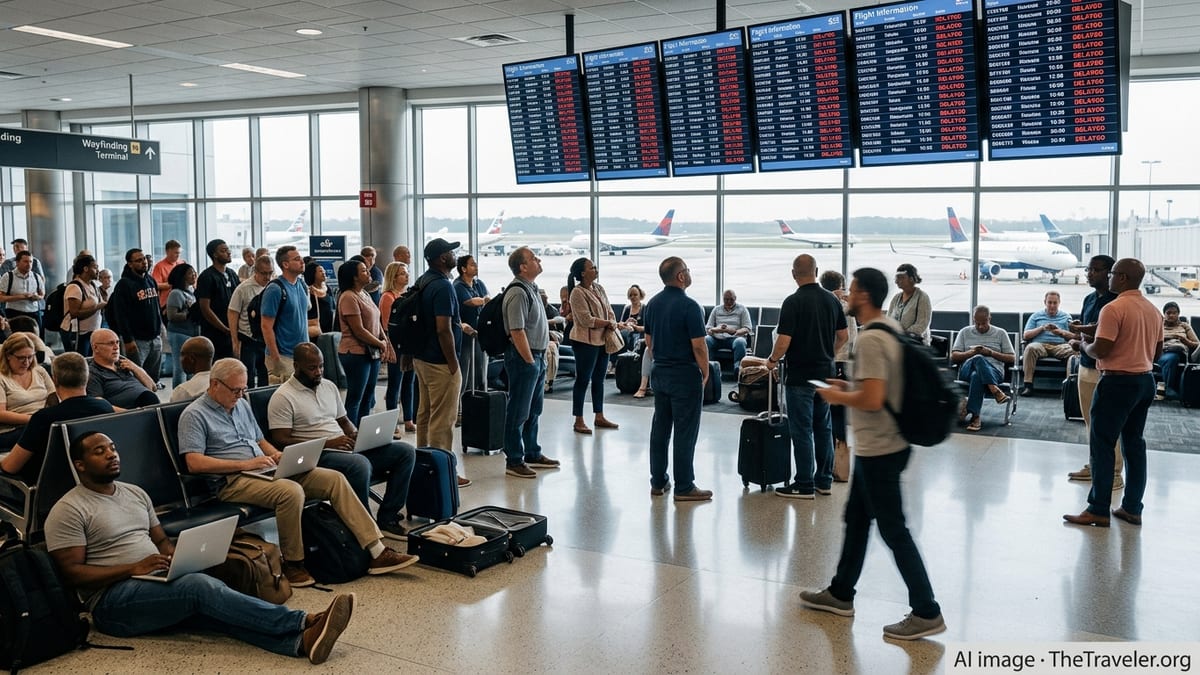
Thousands of airline passengers across the United States faced extensive delays and cancellations on Tuesday as more than 3,000 flights were disrupted nationwide, with major hubs including Atlanta, Boston, Houston, San Francisco, San Diego and Indianapolis reporting cascading operational issues.
Get the latest news straight to your inbox!
Nationwide Gridlock as Delays Top 3,000 Flights
Publicly available tracking data for April 21 shows at least 3,002 U.S. flights delayed and 105 canceled, creating widespread bottlenecks at airports and along key domestic routes. The latest wave of disruption follows weeks of unstable operations across the network, compounding pressure on airlines already coping with tight schedules and high load factors.
Reports indicate that San Francisco International Airport recorded some of the heaviest disruption after federal traffic management measures curtailed arrivals, forcing airlines to pad schedules, reroute aircraft and hold flights on the ground. Knock-on effects quickly spread across the country as delayed aircraft missed subsequent departures and crews ran up against duty-time limits.
Travelers connecting through major hubs reported multi hour waits, rolling departure time changes and long lines at customer service desks, with some itineraries requiring rebooking for later in the week. For many, the delays added to a sense that large scale disruption has become a persistent risk in U.S. air travel rather than an occasional exception.
San Francisco, Atlanta and Boston Among Worst Affected
San Francisco has emerged as a recurring pinch point this spring after regulators cut the airport’s permitted arrival rate because of safety concerns and runway construction. Earlier in March, the arrival cap was reduced by roughly one third, and publicly available information shows that schedule adjustments have not fully absorbed the impact, leaving the hub vulnerable whenever weather or traffic volumes increase.
In Atlanta, the nation’s busiest airport, recent data from early April documented 177 delays and 34 cancellations on a single day, affecting Delta, American and several international carriers. Those operational strains foreshadowed the current wave of disruption, with Atlanta again listed among the most impacted hubs as Tuesday’s delays mounted.
Boston Logan has also faced repeated operational challenges in recent weeks, with a March storm cycle and subsequent traffic control measures contributing to notable cancellation totals. With Boston positioned as a key transatlantic and domestic connector, disruptions there have a tendency to ripple quickly into schedules for carriers such as Delta, American and JetBlue.
Other major airports, including Houston, San Diego and Indianapolis, have seen spillover effects as aircraft and crews arriving late from constrained hubs cascade into local departure banks. Even when individual airports report comparatively modest weather or traffic issues, their role in a tightly interconnected network leaves them exposed to delays originating hundreds or thousands of miles away.
Airlines Struggle With Tight Schedules and Cost Pressures
The latest disruption arrives against a backdrop of rising operating costs and thin schedule margins for U.S. carriers. Recent industry coverage highlights a sharp increase in fuel costs this spring, estimated in the billions of dollars across the sector, as well as continuing staffing challenges in certain crew categories and at air traffic control facilities.
Public reports on airline performance in 2026 show a pattern of frequent schedule adjustments as carriers attempt to balance demand growth with cost control. Some airlines have already announced targeted route suspensions for the summer in response to fuel exposure and operational risk, including reductions on select domestic routes from hubs such as Detroit, New York and Raleigh.
At the same time, regulators have intensified scrutiny of chronic delays and aggressive scheduling practices. Past enforcement actions have cited “unrealistic scheduling” on certain repeatedly delayed routes, signaling that carriers may face financial penalties if they fail to align timetables more closely with actual operating conditions.
For passengers, this environment can translate into thinner buffers built into flight times and tighter aircraft rotations, increasing the likelihood that a weather hold, mechanical inspection or crew timing issue will trigger a chain reaction of missed slots and late departures.
Ripple Effects for American, Delta, United, Alaska and Others
According to flight tracking data and recent disruption trackers, Tuesday’s delays and cancellations affected a wide cross section of carriers, including the largest network airlines and regional operators. American, Delta and United shouldered a significant portion of the overall impact by virtue of their scale and reliance on the hardest hit hubs.
Regional carrier SkyWest, which operates feeder services for multiple major airlines, plays a key role in connecting smaller cities to large hubs such as Denver, Chicago, Houston and San Francisco. Disruptions to its operations can have outsized impacts on travelers from secondary markets, who often have fewer alternative flights or routings when cancellations occur.
Alaska Airlines and Frontier also experienced disruption within their domestic networks, particularly on routes that feed into San Francisco and other congested western gateways. Low cost and hybrid carriers typically operate with high aircraft utilization, meaning a single delayed rotation can quickly knock subsequent flights off schedule.
The breadth of carriers affected underscores that the disruption is systemwide rather than confined to a single airline. With many routes interlined or code shared, delays on one operator can cascade into missed connections and misaligned schedules on another, further complicating efforts to restore normal operations.
What Passengers Can Expect in the Coming Days
Based on patterns seen in earlier disruption events this year, residual delays are likely to persist for at least another news cycle as airlines reposition aircraft and crews, clear backlogs of stranded travelers and work through maintenance checks deferred during peak disruption hours. Even flights that appear on time in schedules may face minor holds as congestion builds at departure and arrival banks.
Consumer advocacy guidance suggests that passengers with travel planned through affected hubs should build additional buffer time into itineraries, particularly for tight domestic connections and same day international departures. Monitoring airline apps and airport information screens closely can provide early signals of rolling delays or equipment changes.
Regulatory information notes that passenger protections and compensation vary depending on the cause of disruption and the operating carrier’s policies. Weather and air traffic control constraints often limit mandatory reimbursements, while controllable issues such as mechanical faults or staffing shortages may trigger meal, hotel or rebooking support in some cases.
With operational challenges expected to continue through the busy spring and summer periods, industry analysts anticipate that airlines, regulators and airports will face ongoing scrutiny over how effectively they manage large scale disruption events and communicate options to the traveling public.