


More news on this day
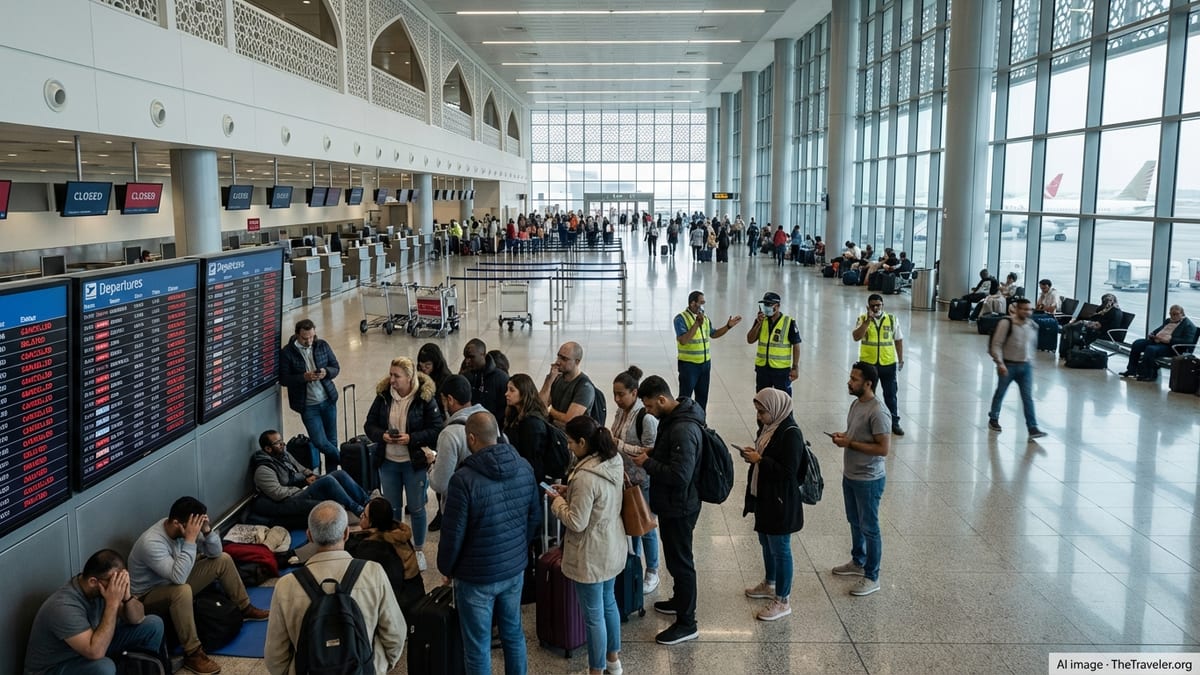
Passengers traveling through Kuwait International Airport faced fresh disruption as a cluster of delays and cancellations affected at least 22 flights, disrupting services on Kuwait Airways, EgyptAir, Jazeera Airways and routes linking Kuwait City with Cairo, Dubai, Istanbul, Mumbai and other key destinations.
Get the latest news straight to your inbox!
Constraints Persist After Kuwait Airspace Reopening
The latest disruptions come only weeks after Kuwait reopened its airspace and began a phased restoration of passenger operations at Kuwait International Airport. Publicly available information shows that the airport, which had been partially closed following drone strikes and regional tensions earlier in 2026, is still operating under reduced capacity and limited daytime hours.
Travel industry updates indicate that flights are concentrated into a narrow operating window, typically around midmorning to late afternoon. This compressed schedule has left airlines with little room to absorb knock-on delays from late inbound aircraft, crew rotation issues or technical checks, increasing the likelihood that small timetable problems escalate into cancellations.
Recent aviation notices and schedule trackers suggest that Kuwait Airways and Jazeera Airways are among the first carriers to resume regular services from their dedicated terminals, with EgyptAir and other regional airlines gradually rebuilding their networks into Kuwait. However, the same sources note that the resumption is labeled as “limited” or “exceptional,” underlining that full pre-crisis capacity has not yet returned.
Against this backdrop, the airport’s tally of at least 14 delayed departures and 8 cancellations in a single operating cycle reflects the strain of restarting a complex hub under tight security and airspace controls, while demand from stranded and rebooking passengers continues to rise.
Key Routes Affected Across the Middle East and South Asia
Published coverage of live departure boards and airline schedules indicates that the latest wave of disruption hit routes linking Kuwait with major regional gateways, including Cairo, Dubai, Istanbul and Mumbai. These cities serve both as high-demand origin and destination markets and as onward connection points for long haul travel to Europe, North America, Africa and East Asia.
Delays on these corridors can ripple outward as missed connections and aircraft reassignment issues cascade into later rotations. For example, a Kuwait Airways or Jazeera Airways flight arriving late from Cairo or Dubai may then turn around to operate an evening service to South Asia or Europe, leaving limited buffer if turnaround processes are slowed by security checks or passenger handling bottlenecks.
South Asian routes appear particularly exposed, as Kuwait serves significant flows of labor, family visit and transit passengers to and from India and neighboring countries. Publicly accessible passenger accounts and schedule data point to disrupted itineraries involving Kuwait as a hub on journeys between Indian cities and destinations such as London, New York and Gulf states.
In addition, Istanbul and Dubai are heavily used as alternative hubs for travelers rerouting away from Kuwait during the earlier airspace closure. With Kuwait International Airport now partially back in service, some passengers are shifting back to Kuwait-based itineraries. The mixed pattern of restored and still-cancelled flights has left many trying to navigate a patchwork of options that can change with little notice.
Airlines Balance Safety, Capacity and Customer Backlogs
According to airline statements and operational updates carried in regional aviation media, Kuwait Airways has described the current phase as an exceptional and limited resumption of services from Terminal 4. Jazeera Airways has similarly framed its return to its dedicated Terminal 5 as part of a gradual ramp-up, with some flights still routed via alternative airports until Kuwait operations fully normalize.
These cautious strategies reflect competing pressures. On one hand, carriers aim to restore key trunk routes and accommodate passengers whose flights were canceled during the airspace shutdown in February and March. On the other, they must comply with capacity caps, revised flight corridors and tighter safety margins that can reduce the number of daily movements and force last-minute schedule adjustments.
EgyptAir and other foreign airlines are also recalibrating their Kuwait services. Operational bulletins from regional travel agents and airport partners point to periodic timetable changes and adjustment of flight times, particularly in the evening, as carriers adapt to Kuwait’s restricted hours and manage aircraft utilization across their wider networks.
Industry observers note that the presence of multiple Kuwait-focused carriers on overlapping routes, such as Kuwait City to Cairo or Dubai, can amplify disruption when the airport is not yet at full capacity. If one airline is forced to cancel or delay a service due to slot or crew constraints, competing flights may also experience crowding at gates, security checkpoints and immigration, further lengthening processing times.
Passengers Confront Uncertainty, Limited Rebooking Options
Publicly available social media posts and travel forum discussions suggest that passengers passing through Kuwait International Airport continue to face significant uncertainty, including abrupt cancellations, late schedule changes and evolving check in procedures. Some travelers report receiving automatic refunds instead of rebooking options, particularly on itineraries originally purchased for travel during the airspace closure period.
Others describe itineraries where one leg, such as Mumbai to Kuwait, has been canceled while onward segments remain scheduled, forcing them to negotiate with airlines or third party booking sites to realign entire journeys. The mix of partially restored direct services and ongoing diversions via Saudi Arabian airports has also created confusion over visa requirements, minimum connection times and baggage handling.
Travel agencies active in Kuwait have noted in local media that there is strong pent up demand to travel now that the airport has reopened, particularly among residents who postponed family visits or work trips during the closure. This surge in bookings is colliding with a constrained flight program, which can lead to higher fares and fewer spare seats for passengers whose flights are disrupted at short notice.
Online guidance from airlines and airport information portals consistently recommends that passengers monitor their flight status frequently, arrive early for departures and maintain flexible plans where possible. Nonetheless, the uneven pattern of 14 delays and 8 cancellations at Kuwait International Airport highlights the challenge for individuals trying to plan trips around school terms, visa deadlines or connecting long haul flights.
What Travelers Should Expect in the Coming Days
Based on current schedules, aviation data services show that more carriers are planning to restore Kuwait flights through May, while Kuwait Airways and Jazeera Airways gradually expand their route maps. However, analysts note that any renewed security flare up, technical issue or airspace restriction could quickly translate into additional delays or cancellations at an airport still in recovery mode.
Travelers with upcoming journeys routed through Kuwait are being advised in public information channels and booking platforms to reconfirm itineraries directly with their airline, especially if tickets were originally issued for travel during the months when the airport was closed. Some itineraries may still contain legacy segments via alternative airports, or may no longer match the latest operating plan.
Observers expect that as operating hours lengthen and more gates and ground handling resources come back online, Kuwait International Airport’s resilience to disruption should improve. For now, though, the pattern of double digit delays and multiple cancellations in a single day underlines that Kuwait’s aviation sector remains in a delicate transition phase, with airlines, airport authorities and passengers all adapting to a rapidly changing environment.