


More news on this day
Air travel across Canada faced fresh disruption today as major hubs in Calgary, Montreal, Ottawa, Toronto, and Vancouver reported 44 flight cancellations and 213 delays, affecting operations for Air Canada, Porter Airlines, WestJet, Jazz Aviation, Endeavor Air, and several partner carriers.
Get the latest news straight to your inbox!
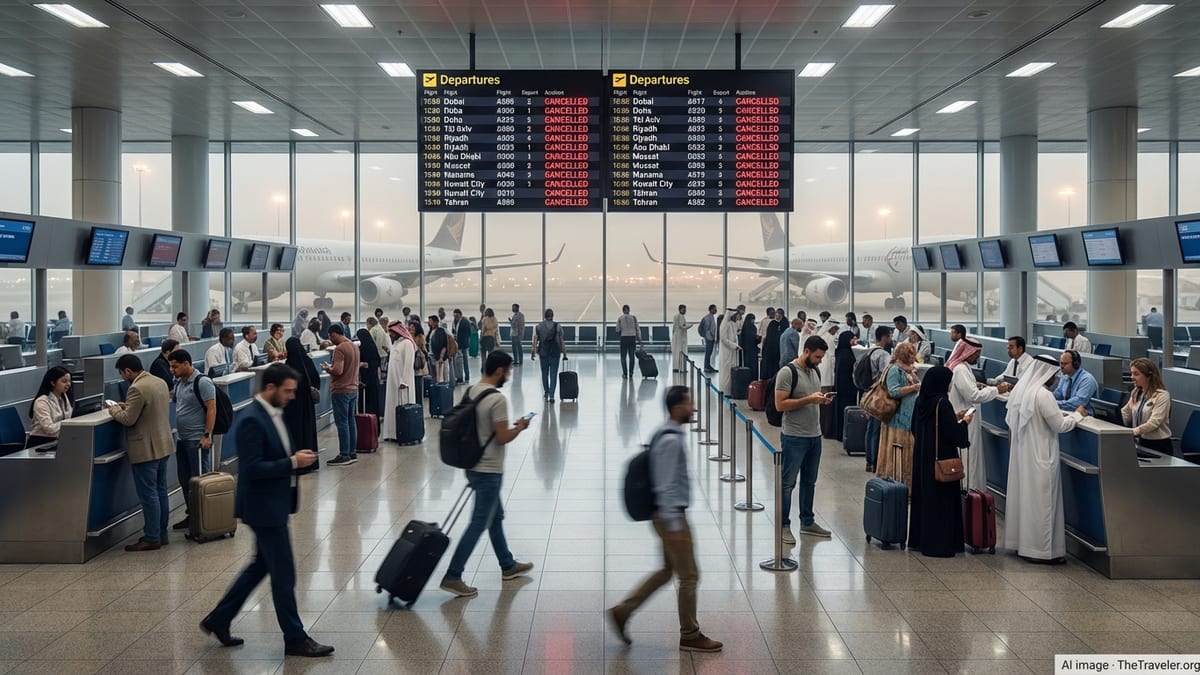
Nationwide Ripple Effect Across Canada’s Busiest Airports
Operational data compiled from live flight tracking and airport status dashboards shows a broad pattern of disruption across Canada’s largest airports today, with both domestic and transborder services affected. The combined tally of 44 cancellations and 213 delays reflects mounting pressure on airline schedules as carriers attempt to keep complex networks running on a day of heightened irregular operations.
Toronto Pearson and Vancouver International appear to be bearing a significant share of the disruption, in line with their roles as primary long-haul and transcontinental hubs. Montreal–Trudeau, Ottawa Macdonald–Cartier, and Calgary International are also showing elevated numbers of delayed departures and arrivals, underscoring how quickly schedule issues in one region can propagate from coast to coast.
The latest figures place Canada within a broader pattern of global flight disruption today, with live tracking platforms reporting hundreds of cancellations and thousands of delays worldwide. While Canada’s totals remain modest compared with some major U.S. hubs, the concentration of cancellations and delays in a handful of key Canadian airports has amplified the impact on passengers connecting through these nodes.
Publicly available dashboards indicate that the disruption is skewed toward delays rather than outright cancellations, suggesting airlines are prioritizing keeping aircraft and crews moving, even when departures are significantly behind schedule.
Air Canada, WestJet and Porter Among Most Affected
Canada’s largest carriers are prominent in today’s disruption picture, reflecting their dominant presence at the affected airports. Air Canada, with major operations in Toronto, Montreal, Calgary, Ottawa, and Vancouver, is facing a mix of delayed and cancelled flights across its mainline and Air Canada Express services operated by Jazz Aviation and other regional partners.
WestJet, which maintains a strong base in Calgary and substantial operations in Vancouver and Toronto, is also navigating a day of irregular operations. Historical performance data highlights that proactive cancellations and rolling delays at Calgary can quickly cascade through WestJet’s network, affecting flights as far away as central and eastern Canada when aircraft and crews are repositioned to stabilize the schedule.
Porter Airlines, which has rapidly expanded beyond its Toronto Billy Bishop base into Ottawa, Montreal, and Western Canada, is appearing more frequently on national delay and cancellation boards as its network grows. Today’s statistics show Porter among the carriers contending with schedule strain, particularly on high-frequency regional routes.
Endeavor Air, a U.S. regional carrier operating flights on behalf of major American airlines, appears in the disruption data through its cross-border services touching Canadian airports. These operations, often tightly timed to connect into U.S. domestic banks, are particularly sensitive to even modest delays at either end of the route.
Weather, Congestion and Knock-On Operational Challenges
While no single cause fully explains today’s pattern of 44 cancellations and 213 delays, a familiar set of contributing factors is visible in airport and aviation data. Intermittent weather issues, including low cloud and shifting wind conditions at several airports, have triggered ground delays and tighter spacing between arrivals and departures during peak periods.
Congestion related to busy late-spring travel volumes is also evident. High passenger loads and full aircraft reduce the flexibility airlines have to consolidate flights or re-accommodate disrupted travelers. When an early rotation is delayed, the aircraft and crew often remain late for subsequent legs, a phenomenon that becomes especially visible on multi-stop domestic and transborder runs linking Toronto, Montreal, Ottawa, Calgary, and Vancouver.
Operational bulletins and industry analyses emphasize the role of knock-on effects: a single cancellation or extended delay in the morning can ripple across an airline’s network well into the evening. This is particularly true in Canada, where long sector lengths and limited backup aircraft at smaller stations can complicate rapid recovery efforts.
Air traffic management measures at busy U.S. hubs are another factor. Some Canadian flights that originate or terminate in major American cities are subject to ground delay programs and flow restrictions south of the border, which then show up as delays or missed connections on Canadian airport boards.
Passenger Impact: Long Lines, Missed Connections and Changing Plans
For travelers, today’s disruption is translating into long queues at check-in and customer service desks, crowded gate areas, and a higher risk of missed connections, especially for those relying on tight layovers in Toronto, Montreal, or Vancouver. Passengers connecting onward to Europe, the United States, or smaller Canadian communities are particularly exposed when inbound flights arrive significantly behind schedule.
Reports from recent disruption days in Canada highlight how quickly hotel capacity, ground transportation, and alternative flight options can tighten once a cluster of cancellations occurs. With a relatively modest absolute number of cancellations today compared with major holiday storms, the primary challenge for many passengers is uncertainty and extended waits rather than overnight stranding, but the experience remains stressful and time-consuming.
Consumer advocacy guidance stresses that travelers facing significant delays or cancellations should carefully review the specific airline’s tariff and the federal air passenger protection regulations, which outline entitlements such as rebooking, refunds in some circumstances, and standards of treatment including food vouchers or accommodation in qualifying cases.
Industry observers also note that passengers who book long itineraries on a single ticket, rather than separate point-to-point segments, generally have stronger protection when a disruption on one leg affects an onward connection, as airlines are then responsible for providing a workable alternative itinerary.
What Today’s Disruption Signals for the Summer Travel Season
Today’s wave of 44 cancellations and 213 delays at Canada’s major hubs comes as airlines and airports prepare for what is expected to be another busy summer travel season. The concentration of issues at key nodes such as Toronto, Vancouver, Calgary, Montreal, and Ottawa serves as a reminder of the system’s sensitivity to operational shocks.
Aviation analysts point out that Canadian carriers have been working to restore capacity while also improving resilience after several difficult seasons marked by weather events, staffing constraints, and infrastructure bottlenecks. Even so, days like today illustrate that limited slack in the system can make it challenging to absorb disruptions without visible impact on passengers.
Published performance data and recent trend analysis suggest that, while overall reliability has improved compared with the worst periods of the pandemic and early recovery years, travelers should still build buffer time into tight connections, especially when itineraries involve multiple hubs or cross-border segments.
As airlines refine their schedules and resource planning for the peak summer period, today’s pattern of cancellations and delays across Air Canada, Porter, WestJet, Jazz Aviation, Endeavor Air, and their partners will likely feed back into internal reviews of crew allocation, spare aircraft positioning, and contingency protocols aimed at keeping the network more stable during the busiest weeks ahead.