


More news on this day
A developing pavement failure at New York’s LaGuardia Airport has closed one of the airport’s main runways, triggering immediate disruptions and fueling concern that the sinkhole could snarl flights for days as crews assess the damage and stabilize the airfield.
Get the latest news straight to your inbox!
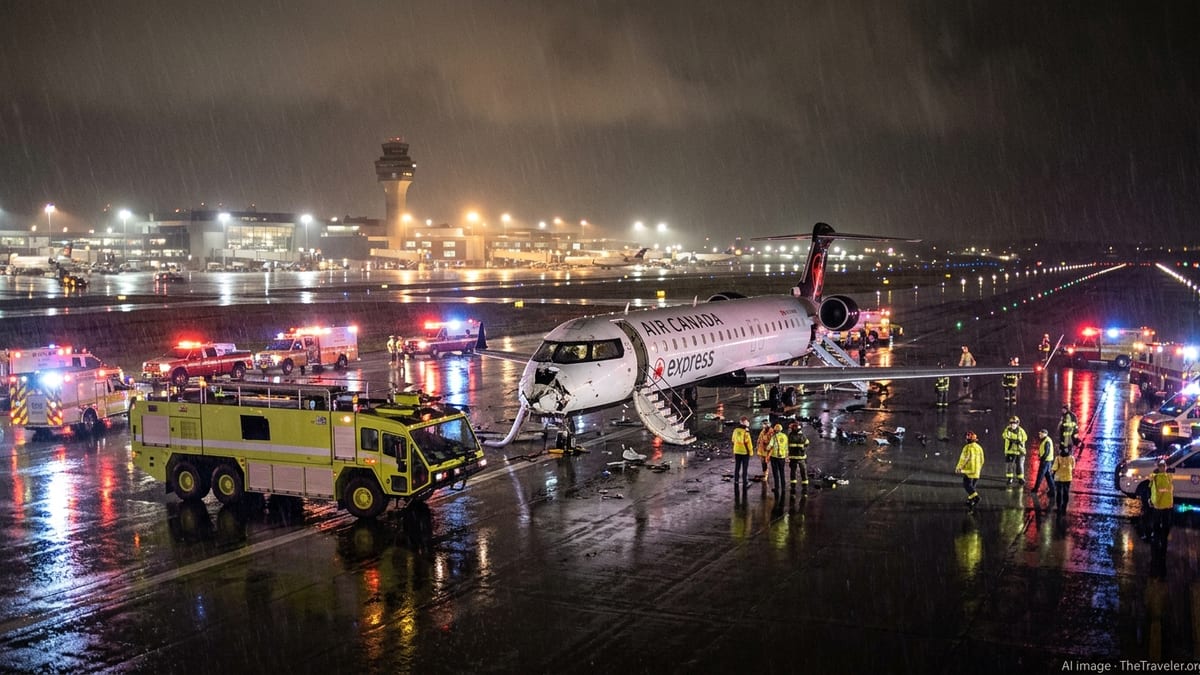
Runway Closure Deepens Turbulent Spring For LaGuardia
The latest disruption comes at a sensitive moment for LaGuardia, which has already endured a season of heightened delays following a deadly runway collision in March and ongoing airfield construction. Early reports indicate that a sizable depression opened in the pavement on Wednesday, forcing airfield managers to suspend operations on the affected runway while engineers evaluate the underlying soil and drainage conditions.
Initial accounts shared on social media by travelers and aviation observers describe a visible hole cutting into the runway surface, with surrounding areas cordoned off by airport safety vehicles. Publicly available air-traffic data shows a rapid reduction in movements shortly after the problem was identified, suggesting that departures and arrivals were quickly rerouted onto LaGuardia’s remaining runway.
LaGuardia operates with a compact, high-intensity airfield layout, and the closure of even a single runway can sharply reduce capacity. With schedules already tightly packed heading into the busy summer season, any prolonged restriction risks rippling through airlines’ networks, affecting not only New York–bound passengers but also travelers connecting through the city to destinations around the United States and Canada.
The sinkhole also adds a new layer of scrutiny to LaGuardia’s aging infrastructure at a time when the airport has been promoting its multibillion-dollar terminal modernization and new technology features aimed at smoothing the passenger experience.
Delays, Cancellations and Diversions Mount Quickly
Within hours of the runway closure, flight tracking dashboards began to show elevated delays and cancellations at LaGuardia, with some departures pushed back by several hours and a growing number of services scrubbed entirely. Airlines appeared to prioritize mainline operations and peak business routes, with regional flights bearing many of the early cancellations as carriers moved to consolidate passengers onto fewer aircraft.
Some travelers reported being diverted to nearby airports such as Newark Liberty and John F. Kennedy as air-traffic controllers worked to manage arrival flows into New York’s congested airspace. Others described extended ground holds at distant origin airports, with aircraft held at gates or on taxiways while carriers waited for updated landing slots at LaGuardia.
Published coverage from recent disruptions at LaGuardia shows how fragile the airport’s operations can be when a single runway is out of service, and early Wednesday patterns appeared to mirror those previous events. Once delays begin to stack up during the morning push, they often cascade into the afternoon and evening as aircraft and crews fall out of position.
Travel industry analysts noted that carriers are likely to lean heavily on change-fee waivers and flexible rebooking policies, encouraging passengers with nonessential travel to move their trips to later dates or alternative airports in the region.
Safety Concerns and Infrastructure Questions
The emergence of a sinkhole on an active runway raises immediate safety questions about the integrity of the pavement structure and the conditions beneath it. Aviation engineering experts point out that runways at coastal airports like LaGuardia are particularly vulnerable to subsurface erosion, shifting water tables and the cumulative impact of heavy aircraft load cycles on a constrained footprint built out over the bay.
Publicly available federal construction reports already highlight recurring maintenance on LaGuardia’s runways, including periodic overnight closures for resurfacing and concrete replacement. The new incident will likely intensify interest in how ongoing work addresses drainage, soil compaction and long-term resiliency against extreme weather events that can accelerate deterioration.
In the wake of the March runway collision, scrutiny of LaGuardia’s safety and infrastructure planning had largely focused on ground vehicle movements, technology upgrades and emergency procedures. The sinkhole pushes structural concerns squarely into the spotlight, raising the prospect of more comprehensive reviews of the airfield’s underlying conditions as well as its surface condition monitoring.
While full technical details will take time to emerge, early indications suggest that investigators and engineers will be tasked not only with repairing the visible damage but also with determining whether similar vulnerabilities exist elsewhere on the airfield that could threaten operations if left unaddressed.
Advice for Travelers Facing the Disruption
With the duration of the runway closure still uncertain, airlines are urging passengers to closely monitor their flight status before heading to the airport. Given LaGuardia’s limited runway capacity, schedule reductions and last-minute equipment changes are likely as carriers attempt to balance safety constraints with the need to keep some level of service moving.
Travel experts recommend that those with flexible plans consider rebooking through other New York–area airports to reduce the risk of missed connections and overnight delays. Passengers already at LaGuardia may find that longer lines form at customer service counters as the day progresses, particularly if the closure extends into the evening rush when departure banks are heaviest.
Travelers with checked luggage on canceled flights should be prepared for retrieval delays as ramp operations adjust to the altered runway layout and any temporary taxiway restrictions. Those on tight schedules, including cruise departures, international connections from other airports or time-sensitive business meetings, may need to quickly explore backup options including rail or intercity bus routes from New York to nearby major hubs.
Given the airport’s recent history of weather-related slowdowns and incident-driven closures, some frequent flyers have already adopted a more cautious approach to tight connections via LaGuardia, a trend that could intensify if sinkhole repairs force an extended period of constrained operations.
Outlook: How Long Could Disruptions Last?
The ultimate impact of the sinkhole will hinge on what engineers find beneath the runway surface and how extensive the repairs must be. If the pavement failure is confined to a small, easily isolated section with no significant subsurface erosion, the closure could potentially be measured in days, with work conducted around the clock to restore full operations.
If inspections reveal deeper structural issues, however, LaGuardia could face a longer spell of one-runway operations, stretching disruptions into weeks. Past federal construction planning documents for the airport show that even planned runway maintenance can drive measurable increases in delay, suggesting that an unplanned outage of this kind may be even more disruptive.
Regional carriers and low-cost airlines that rely heavily on high aircraft utilization face particular challenges in this scenario, as a prolonged capacity squeeze forces them to trim frequencies, swap aircraft types and re-time schedules. Business-focused shuttle routes in the Northeast corridor could also feel the strain as airlines juggle scarce slots and prioritize flights with the greatest demand.
For now, travelers are being advised to treat any LaGuardia itinerary over the coming days as subject to change, and to build in generous buffers or alternate plans as the airport confronts yet another high-profile test of its resilience.