


More news on this day
A sinkhole discovered near a runway at New York’s LaGuardia Airport on May 20 has triggered fresh delays and cancellations, adding another layer of disruption for travelers at one of the country’s busiest domestic hubs.
Get the latest news straight to your inbox!
Runway Closure Compounds a Difficult Spring at LaGuardia
Initial reports indicate that the sinkhole opened adjacent to one of LaGuardia’s primary runways early on Tuesday, prompting a precautionary closure of the affected pavement while airport and engineering teams assessed the damage. Flight-tracking data shows a rapid build-up of delays and cancellations through the morning as departures and arrivals were held or rerouted to the remaining operational runway.
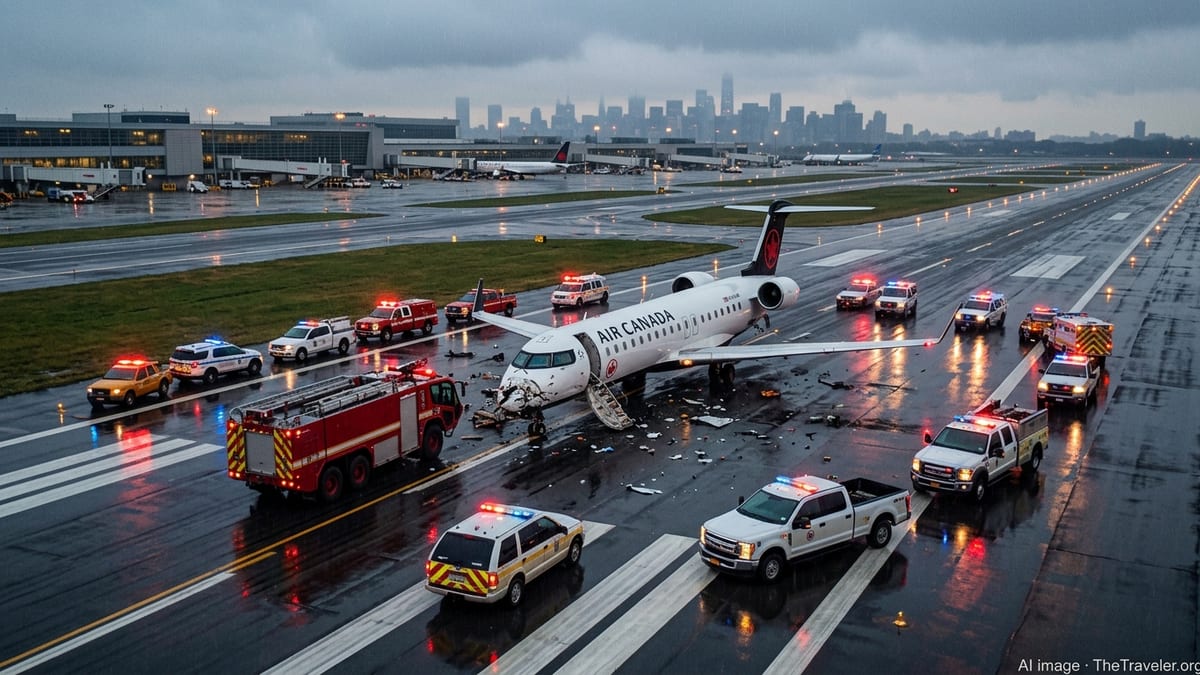
Publicly available coverage notes that LaGuardia has already experienced repeated disruption in recent months due to severe weather, infrastructure work, and the lingering operational aftershocks of a March runway crash that temporarily halted all traffic. With limited runway capacity and tightly scheduled turnarounds, the loss of even a single strip for part of the day has an outsized effect on the airport’s ability to move aircraft efficiently.
The sinkhole incident has also unfolded against a backdrop of broader strain across New York’s aviation system. Neighboring John F. Kennedy International and Newark Liberty International have been absorbing diversions and rebooked passengers since LaGuardia’s March closure, and the latest runway restriction is expected to prolong those ripple effects for several days.
Delays, Cancellations and Airline Responses
Flight-status boards and tracking services on Tuesday showed mounting disruption on key domestic routes into and out of LaGuardia, particularly on services operated by American Airlines, Delta Air Lines, Southwest Airlines and regional affiliates. Morning and midday departure banks experienced rolling delays as aircraft waited for available slots on the remaining runway, while a smaller number of flights were cancelled outright when schedule recovery became impractical.
According to publicly available airline advisories, carriers have been encouraging passengers to check their flight status frequently and to make use of mobile rebooking tools where possible. Some travelers were offered the option to move to later flights or to be rebooked through John F. Kennedy or Newark, although limited seat availability during the busy late spring travel period has made same-day alternatives harder to secure.
Operational data from previous disruption events at LaGuardia shows that schedule recovery can lag for 24 to 48 hours after the immediate cause is resolved. With aircraft and crews out of position, later flights in the day and even services on the following morning may experience knock-on delays, particularly on short-haul business routes that rely on rapid aircraft turns.
Safety Inspections and Infrastructure Concerns
The emergence of a sinkhole so close to an active runway has drawn fresh attention to the unique geography and infrastructure of LaGuardia. Built on reclaimed land along the Flushing Bay shoreline, the airport has long required extensive maintenance to manage subsidence and drainage issues beneath its runways and taxiways. Engineering assessments are expected to focus on possible causes such as aging underground utilities, soil erosion and heavy rainfall.
Published aviation and infrastructure analyses describe LaGuardia as an airport with little margin for error, due in part to short runways, limited taxiway space and constrained room for expansion. Any unplanned maintenance on critical pavement tends to create immediate bottlenecks, with aircraft forced to queue for takeoff or circle in holding patterns until a landing slot opens.
Recent reports on airport construction planning show that federal and local agencies have already earmarked LaGuardia for ongoing runway and taxiway work through 2026 and beyond. The sinkhole discovery is likely to feed into those plans, prompting a closer look at subsurface conditions and the need for more extensive rehabilitation of older sections of pavement.
Travelers Face Longer Lines and Tougher Connections
For passengers, the runway issue has translated into crowded terminals, longer security lines and a heightened risk of missed connections. Real-time airport analytics services had already classified LaGuardia as busier than average this week, with elevated security wait times and higher than normal rates of departure delay even before the sinkhole appeared.
Travel blogs and consumer advisory sites recommend that travelers heading to LaGuardia in the coming days build in extra time, arrive earlier for security screening and consider checking in for flights as soon as online windows open. Those with onward connections, particularly on separate tickets, may face additional risk and are being urged to leave wider buffers or consolidate itineraries where possible.
The disruption is especially acute for regional travelers using LaGuardia as a bridge between smaller East Coast cities and larger domestic or international networks. When a hub airport experiences an infrastructure-related slowdown, aircraft and crews can quickly fall out of their planned rotations, leading to a cascade of delays on routes that might be hundreds of miles away from the original problem.
Ongoing Monitoring and Outlook for the Week
According to aviation tracking platforms, air traffic managers have been gradually adjusting flow rates into LaGuardia as more information becomes available on the condition of the affected runway area. While some improvement in on-time performance is possible once engineers complete immediate stabilization work, the airport is expected to remain vulnerable to further delays if weather deteriorates or new maintenance needs are uncovered.
Airlines are likely to keep reduced schedule buffers in place until they are confident that full runway capacity is restored. Industry analysts note that the combination of peak-season demand, limited spare aircraft and a still-recovering national aviation system leaves carriers with few easy options when an infrastructure incident constrains operations at a major hub.
Travelers with bookings over the next several days are being urged, by publicly available advisories and travel-tracking tools, to monitor their flights closely, update contact details with airlines and consider flexible arrangements where feasible. As with many modern disruption events, the sinkhole at LaGuardia illustrates how a localized infrastructure problem can quickly evolve into a network-wide challenge for airlines and passengers alike.