


More news on this day
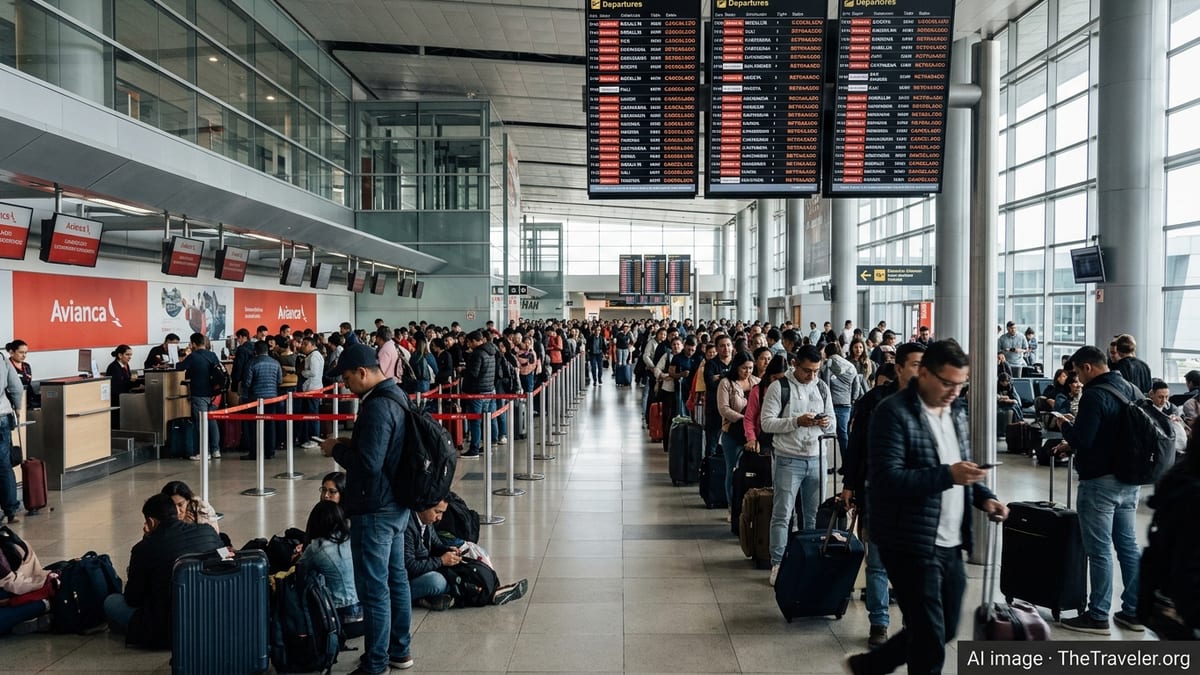
Air travel across Colombia experienced fresh disruption as at least 19 flights were reportedly cancelled and numerous others delayed on Friday, affecting major domestic and regional routes operated by LATAM, Avianca, Copa Airlines and other carriers serving Bogotá and Medellín.
Get the latest news straight to your inbox!
Key Routes Between Bogotá and Medellín Affected
Published flight data and local media coverage indicate that the latest wave of cancellations has focused heavily on the dense air corridor linking Bogotá and Medellín, one of the busiest domestic routes in South America. With airlines such as LATAM, Avianca, Copa Airlines and low cost operators all competing on this trunk line, any operational shock has an outsized impact on Colombian travelers.
The cancellations and delays reported on Friday included services in and out of El Dorado International Airport in Bogotá and José María Córdova International Airport, which serves Medellín. These hubs act as vital connectors for business and leisure traffic moving between major Colombian cities and onward to international destinations in North America, Central America and the wider region.
While the precise breakdown by airline varied across public tracking platforms, at least 19 flights were listed as cancelled within Colombian airspace over the course of the day, with additional services facing extended delays. A significant share of these involved routes touching either Bogotá or Medellín, compounding congestion in already high frequency time bands.
Publicly available schedules show that carriers typically mount dozens of daily frequencies between Bogotá and Medellín. When even a small percentage of these are pulled from the timetable at short notice, knock on effects can include missed connections, aircraft and crew dislocation, and ripple delays on subsequent rotations.
Airlines Cite Operational Pressures and Network Complexity
According to published coverage and data from flight tracking services, the disruptions appear tied to a mix of operational pressures rather than a single, clearly defined cause. Factors commonly associated with similar events in Colombia include localized weather systems, air traffic flow restrictions near the main hubs and aircraft availability issues on short haul fleets.
LATAM and Avianca, which both operate extensive networks within Colombia, rely heavily on narrowbody aircraft to sustain high frequency shuttles between key cities. When these aircraft are rotated for maintenance, affected by technical checks or repositioned after earlier irregular operations, the resulting gaps can show up as same day cancellations, especially at peak travel times.
Copa Airlines and other regional players often feed passengers into Bogotá or Medellín as part of broader itineraries that involve connections in Panama City or other regional hubs. Disruption on a single domestic leg inside Colombia can therefore cascade into missed or rebooked international sectors, adding to the overall impression of a system under strain.
Observers note that Colombian airlines and airports have been operating close to capacity on several core routes, particularly on Fridays and weekends when domestic demand spikes. In such conditions, the margin for absorbing unexpected events is small, and relatively minor schedule changes can quickly translate into visible queues, gate changes and revised departure times across the boards.
Traveler Impact: Missed Connections and Lengthy Layovers
Reports from passengers and travel forums describe a familiar pattern for those caught up in Friday’s cancellations. Travelers on itineraries involving Bogotá or Medellín frequently face missed onward connections, forced overnight stays or improvised rerouting via secondary cities in order to reach their final destinations.
In several cases, journeys that were initially planned as straightforward same day trips within Colombia have reportedly stretched into overnight or next day arrivals. With school holidays and mid year travel driving higher passenger loads, re accommodation options on later flights can be limited, particularly for those who booked popular departure times.
Airlines serving Colombia generally offer online and app based rebooking tools, and call centers have been handling an uptick in requests to modify travel plans on disrupted days. Public guidance from consumer groups and travel advisers continues to stress the importance of monitoring flight status closely, building additional buffer time into connections and retaining all documentation related to delays, cancellations and incidental expenses.
Travel commentators also point out that passengers on itineraries beginning or ending outside Colombia may have additional protections or compensation options under the regulations of the country where their ticket was issued or where a long haul leg originates, a factor that can be relevant for routes linking Colombian cities with North America or Europe.
Operational Resilience Under Scrutiny on a Busy Travel Day
The cluster of cancellations and delays has renewed attention on the resilience of Colombia’s air transport system at a time of robust demand. Bogotá remains the primary gateway for international traffic and the central node for connections between the Andean interior, the Caribbean coast and regional neighbors, while Medellín has grown into a significant secondary hub for tourism and business travel.
Aviation analysts observing the latest disruption note that operators across Latin America are still fine tuning schedules and fleet deployment in response to evolving demand patterns and aircraft availability. This sometimes involves last minute schedule adjustments that can improve overall network efficiency but leave individual flights vulnerable to cancellation when conditions tighten.
Industry commentary suggests that investments in airport infrastructure, air traffic management and fleet modernization have helped support Colombia’s growth in recent years, yet days with clustered disruptions illustrate the ongoing challenge of matching high frequency operations with the need for spare capacity and contingency planning.
For travelers, the events highlight the value of flexible booking options and real time information tools. As airlines work through the affected rotations and restore regular patterns on the Bogotá and Medellín corridors, passengers planning near term trips within Colombia are advised, by publicly available travel advisories, to confirm flight details before heading to the airport and to be prepared for potential schedule changes on short notice.