


More news on this day
Travelers at Miami International Airport on July 3 faced extensive disruption as more than 300 flight delays and a cluster of cancellations involving American Airlines, Delta Air Lines, and regional carrier Envoy rippled across key routes to Canada, Venezuela, Colombia, the United Kingdom, and major U.S. hubs including New York, Austin, and Atlanta.
Get the latest news straight to your inbox!
Ripple Effects Across North and South American Corridors
Operational data and live tracking tools for Miami International Airport on Friday pointed to a heavy buildup of delayed departures and arrivals, with American, Delta, and Envoy accounting for the bulk of schedule disruptions. In total, 304 flights connected to the carriers were reported delayed, alongside six cancellations, affecting both domestic and international itineraries.
Miami’s role as a primary gateway between the United States and Latin America meant the impact stretched well beyond South Florida. Routes to Colombia and Venezuela, already sensitive to geopolitical developments and airspace restrictions, experienced rolling knock-on effects as late arrivals forced crews and aircraft out of position for subsequent departures. Connections onward from Miami toward secondary cities across the region were especially vulnerable to missed links and missed minimum connection times.
Flights to Canada and key U.S. hubs also came under strain. Schedules serving Toronto and Montreal saw growing delays as the day progressed, while heavily trafficked domestic corridors toward New York, Austin, and Atlanta reported extended departure holds. Travelers attempting to connect in Miami onto these northern routes encountered long waits at gates and crowded rebooking desks as airlines sought to consolidate loads and reassign limited aircraft.
The pattern underscored how even a finite cluster of cancellations, when combined with several hundred delayed operations in a single hub, can quickly ripple through international networks. Missed aircraft rotations, late-arriving crews, and constrained overnight parking positions can amplify the original disruption and push recovery efforts into the following day.
Weather, Congested Airspace, and Strained Airline Operations
Publicly available flight tracking and airport information for July 3 indicated that Miami’s disruption coincided with pockets of airspace congestion and localized weather in the wider Southeast and Caribbean region. While no single nationwide air traffic control initiative appeared solely responsible, a combination of convective weather cells, ground delay programs, and high summer travel demand contributed to rolling hold times into and out of South Florida.
Miami International routinely operates near capacity during peak travel periods, and American, Delta, and Envoy together represent a significant share of daily movements. Earlier operational statistics from the Miami-Dade Aviation Department highlight how American and its regional partners conduct thousands of monthly flights at the airport, with Delta providing additional domestic and international connectivity. When irregular operations strike, this dense schedule can magnify the effect of even modest air traffic restrictions or short-lived storms.
Reports from national airspace monitoring platforms on Thursday and Friday cited active delay programs at several major U.S. hubs, including along the eastern seaboard. As Miami’s flights to and from New York and Atlanta encountered airborne holding and sequencing delays, aircraft were forced into extended taxi queues on departure and protracted arrival patterns on approach. These conditions, in turn, reduced the buffer time built into airline schedules and left little margin to absorb new disruptions.
For passengers, the result was a familiar pattern: departure times that slipped in 15- to 30-minute increments, turning what initially appeared to be a minor delay into a multi-hour wait. Some travelers subsequently missed international connections to South America and Europe, resulting in unexpected overnight stays or diversions through secondary hubs.
Key International Links to the United Kingdom and Beyond
While Miami is often associated with traffic to Latin America and the Caribbean, the airport has also grown into an important transatlantic gateway, including service to the United Kingdom. On July 3, extended delays in the departure bank touching New York, Atlanta, and other U.S. hubs indirectly strained transatlantic operations, as late inbound aircraft and tight crew schedules narrowed the window for on-time evening departures.
Publicly accessible airline timetables and recent traffic data show that Miami’s transatlantic schedule is heavily concentrated in late afternoon and evening hours. When midday and early afternoon domestic feeder flights from cities like Austin and New York run late, passengers aiming to connect onto overnight services to London and other European destinations often find themselves at risk of misconnecting.
Airlines attempted to alleviate pressure by re-accommodating affected travelers onto alternative routes via other U.S. hubs, including Dallas, Charlotte, and Atlanta. However, the concurrent delays at these airports limited available onward options, particularly for those needing to reach Europe or South America before the weekend. As capacity on remaining flights tightened, last-minute fares rose and standby lists lengthened.
Although only a handful of services were fully cancelled, the rebalancing of aircraft and crews required to protect longer-haul operations added to the disruption faced by travelers on shorter routes. Some short-haul sectors to nearby Caribbean and Central American destinations were reportedly merged or retimed to free up resources for long-haul departures.
Domestic Hubs and Regional Feeders Under Pressure
The disruption was particularly acute along Miami’s domestic trunk routes. Flights between Miami and major hubs such as New York, Austin, and Atlanta are vital for distributing passengers across wider airline networks, functioning as key feeders for both transcontinental and international trips. On July 3, these routes experienced above-average delays, with some services showing departure holds exceeding an hour.
Public tracking dashboards showed American flights between Miami and New York operating with notable schedule slippage, while Delta services on the Miami to Atlanta corridor encountered recurrent departure and arrival delays. Envoy’s regional operations, which support American’s network by connecting smaller U.S. cities into Miami, also reported slower-than-usual turn times, constraining the flow of passengers into the hub.
As the day progressed, delays began to stack, leading to aircraft arriving late into Miami only to depart again behind schedule. This cyclical pattern, widely recognized in airline operations, made it difficult to reset the timetable without resorting to cancellations. The decision to cancel six flights appeared aimed at creating operational breathing room, allowing airlines to reassign aircraft and restart select rotations on a more reliable basis.
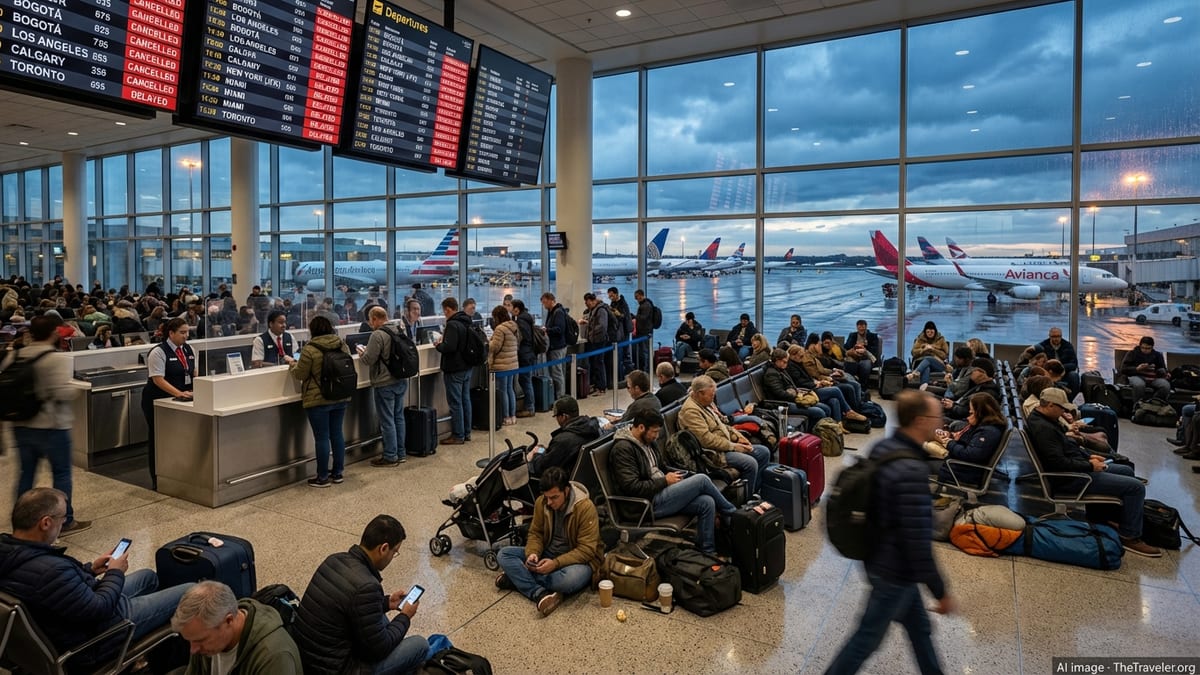
Travelers caught up in the disruption reported long queues at customer service counters and crowded gate areas as multiple departure boards listed revised times. While self-service tools and airline apps offered rebooking and status updates, limited remaining seat availability on peak-day flights left many passengers waiting for later departures or being rerouted through alternative cities.
What Passengers Can Expect in the Coming Days
Experience from previous episodes of mass delays suggests that Miami’s operation may require several schedule banks to fully stabilize, particularly if weather or airspace constraints persist into the weekend. Even once the immediate backlog has been reduced, aircraft and crews may remain out of their optimal rotations, prompting isolated delays and equipment swaps on select routes over the next 24 to 48 hours.
Travel analysts note that travelers flying through Miami during busy summer periods should be prepared for heightened volatility, especially when connecting between domestic and international flights. Building longer layovers, monitoring flight status closely, and remaining flexible with routing options can help mitigate the risk of missed connections when a hub experiences widespread delays.
Publicly available guidance from aviation regulators and consumer advocates also stresses the importance of documenting expenses and keeping records of delay notifications, boarding passes, and rebooking confirmations. These details can be useful when seeking compensation, refunds, or travel credits under airline policies or applicable consumer protection rules.
For now, Miami International Airport remains operational, but the July 3 disruption highlights how quickly a confluence of summer weather, busy holiday traffic, and tightly scheduled airline operations can unravel connectivity across an entire region. With American, Delta, and Envoy at the center of the latest wave of delays and cancellations, travelers using the South Florida gateway are being urged by published reports to allow extra time and prepare for continued irregular operations on key routes.