


More news on this day
Air travel across Argentina is facing fresh disruption as a cluster of cancellations affecting seven key domestic and regional routes ripples through major South American airlines, impacting services that connect Buenos Aires with Córdoba, Iguazú and other high-demand destinations.
Get the latest news straight to your inbox!
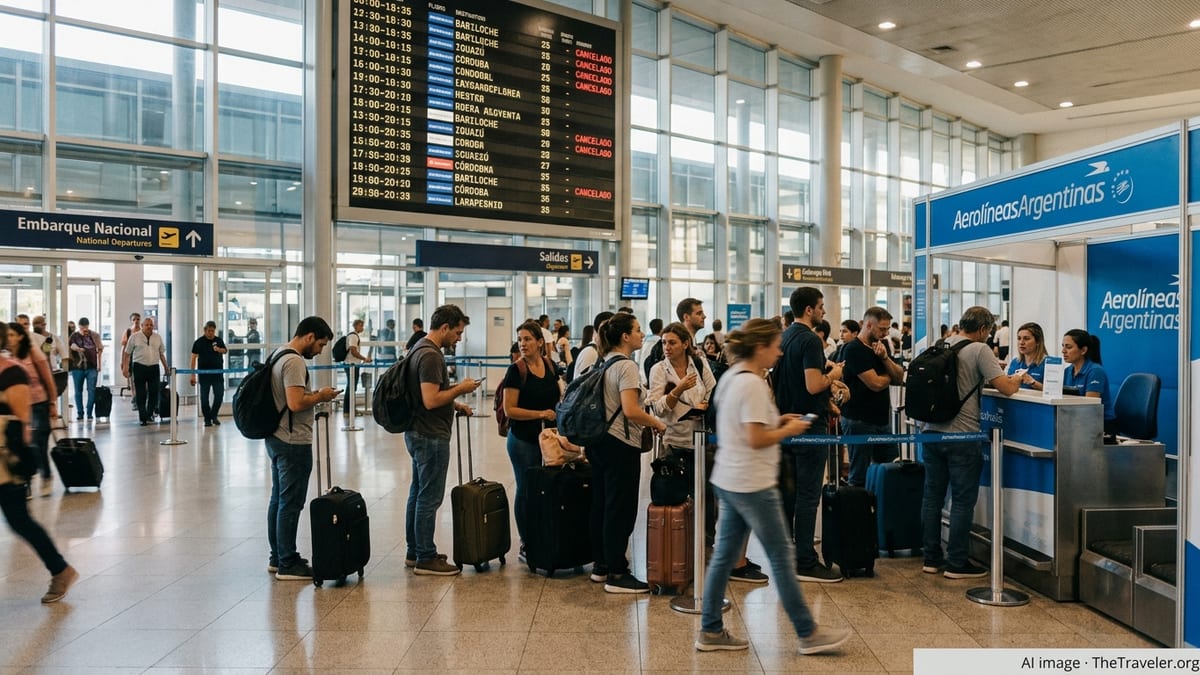
Cluster of Cancellations Strikes Core Argentine Network
Recent operational data and schedule updates indicate that seven flights on prominent domestic and regional routes have been cancelled or removed from near-term schedules, concentrating disruption on corridors that link Buenos Aires with Córdoba, Puerto Iguazú and other major cities. The affected services span both Aerolíneas Argentinas and other South America based carriers, amplifying the impact across the region’s interconnected networks.
The pattern of disruption is most visible on routes feeding the country’s tourism and business hubs. Several flights between Buenos Aires and Puerto Iguazú, a gateway to Iguazú Falls, have been marked as not operating on dates that would normally see multiple daily rotations, while select Buenos Aires to Córdoba frequencies have also disappeared from public timetables. Monitoring platforms that aggregate airport, airline and global distribution system data show gaps where regular flights previously appeared, suggesting targeted cuts rather than ad hoc same day cancellations.
These changes come at a time when Argentine domestic demand has been rebounding, putting renewed pressure on airlines that are trying to balance higher load factors with volatile costs, union actions and infrastructure constraints. The removal of even a handful of frequencies on heavily trafficked city pairs can quickly cascade into missed connections and longer travel times for passengers relying on hub-and-spoke itineraries.
In several cases, former daily or near daily services are now shown as operating only on select days of the week, or not at all on key travel dates. That shift has effectively turned what were once routine short hops into journeys that require significant replanning, with travelers forced to look at alternative departure days, different airports in the same metropolitan area, or indirect routings via regional hubs such as São Paulo, Santiago or Lima.
Buenos Aires, Córdoba and Iguazú Among Hardest Hit
Buenos Aires remains at the center of the disruption, with both Aeroparque Jorge Newbery, which serves much of the domestic and regional market, and Ezeiza International Airport, the main long haul gateway, experiencing adjustments in departures to provincial cities. Published departure boards show a thinning of some early morning and late evening waves that traditionally connect the capital to Córdoba, Mendoza, Salta, Puerto Iguazú and other key destinations.
On the Buenos Aires to Córdoba trunk route, which is normally one of the most competitive in the country, schedule trackers show a reduction in planned operations from a mix of full service and low cost carriers. Some flights that previously appeared as daily or multi weekly frequencies are now marked as not scheduled on certain days, narrowing options for business travelers who rely on same day returns between the two cities.
Puerto Iguazú, the northern city adjacent to the famed waterfalls, is another focal point. Several flights that typically link Iguazú with both Aeroparque and Ezeiza are listed as not operating on select dates or have been withdrawn from near term timetables, curtailing capacity into one of Argentina’s flagship tourism areas just as the region enters a period of stronger shoulder season demand. In some instances, passengers searching for same day returns between Buenos Aires and Iguazú are being offered only one or two viable options instead of an array of choices spread across the day.
Other routes affected include services from Buenos Aires to secondary provincial markets that depend heavily on air links for business, medical and governmental travel. With Argentina’s vast geography and limited long distance rail options, the cancellation of a single nonstop flight can translate into many extra hours of traveling by road or a forced overnight stay in the capital.
Multiple South American Carriers Adjust Argentine Operations
The disruption is not confined to Argentina’s flag carrier. Publicly available schedule information shows that several major South American airlines have made adjustments to Argentine routes in recent weeks, either by cancelling selected flights, reducing weekly frequencies or shifting capacity to alternative city pairs.
LATAM Airlines Group, which serves Argentina through connections from hubs in Chile, Brazil and Peru, has already outlined future temporary suspensions of some long haul services touching Buenos Aires in response to upcoming runway works at Ezeiza International Airport. Alongside those structural changes, monitoring tools also show fluctuations in near term regional frequencies, with certain Buenos Aires flights on specific days being removed or reduced compared with earlier schedules.
Brazil based carriers, including Gol, have also fine tuned their Argentine operations, with some services to Córdoba and other interior cities showing irregular patterns of operation. In some cases, long term schedules still list flights on key routes, but day of operation data and booking engines reflect thinner offerings, indicating that individual rotations are being cancelled or consolidated based on demand, crewing or operational considerations.
Smaller regional airlines that connect neighboring countries with Argentine destinations have likewise trimmed capacity, particularly on cross border services that rely on both inbound tourism and outbound Argentine leisure travel. Those changes contribute to a broader sense of fragility in Argentina’s place within the South American aviation network, as carriers weigh the profitability of each flight against currency volatility, fuel prices and regulatory factors.
Ongoing Operational and Labor Pressures Weigh on Reliability
The latest wave of cancellations comes against a backdrop of broader operational challenges affecting air travel in Argentina and across South America. Over the past year, travelers have faced repeated episodes of schedule disruption linked to aviation labor actions, currency fluctuations and infrastructure works at major airports.
Earlier this year, Aerolíneas Argentinas reprogrammed and cancelled services to Misiones province, including routes to Posadas and Iguazú, in connection with a national labor action, forcing hundreds of passengers to be rebooked or rerouted. Similar stoppages and work to rule campaigns in the wider aviation sector have periodically affected ground handling, air traffic control and airport services, increasing the risk that even flights which remain on the schedule may experience extended delays or last minute changes.
Infrastructure constraints are another factor. Ezeiza International Airport is preparing for runway maintenance that has already prompted some carriers to preemptively suspend or reschedule flights for late 2026, highlighting the knock on effects that such works can have on broader regional connectivity. While many of the current cancellations are domestic, the interaction between local services and long haul or regional feeds means that reliability issues in one part of the network can quickly spread to others.
Airlines operating in Argentina also continue to navigate a challenging economic environment marked by exchange rate shifts and high operating costs, which can make marginal routes vulnerable to rapid adjustment. When load factors soften or costs rise unexpectedly, trimming a handful of frequencies on secondary routes is often one of the quickest levers carriers can pull to protect their finances, even if it sharply reduces options for passengers on affected days.
Travelers Face Longer Journeys and Limited Alternatives
For travelers, the practical impact of seven cancellations spread across seven key routes is significant. On busy days, the loss of a single rotation between Buenos Aires and a provincial city can mean that remaining flights are fully booked well in advance, leaving little room for rebooking after a disruption. Those who do manage to secure alternative seats may find themselves routed via another hub in South America, turning what is normally a one and a half hour domestic hop into a half day journey.
Reports from booking platforms and traveler forums indicate that some passengers have had to shift their departure or return dates by one or more days to accommodate the reduced schedule, particularly on routes to high demand tourist destinations such as Puerto Iguazú. Others have opted for long distance buses as a fallback, accepting overnight ground journeys to avoid uncertainty around air services.
As airlines, airports and regulators work through the latest round of operational and economic pressures, the pattern emerging in Argentina suggests that travelers can expect a more fluid and less predictable domestic schedule in the near term. Even in the absence of headline grabbing mass cancellations, the quiet removal of individual flights on key routes is likely to remain a feature of the country’s air travel landscape.
For now, major South American carriers appear focused on preserving core connectivity while fine tuning capacity at the margin. That strategy helps them adapt to shifting conditions but leaves passengers on affected routes, from Buenos Aires to Córdoba, Iguazú and beyond, navigating a more constrained set of options every time they plan a trip.