


More news on this day
Travelers at Xi’an Xianyang International Airport faced cascading disruptions today as a cluster of flights operated by China Eastern, XiamenAir, Hainan Airlines, Shenzhen Airlines and Okay Airways were grounded or heavily delayed, affecting connections to major cities including Harbin, Dalian, Shenyang and Chiang Mai.
Get the latest news straight to your inbox!
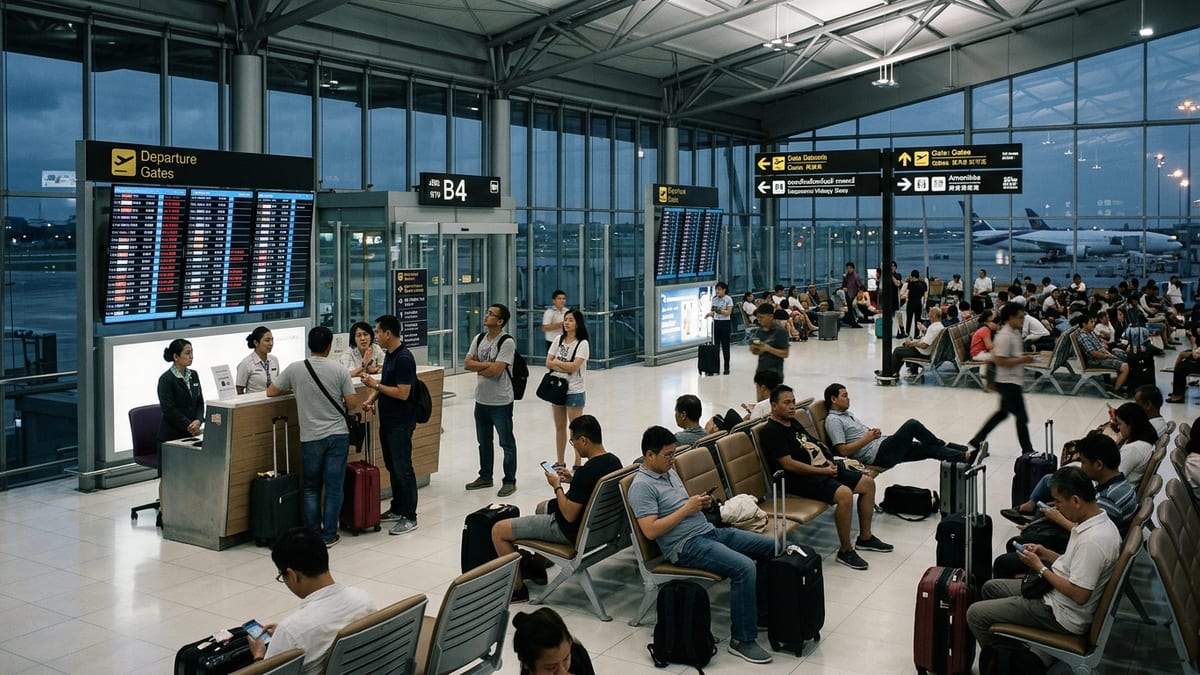
Cluster of Cancellations and Delays at Xi’an Hub
Publicly available flight-tracking data for May 21 indicates that at least 15 departures and arrivals involving Chinese full service and regional carriers were either cancelled outright or subjected to extended delays at Xi’an Xianyang International Airport. The disruptions center on services operated or codeshared by China Eastern, XiamenAir, Hainan Airlines, Shenzhen Airlines and Okay Airways, all of which maintain significant domestic and regional networks that funnel traffic through Xi’an and other large Chinese hubs.
Schedule summaries show that affected flights span both domestic trunk routes and international or regional links, amplifying the impact on connecting passengers. While some services were removed from the day’s operating plan in advance, others appear as last minute cancellations or rolling delays, leaving travelers to improvise overnight stays and alternative routings through other mainland cities.
Xi’an Xianyang serves as a key base for several of the impacted brands, particularly China Eastern and Hainan Airlines, which use the airport as a stepping stone between inland China and coastal or resort destinations. The concentration of affected services at a single hub increased the likelihood of missed onward connections for passengers heading to Northeast China and Southeast Asia.
No single cause is clearly identified in available operational notices, and the pattern of flight changes suggests a mix of aircraft rotation issues, crew availability constraints and wider network rebalancing rather than a single weather or air traffic control event.
Major Chinese Carriers Among Those Most Affected
China Eastern appears prominently among the disrupted operators, with a series of Xi’an based departures, including key services toward Shanghai and western China, listed as cancelled or subject to significant timing changes in today’s schedules. Some China Eastern flights marketed under joint codes with partner airlines also show irregular operations, compounding uncertainty for travelers holding tickets issued by other carriers on China Eastern operated sectors.
Hainan Airlines, which counts Xi’an among its operational bases, shows irregular patterns on certain services touching the city, with recent schedules indicating cancellations on routes linking Xi’an with major leisure and coastal destinations. These adjustments can strand passengers relying on same day connections, particularly those pairing domestic Chinese legs with long haul itineraries beyond Beijing, Guangzhou or Shenzhen.
Shenzhen Airlines and Okay Airways are also visible in the disrupted mix through codeshare and feeder operations that route passengers into larger trunk services from Xi’an. Changes to their domestic segments can have disproportionate downstream effects, especially for travelers using Xi’an as a midpoint between smaller inland cities and coastal gateways such as Dalian or Harbin.
XiamenAir, while not primarily based in Xi’an, participates in the same tightly interlinked network of Chinese domestic and regional services. Adjustments in its wider schedule, combined with irregular operations at Xi’an, add another layer of complexity for travelers attempting to stitch together multi segment journeys inside China.
Key Routes to Harbin, Dalian, Shenyang and Chiang Mai Disrupted
The latest schedules and status pages show disruptions rippling across routes that connect Xi’an with important cities in Northeast China, including Harbin, Dalian and Shenyang. These corridors are heavily used by both business travelers and domestic tourists, and they also function as feeders into international flights leaving from coastal hubs.
Flights linking Xi’an to Shenyang and Dalian in particular appear under pressure, with cancellations and long delays affecting services operated directly by the mentioned airlines or sold under their codes via partners. Travelers booked on morning departures have in several cases been offered later same day services through different hubs, resulting in longer travel times and missed meetings or events at their destinations.
The disruption also extends beyond mainland China. Xi’an’s role as a connecting point for travelers heading to Southeast Asia means that irregular operations are being felt on itineraries involving Chiang Mai and other regional leisure markets. Connections that once relied on tight transfer windows in Xi’an are now subject to extended layovers or complete rebooking via alternative cities such as Kunming, Guangzhou or Shanghai.
For many passengers, the challenge lies not only in a single cancelled flight but in the breakdown of a carefully timed chain of sectors. When one domestic leg between Xi’an and cities like Harbin or Dalian fails to operate as planned, it can invalidate onward tickets to regional destinations, sometimes with limited same day recovery options.
Passenger Experience: Missed Connections and Last Minute Rebookings
Reports shared on travel forums and flight tracking platforms point to a difficult day for passengers at Xi’an Xianyang. Many travelers describe learning of cancellations through app notifications or departure board changes rather than through proactive rebooking, then queuing at customer service desks or using carrier websites to seek alternatives.
Some travelers have reported being rebooked via secondary hubs or routed a day earlier or later than originally planned, particularly on itineraries that combine domestic Chinese legs with international flights to destinations such as Chiang Mai. Others describe being provided with hotel stays or meal arrangements in larger coastal cities where airlines maintain stronger ground support, rather than at Xi’an itself.
Social media posts and forum threads suggest that passengers with flexible tickets or travel insurance have generally fared better, especially when they were able to take advantage of self service change tools offered by carriers such as China Eastern and Hainan Airlines. Travelers on tightly timed itineraries, including those connecting from smaller inland cities through Xi’an to international departures, appear to have borne the brunt of the cascading delays.
In several instances, travelers recount being offered reroutes through hubs like Kunming or Guangzhou, swapping a once straightforward Xi’an connection for multi stop journeys that add several hours to the total travel time. The resulting fatigue and uncertainty have added to frustrations among both leisure and business passengers.
Guidance for Travelers Flying Through Xi’an
Publicly available advisories from major Chinese airlines emphasize the importance of monitoring flight status closely on the day of departure and making use of digital tools for rebooking where possible. For travelers planning to pass through Xi’an Xianyang in the coming days, the pattern of disruptions suggests that conservative connection times may be prudent, especially for those linking domestic flights in and out of Xi’an with separate tickets on long haul or regional carriers.
Travel specialists typically recommend that passengers build in extra buffer time when relying on inland Chinese hubs for same day international connections. Today’s events at Xi’an, affecting carriers such as China Eastern, XiamenAir, Hainan Airlines, Shenzhen Airlines and Okay Airways, illustrate how quickly a cluster of cancellations or delays can compromise onward plans, particularly during busy travel periods.
Passengers are also encouraged to keep digital copies of their ticket receipts and boarding passes, as these documents can be important when requesting refunds, schedule change fee waivers or accommodation support from airlines. Those with comprehensive travel insurance may have additional recourse for costs arising from missed connections, overnight stays or the need to purchase replacement flights.
With Chinese carriers continuing to adjust schedules across their networks in response to demand patterns and operational constraints, observers expect episodic disruptions of the kind seen today at Xi’an Xianyang to remain a possibility. Travelers transiting the airport are likely to benefit from careful planning, flexible itineraries and close attention to airline communication channels in the days ahead.