


More news on this day
A United Airlines Boeing 737 MAX 9 operating as flight UAL1715 from Denver to the New York area diverted to Philadelphia International Airport for an emergency landing, according to live flight-tracking data and early media coverage.
Get the latest news straight to your inbox!
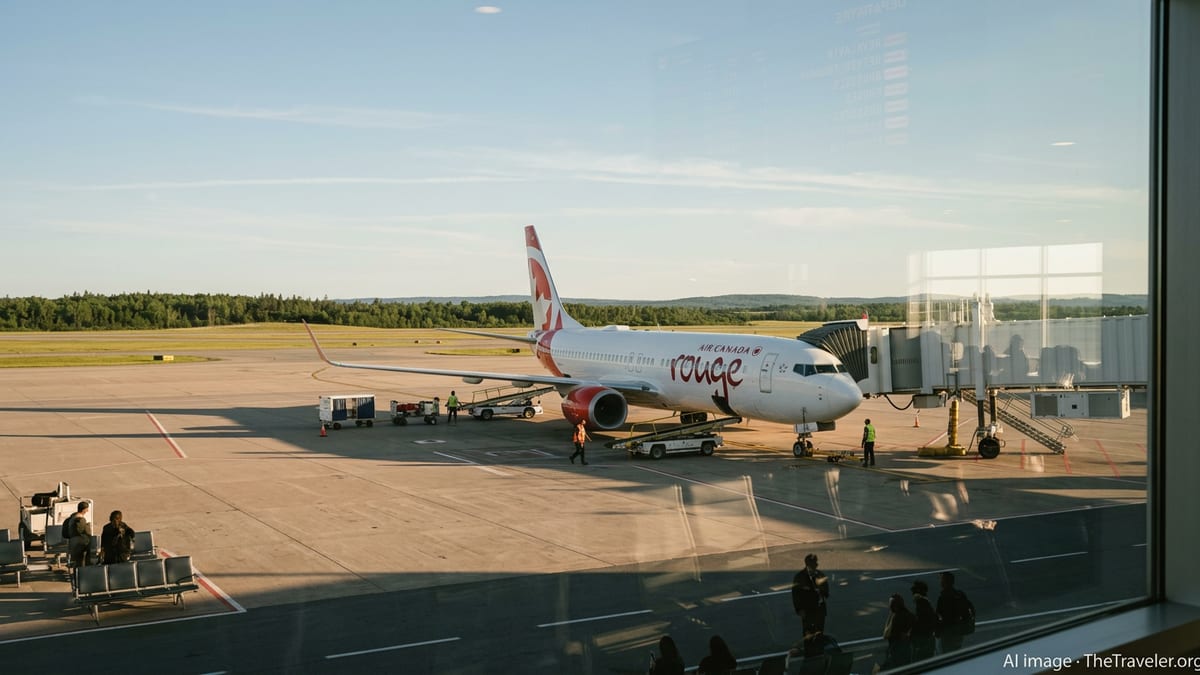
Diversion From Denver–New York Route to Philadelphia
Publicly available flight-tracking information shows that United Airlines flight UAL1715 departed Denver International Airport on a scheduled service to the New York area before altering course en route and descending toward Philadelphia. The Boeing 737 MAX 9 diverted from its planned northeast routing and initiated a direct track to Philadelphia International Airport, where it landed safely.
Data from aviation tracking platforms indicates that the aircraft began an unplanned descent consistent with a diversion scenario, with the flight path curving away from the New York terminal area and toward southeastern Pennsylvania. The landing at Philadelphia was completed without reports of injuries, and subsequent ground movements suggest the aircraft came to a normal stop on the runway before being met by airport services.
Initial information available to the public does not specify the exact nature of the in-flight issue, but the decision to divert is consistent with a precautionary response to a potential technical or onboard concern. In such cases, flight crews typically seek the nearest suitable airport with appropriate runway length, maintenance support, and emergency response capability.
What Is Known About the Aircraft and Flight
The aircraft involved is a Boeing 737 MAX 9, one of the largest variants in Boeing’s single-aisle MAX family and a type widely used by United on domestic medium-haul routes from Denver. Fleet registries and recent usage patterns indicate that United deploys the MAX 9 on high-demand services linking major hubs and business markets, including flights from Denver to New York–area airports.
Operational data suggests that UAL1715 was flying at cruising altitude before the diversion began, with an initial descent and course change that took the aircraft away from the typical arrival streams into Newark Liberty or other New York–area fields. The timing and geometry of the diversion are in line with standard airline practice when crews opt for a nearer alternate rather than continuing to destination.
Publicly accessible information so far does not show any runway closures or prolonged ground disruption at Philadelphia International Airport following the landing, implying that the event was contained to the single flight and its passengers. Subsequent schedules list other United services operating normally to and from the airport.
Passenger Experience and Onboard Implications
While detailed passenger accounts have not yet been widely reported, diversions of this kind typically result in extended time onboard as crews coordinate with operations and ground staff at the alternate airport. Travelers may remain seated for safety checks or await gate availability while airport personnel verify the aircraft’s status.
In most diversions prompted by suspected mechanical or systems irregularities, cabin conditions remain stable and safety systems operate as designed. The cockpit crew focuses on managing checklists, communications, and approach planning, while flight attendants provide updates as information becomes available and prepare the cabin for landing at an unexpected airport.
Once on the ground, passengers are usually deplaned either at a remote stand using mobile stairs or at a gate, depending on airport logistics. Airline operations teams then work to rebook travelers onto later departures or alternative routings to reach the New York area, often prioritizing connections and time-sensitive itineraries.
Regulatory and Safety Context for the 737 MAX 9
The diversion involving UAL1715 comes against the backdrop of heightened attention on the Boeing 737 MAX 9, a model that has undergone increased scrutiny following structural and systems issues identified in recent years. Regulatory agencies and airlines have implemented additional inspection and maintenance protocols for certain components and configurations on the type.
According to published coverage and industry briefings, oversight measures for the MAX 9 now emphasize structural checks, cabin panel integrity, and system redundancy. These precautions have aimed to reassure travelers and crews that aircraft returning to service meet updated safety expectations and comply with revised airworthiness requirements.
Events such as a diversion to Philadelphia are routinely reviewed by airline safety departments, and when warranted, reports are filed with national regulators to assess whether further action is needed. Many such incidents ultimately trace to contained technical irregularities or sensor warnings rather than major component failures, but they nonetheless contribute to ongoing data collection about fleet reliability.
Next Steps for the Aircraft and Travelers
After an unscheduled landing of this nature, the aircraft typically undergoes inspection by maintenance technicians before any return to service. Checks can range from targeted evaluations of specific systems cited by cockpit alerts to broader examinations if crews observed unusual behavior during flight or landing.
For passengers, the immediate priority is onward travel. Airlines generally arrange rebooking onto later flights from Philadelphia or connecting itineraries via other hubs, depending on seat availability and the time of day. Some customers may be offered hotel and meal accommodations if delays extend into overnight hours.
Further details about the cause of the diversion, any component replacements, and the aircraft’s return to regular scheduling may emerge through subsequent reporting and updated flight-tracking records. For now, available information indicates that UAL1715’s diversion to Philadelphia concluded without injuries, underscoring that standard procedures and crew decision-making led to a safe outcome for those onboard.