


More news on this day
Flight disruptions continued Tuesday at Miami International Airport as two of the busy hub’s four runways remained closed following a fatal Amazon cargo jet crash that killed five people and injured five others on Sunday.
Get the latest news straight to your inbox!
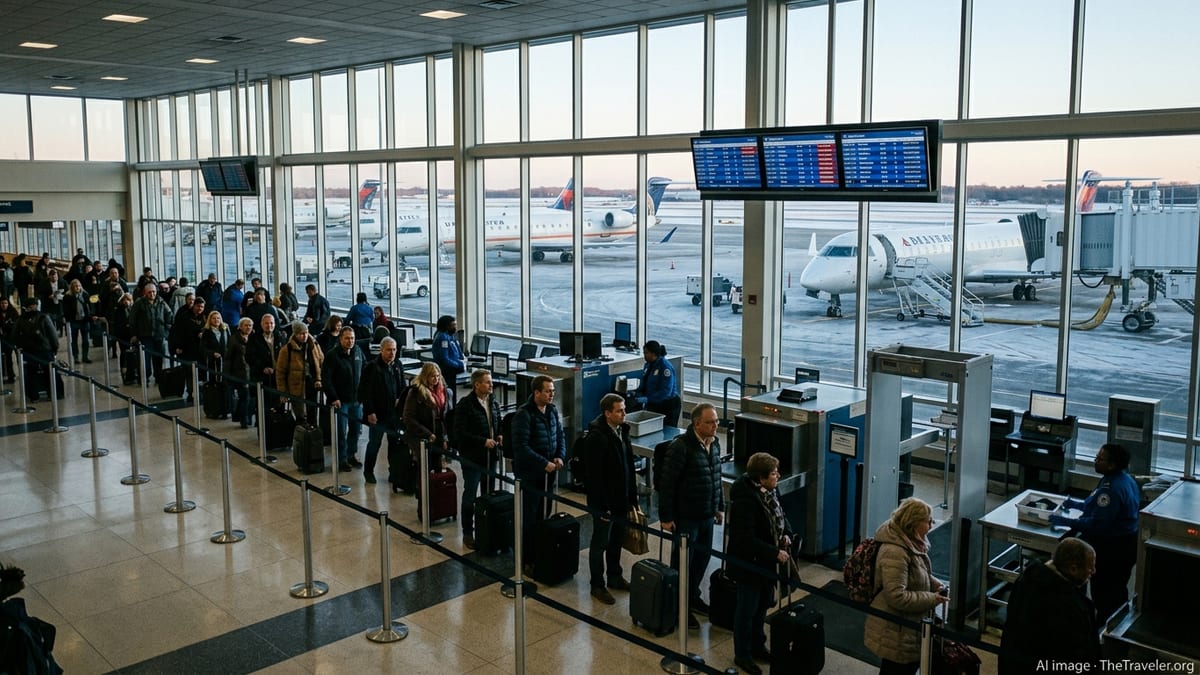
Runway closures squeeze capacity at major U.S. gateway
Publicly available information from the Miami-Dade Aviation Department indicates that two of Miami International Airport’s four runways are still out of service while investigators document the wreckage of the Boeing 767-300 cargo aircraft that overran Runway 30 on September 6. The aircraft broke through the perimeter fence and struck vehicles outside airport property before coming to rest and catching fire.
Coverage from local outlets describes the closures as affecting Runway 30 and an intersecting runway that cannot be fully used while emergency and investigation equipment remain positioned around the accident site. The remaining two runways are handling all arrivals and departures, cutting the airport’s normal capacity and complicating traffic flows at one of the United States’ busiest international gateways.
Miami International routinely manages hundreds of daily flights across its four-runway system, and federal analyses have previously highlighted how runway outages at the airport can quickly ripple into delays. With two runways now unavailable and an active crash scene near the end of Runway 30, controllers and airlines are operating on a constrained airfield layout that leaves little room to recover from weather or operational hiccups.
According to published coverage summarizing airport statements, there is no firm timeline yet for reopening the closed runways. The National Transportation Safety Board has indicated that on-site documentation of the wreckage and runway surface will continue for several days, keeping those areas off-limits to normal traffic in the near term.
Passengers face continuing delays and cancellations
Travelers passing through Miami this week are encountering lines, last-minute gate changes and a patchwork of cancellations as airlines adjust schedules around the runway closures. Local television reports describe departure boards filled with delayed flights and travelers rebooked onto late-night or next-day services, particularly on heavily traveled domestic routes.
National and local outlets report that the immediate aftermath of Sunday’s crash included a full ground stop at Miami International, halting takeoffs and landings while emergency crews responded and the airfield was inspected. Although that total halt was lifted, the reduced runway capacity continues to limit the number of flights that can operate per hour, forcing carriers to trim schedules and consolidate passengers onto fewer departures.
Some travelers have described missed connections and diversions to nearby airports such as Fort Lauderdale-Hollywood International as airlines look for alternative ways to move passengers around the bottleneck in Miami. According to flight-tracking data cited in media coverage, carriers have been prioritizing international long-haul departures and key domestic trunk routes, while some shorter flights face repeated delays or cancellations.
Published information from the airport and airlines suggests that disruption is likely to persist at least through the middle of the week. Travelers booked to fly through Miami are being advised in public advisories to check flight status frequently, allow extra time at the airport and consider flexible rebooking options where available.
What is known about the Amazon cargo jet crash
According to the National Transportation Safety Board’s preliminary information, the aircraft involved was a Boeing 767-300 freighter operating as an Amazon-branded cargo service under 21 Air from San Juan to Miami. The jet overran the end of Runway 30 during landing shortly before 2 p.m. local time on Sunday, September 6, crossing a perimeter road and colliding with a van and a sport utility vehicle.
Investigative updates summarized in national coverage indicate that all five fatalities occurred in vehicles that were struck by the aircraft. Five additional individuals were injured. The two pilots were rescued from the cockpit section, which remained largely intact despite the severe post-crash fire that burned through portions of the fuselage and wings.
Federal investigators have begun documenting the wreckage, collecting flight data and cockpit voice recorders, and examining runway conditions at the time of the landing. Aviation specialist reports note that the aircraft was a converted passenger jet delivered in the early 1990s and placed into cargo service in 2015, with a history of operations for multiple carriers before joining the Amazon air network.
Early analyses shared in industry publications and flight-tracking communities have highlighted factors such as aircraft speed on approach, runway length and weather as potential areas of interest, but investigators have not yet issued any findings on probable cause. The NTSB has signaled that determining why the aircraft failed to stop within the available runway distance will be a central question in the months ahead.
Operational strain at a key Latin America hub
Miami International Airport is a critical hub for travel and trade between the United States, Latin America and the Caribbean, with a particularly heavy concentration of cargo and international passenger flights. Federal performance assessments released earlier this year describe the airport as sensitive to runway outages, with even planned construction closures shown to reduce throughput and increase delays during peak periods.
The current unplanned closures after the cargo jet crash are amplifying that vulnerability. With freight operations at Miami among the largest in the country, airlines and logistics providers are adjusting routing for time-sensitive shipments, using alternative gateways where possible or relying more heavily on truck connections from nearby airports.
Travel industry analysts quoted in recent coverage suggest that the incident comes at a challenging moment, with late-summer leisure traffic blending into early fall business travel. Any extended reduction in runway capacity could complicate airline schedule planning not only at Miami but across their wider networks, as aircraft and crew rotations are disrupted by rolling delays.
Published information from the airport indicates that while terminal facilities, security lines and customs processing remain fully operational, the constraint on takeoff and landing slots is likely to keep pressure on on-time performance statistics in the short term. Travelers connecting to popular destinations in South America and the Caribbean may see particularly tight connections or longer layovers as carriers regroup.
What travelers should expect in the coming days
Based on the situation as of Tuesday afternoon, publicly available information suggests that Miami International will continue operating with two runways closed at least until investigators complete detailed on-site work and the damaged areas are cleared. Airport communications cited in local reporting emphasize that safety and the integrity of the investigation take priority over a rapid reopening of the affected runways.
Airlines serving Miami are updating travel advisories, offering fee waivers or flexible rebooking options on some itineraries impacted by the disruptions. Passengers originating in South Florida may find more options by checking nearby airports, although those facilities also face increased demand as travelers seek alternatives.
Industry observers expect that once the wreckage is removed and the NTSB releases the scene back to airport operators, runway inspections and any necessary repairs will be required before full capacity can resume. Depending on the extent of pavement damage and infrastructure repairs, some level of restriction could persist beyond the initial investigation phase.
For now, the advice echoed in airline and airport updates is to monitor flight status closely, build extra time into travel plans and be prepared for schedule changes, especially for connections through Miami over the next several days.
AP News: Federal investigators probe Amazon cargo jet's fiery runway crash that killed 5 in Miami
Local10: Miami International Airport delays continue as 2 of 4 runways close
CBS Miami: Delays, cancellations mount at Miami International Airport after deadly crash