


More news on this day
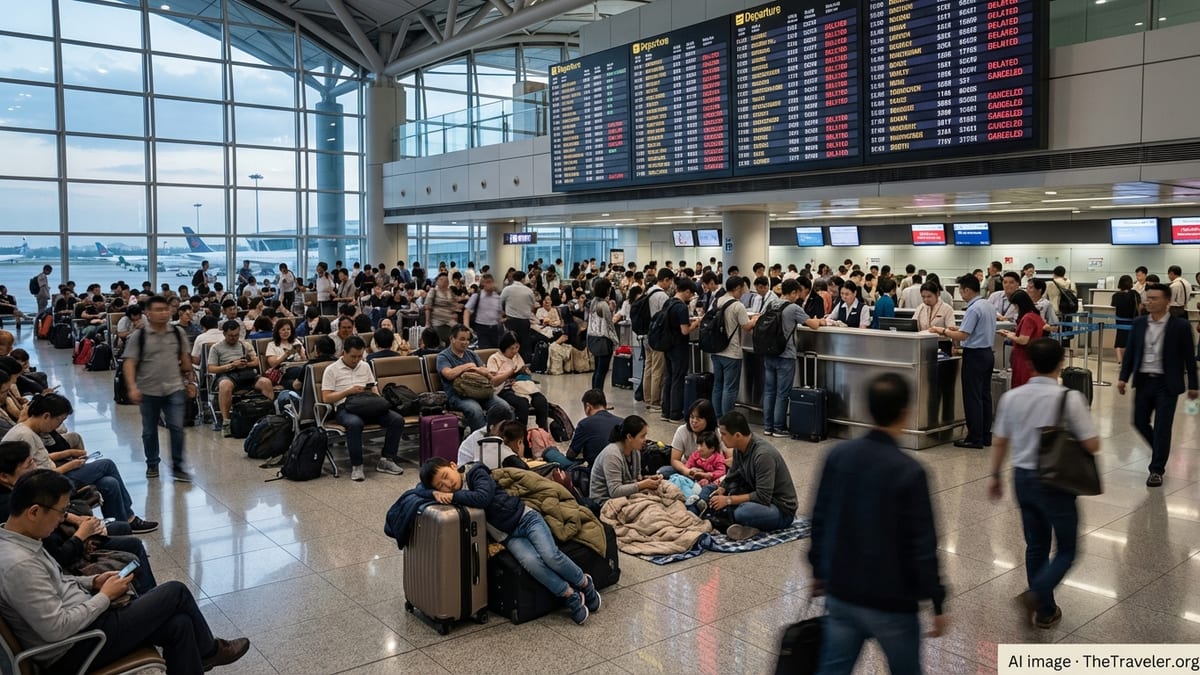
Beijing Capital International Airport is experiencing significant disruption as 19 flights are cancelled and 102 delayed, impacting routes across China, Canada, Japan, South Korea, Taiwan and Thailand and straining already busy summer travel corridors.
Get the latest news straight to your inbox!
Wave of Cancellations Hits Key Asian and Transpacific Routes
Publicly available flight-tracking data for Beijing Capital on 9 June indicates a tightly clustered wave of disruption, with Air China, China Eastern and Dalian Airlines among the carriers cancelling a combined 19 departures and arrivals while more than 100 additional flights suffer delays. The pattern affects both domestic and international sectors, with services to cities in Japan, South Korea, Taiwan and Thailand, as well as at least one transpacific link to Canada, all showing schedule disruptions.
Air China, which uses Beijing Capital as a core hub, appears among the most affected, with a series of late-running departures and extended ground holds. China Eastern and Dalian Airlines are also recording irregular operations on shared trunk routes to major Chinese cities that serve as onward gateways to regional and long haul destinations. International carriers operating into Beijing are reporting knock-on delays as they adjust rotation times and crew schedules around the congestion.
The interruptions come as passenger volumes through Beijing’s airports rise toward peak summer levels, amplifying the impact of each cancellation or long delay. Even when individual flights remain technically operational, extended departure holds and late arrivals are lengthening total journey times for travelers making onward connections to North America and other parts of Asia.
While the overall on time performance rating for Beijing Capital typically trends relatively high, today’s concentrated disruption illustrates how quickly conditions can deteriorate once several large network carriers experience simultaneous schedule pressure at the same hub.
Operational Strain Across Chinese Airline Networks
The current situation at Beijing Capital is unfolding against a wider backdrop of strain across Chinese airline networks. Recent aviation analysis and consumer compensation platforms have highlighted periodic spikes in cancellations and delays this year tied to weather systems, airspace constraints and resource bottlenecks at key hubs including Beijing, Shanghai and Chengdu.
Earlier in the spring, published coverage documented clusters of cancelled and delayed services involving Air China, China Eastern and China Southern across northern and central China, with ripple effects stretching into March and May. Those episodes underscored the sensitivity of domestic and regional schedules to any localized disruption at a major hub, as aircraft and crews based in one city serve multiple spokes throughout the day.
Industry observers note that many Chinese carriers are still rebuilding network resilience after years of pandemic-related volatility. Schedules have been ramped up faster than some support functions, such as maintenance capacity and crew planning, can fully absorb, leaving less margin to recover when weather or congestion forces tactical changes.
Beijing Capital, which continues to handle a large share of Air China’s operations as well as a mix of other domestic and foreign airlines, is therefore particularly exposed whenever system-wide stress coincides with strong seasonal demand and limited slack in aircraft utilization.
International Passengers to Canada and Asia Face Lengthy Delays
The disruptions at Beijing Capital are being felt most acutely on popular regional and long haul corridors. Public flight boards show delayed departures and arrivals on links to major Japanese and South Korean cities, as well as to Taipei and multiple Thai destinations, where Beijing often functions as a key transfer point for both business and leisure travelers.
Transpacific itineraries are also being hit. Flight databases list at least one Canada bound service subject to extended delay, complicating onward connections in North America and raising the likelihood of missed links for travelers who began their journeys in secondary Chinese cities. Travel planning tools indicate that a significant share of itineraries between Canada and inland China still route through Beijing, magnifying the effect of any irregular operations at the capital’s main airport.
For passengers, the combination of late evening and overnight long haul departures with rolling delays can mean extended hours in terminals and unplanned overnight stays. Families and tour groups heading to beach destinations in Thailand or city breaks in Japan and South Korea are particularly vulnerable, as many rely on tightly timed connections sold as through tickets via Beijing.
Airlines are adjusting by reassigning aircraft between routes and, in some cases, consolidating lightly booked services, but such measures can themselves result in further cancellations or last minute schedule changes that complicate travel plans.
Knock On Effects at Beijing Daxing and Other Regional Hubs
The turmoil at Beijing Capital comes shortly after separate reports of disruption at Beijing Daxing International, the city’s newer airport and a key base for China Eastern and China Southern. Coverage in recent weeks has documented clusters of suspended and delayed flights at Daxing tied to operational breakdowns and weather, raising concerns that the capital’s dual airport system is facing sustained pressure.
Further south, earlier this year, data-driven summaries of irregular operations highlighted dozens of cancellations and hundreds of delays at hubs such as Shenyang, Wuhan and other regional airports, many of which are tightly linked to Beijing by high frequency trunk routes. When one node suffers disruption, aircraft and crews can be left out of position for subsequent legs, amplifying the impact across the wider network.
In practice, this means that a late or cancelled departure from a regional city into Beijing Capital may remove aircraft needed for onward flights to Japan, South Korea or Thailand later in the day. Similarly, a delayed arrival from an overseas destination might disrupt planned domestic connections at smaller airports hundreds of kilometers away.
Industry analysts describe this pattern as a cascading effect, in which even a modest increase in same day cancellations, such as the 19 recorded at Beijing Capital, can be enough to tip a busy operation into broader instability when buffers are thin and terminals are already near capacity.
What Travelers Can Expect and How to Minimize Disruption
For travelers scheduled to pass through Beijing Capital during periods of disruption, publicly available guidance from airlines and travel platforms emphasizes preparation and flexibility. Passengers are encouraged to monitor flight status closely via carrier apps and airport displays, and to allow substantial extra time for check in, security and potential gate changes when conditions are unstable.
Consumer rights information indicates that eligibility for compensation or rerouting varies by ticket type, operating airline and jurisdiction, particularly on international segments touching Canada, Japan, South Korea, Taiwan and Thailand. Travelers are advised to review fare conditions and any relevant local or regional passenger rights frameworks in advance of travel, especially when itineraries involve tight connections or multiple airlines.
Travel planners suggest that, where possible, passengers with critical time sensitive commitments consider earlier departures in the day or alternative routings that do not rely on single hub connections during known peak periods. For those already en route, maintaining contact through official digital channels and being prepared with alternative connection options can shorten recovery times if a flight is cancelled or significantly delayed.
With Beijing Capital once again handling dense schedules across domestic and international markets, today’s wave of cancellations and delays serves as a reminder that even highly developed hubs can experience sudden operational stress. For airlines and passengers alike, the focus in the coming days will be on restoring regularity while managing the knock on effects across China’s broader aviation network.