


More news on this day
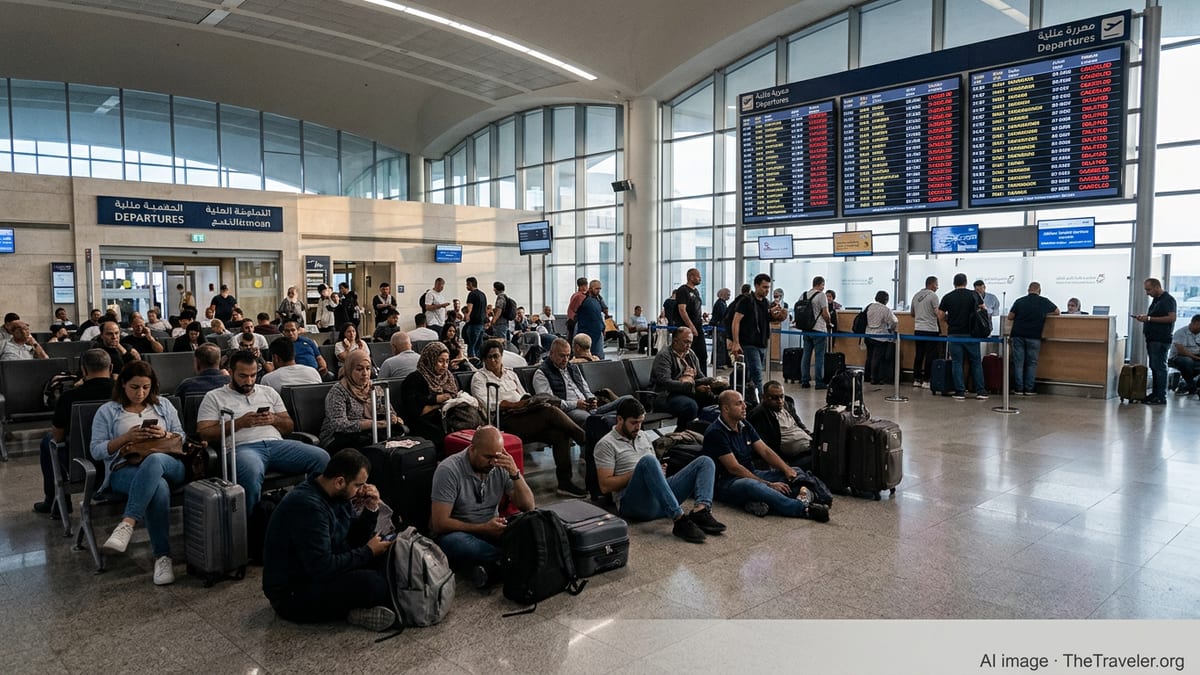
Travelers moving through Jeddah’s King Abdulaziz International Airport on June 6 faced mounting disruption as a series of cancellations and dozens of delays involving Saudia, IndiGo, Nile Air and Flynas rippled across routes linking Riyadh, Mumbai, Cairo and Beirut.
Get the latest news straight to your inbox!
Five Cancellations and 59 Delays Hit Key Regional Routes
Publicly available flight-tracking and schedule data for services operating into and out of King Abdulaziz International Airport indicate that five flights were cancelled and 59 were delayed across a single 24 hour period, affecting departures and arrivals on some of the busiest regional corridors. Services connecting Jeddah with Riyadh, Mumbai, Cairo and Beirut were among those impacted, with Saudia, IndiGo, Nile Air and Flynas all appearing in disruption logs.
The pattern of disruption showed a mix of outright cancellations and rolling delays, some stretching past three hours. While a portion of affected services were domestic links between Jeddah and Riyadh, others were international flights that serve as onward hubs for South Asian labor traffic, religious visitors and business travelers, amplifying the knock-on effects across airlines’ wider networks.
Operational data suggests that the cancellations were concentrated on a handful of rotations, while delays were more broadly distributed across the schedule. Passengers reported missed connections at onward hubs and extended waits in Jeddah as crew and aircraft were repositioned, illustrating how even a limited number of cancellations can cascade into dozens of late departures.
The disruption comes at a time when King Abdulaziz International Airport is handling elevated volumes related to religious travel and the early summer holiday period. With Jeddah serving as the primary international gateway for visits to nearby holy cities, any concentrated operational stress quickly translates into congested departure halls and crowded transfer zones.
Jeddah’s Strategic Role Magnifies the Impact
King Abdulaziz International Airport is Saudi Arabia’s main Red Sea gateway and a critical hub for Saudia and several regional carriers. Its proximity to Mecca and Medina means that movements through Jeddah often spike around major religious seasons, and the airport’s role as a connecting point for labor and leisure traffic across South Asia, the Gulf and North Africa further heightens its sensitivity to schedule disruption.
According to airport reference data, the facility handles tens of millions of passengers a year through a multilevel terminal complex designed to accommodate high-density flows of origin, destination and transfer traffic. When flights from Riyadh, Mumbai, Cairo and Beirut are delayed simultaneously, the impact is not confined to point-to-point passengers but extends to those connecting onward to destinations in Africa, Europe and the broader Middle East.
In the latest disruption, domestic services between Jeddah and Riyadh operated by Saudia and Flynas were affected alongside international operations. These short sectors often serve as feeders into long-haul departures, so even moderate delays can translate into missed onward flights, additional accommodation needs and unplanned rebookings. The resulting queues at transfer and ticketing desks can strain airport resources, especially during already busy periods.
The airport’s conditions-of-use framework places responsibility on airlines to coordinate with the central operations control center during disruption and to communicate schedule changes promptly to passengers. However, the volume and clustering of delays on this occasion meant that information sometimes lagged behind real-time operational changes, contributing to uncertainty for travelers waiting at gates or in check-in areas.
Airlines Struggle With Network Strain and Customer Care
The affected carriers face a complex balancing act between maintaining their broader networks and managing passenger expectations at Jeddah. Saudia, the national carrier, operates an extensive schedule through King Abdulaziz International Airport, while Flynas runs a dense pattern of low-cost services connecting Saudi cities with regional destinations. IndiGo and Nile Air link South Asian and Egyptian traffic flows into Jeddah’s hub.
Recent publicly available advisories and consumer reports point to broader regional capacity pressures, including tight aircraft availability, crew scheduling challenges and lingering constraints on some neighboring airspaces. In such conditions, a disruption on one city pair can quickly reverberate through multiple rotations, leaving airlines with limited flexibility to recover schedules without cancelling selected flights.
Passenger experiences shared on public forums in recent weeks describe difficulty in reaching airline customer service teams in the event of cancellations or long delays, particularly for low-cost carriers. Travelers have reported long response times, limited rebooking options and uncertainty over accommodation or meal support during extended waits. These accounts align with the broader pattern seen in Jeddah, where high demand and constrained resources can leave airlines struggling to keep pace with the volume of inquiries.
For IndiGo and Nile Air passengers connecting via Jeddah from Mumbai and Cairo, delays also raise concerns about missed third-country connections and visa implications if itineraries have to be restructured at short notice. In some cases, travelers may need to rebook segments on alternative carriers at their own expense before seeking refunds or compensation through standard airline channels.
Knock-on Effects Across Riyadh, Mumbai, Cairo and Beirut
The disruption at King Abdulaziz International Airport did not remain confined to Jeddah. Because many of the affected flights operate as turnarounds or feed into onward services, delays and cancellations created visible knock-on effects in Riyadh, Mumbai, Cairo and Beirut. Aircraft arriving late into Riyadh’s King Khalid International Airport, for example, can delay onward domestic or regional services, compounding congestion at key times of day.
On the India-Saudi corridor, which carries large volumes of migrant workers and family visitors, a delayed or cancelled Jeddah rotation can leave passengers in Mumbai facing long waits for the next available seat or rerouting through alternative Gulf hubs. Similar dynamics apply to Nile Air services between Cairo and Jeddah, where slots are tightly scheduled and spare capacity is often limited during peak periods.
Beirut’s role as a regional connector means that any disruption on the Jeddah route can interfere with onward travel to other Levant destinations. Published flight-monitoring data shows that when one end of a city pair experiences repeated delays, the opposing end rapidly accumulates late departures and arrivals as aircraft and crews struggle to return to their planned rotations.
Industry observers note that the interconnected nature of Middle Eastern aviation means that localised problems at one major hub can be felt across multiple countries within hours. The Jeddah disruption illustrates how a cluster of flight issues in a single day can ripple outward to affect travelers who may never pass through King Abdulaziz International Airport itself.
Guidance for Affected Passengers During the Disruption
Travel specialists and consumer-rights advocates generally advise passengers facing similar disruption to monitor their bookings closely through airline apps and third-party flight-tracking tools, rather than relying solely on airport display boards. In fast-moving situations such as the one seen in Jeddah, schedule updates may appear first in digital channels before being reflected on terminal screens.
For those booked with Saudia, IndiGo, Nile Air or Flynas on routes touching Jeddah, Riyadh, Mumbai, Cairo or Beirut, publicly available guidance emphasizes the importance of checking fare rules, rebooking policies and any special advisories issued for the relevant travel dates. Some carriers provide limited complimentary changes or refunds during periods of severe operational stress, especially if delays exceed set thresholds.
Passengers with tight connections or time-sensitive travel plans are encouraged to build additional buffer time into itineraries involving King Abdulaziz International Airport, particularly during peak seasons. Where possible, selecting longer connection windows and avoiding the heaviest bank times can reduce the risk of missed onward flights if delays recur.
While the latest wave of disruption underscores the vulnerability of complex hub operations, it also highlights the value of flexible planning and real-time information for travelers. As airlines and airport operators work to stabilise schedules, passengers moving through Jeddah and its key partner cities remain advised to stay alert to updates and to consider alternative routing options if their plans allow for it.