


More news on this day
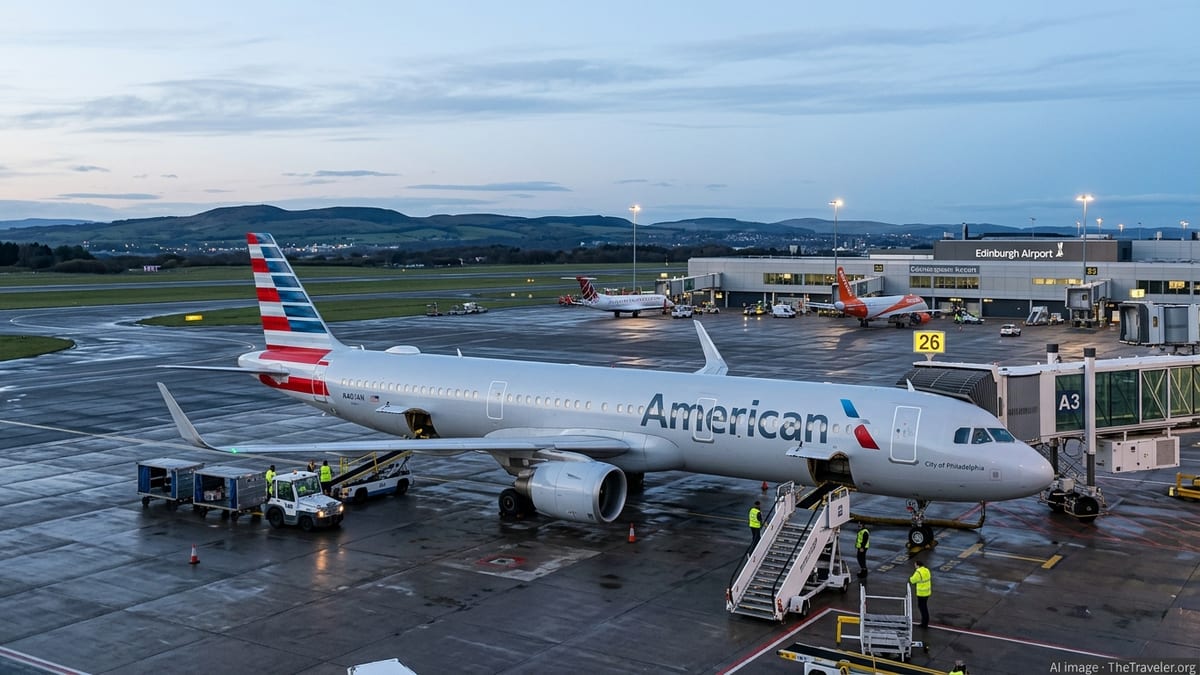
Malta marked a landmark moment in its aviation and tourism history today as the first ever nonstop commercial service by a United States airline touched down at Malta International Airport, delivering American travelers directly to the central Mediterranean archipelago without a single connection.
Get the latest news straight to your inbox!
A Long-Awaited Link Across the Atlantic
The arrival of the inaugural direct service from the United States to Malta caps years of discussion about how to better connect the islands with one of the world’s most important long-haul markets. Publicly available information from Maltese business and tourism bodies has highlighted North America as a key growth region, but until now visitors from the United States typically relied on connections through major European hubs such as London, Frankfurt or Rome.
The new route changes that equation by placing Malta within a single flight of the US East Coast, significantly reducing overall travel time and simplifying journey planning for both leisure visitors and business travelers. Industry observers note that the move aligns with a wider trend among transatlantic carriers to diversify beyond traditional gateway cities and serve smaller but fast-growing Mediterranean destinations directly.
While North American tour operators have been gradually adding Malta to multi-country itineraries, the absence of a nonstop option from any US airline was often cited as a barrier to wider awareness. Today’s landing is widely viewed as the moment when Malta moves from being a secondary add-on in Europe packages to a primary sun-and-culture destination in its own right for the American market.
The choice to inaugurate direct flights at the start of the peak summer season also positions the service to capture immediate demand, as travelers increasingly seek distinctive island experiences in the Mediterranean and look beyond long-established favorites.
What the New Route Means for Travelers
For US-based travelers, the most visible change is convenience. The route eliminates an entire leg of flying for many passengers, along with an airport transfer in Europe that could easily add several hours and a layer of uncertainty to any trip. With a single check-in and a single customs clearance on arrival in Malta, the journey becomes smoother and more predictable for families, older travelers and first-time visitors to Europe.
The schedule is structured to tap into leisure demand, with timings that support long weekend escapes as well as extended stays on the islands. Travel analysts point out that direct flights often stimulate entirely new segments of demand, from short cultural city breaks in Valletta to combined beach and diving holidays that take advantage of Malta’s coastline and neighboring Gozo and Comino.
The new connection is also expected to encourage more independent, tailor-made travel. Whereas previous American visitors frequently relied on packaged tours starting and ending in other European capitals, Malta’s inclusion in online search results for nonstop flights from US cities is likely to spark spontaneous bookings by travelers who may have only recently learned about the islands through television, social media and word of mouth.
In accessibility terms, the route places Malta in more direct competition with other Mediterranean islands that recently secured US links, such as Sardinia and various Greek destinations, strengthening the region’s overall visibility while giving travelers a greater range of choices.
Tourism, Investment and the Maltese Economy
Tourism stakeholders in Malta have long argued that a direct air bridge to the United States would bring more than additional holidaymakers. Business chambers and sector groups have repeatedly stressed that convenient air links are a decisive factor when global companies weigh up where to base regional offices, host conferences or invest in technology and financial services operations.
According to publicly available strategic documents from Maltese business organizations, calls for direct US flights were tied to a broader push to attract higher-spending visitors and professionals, rather than simply adding volume in the peak summer months. The arrival of a nonstop service gives that strategy a tangible foundation, making it easier to pitch Malta as a year-round destination for meetings, incentives and niche events.
Shorter, more reliable travel times are also expected to encourage the Maltese diaspora in North America to visit more frequently and deepen ties with relatives on the islands. Air links play a symbolic role in national identity as much as an economic one, and the sight of a US-registered aircraft at Malta International Airport on a regular basis is likely to become a visible sign of an evolving partnership.
Analysts note that, if the service performs strongly, it could encourage further capacity increases or seasonal extensions in future years. Direct connectivity can also support ancillary sectors, from hospitality and cultural attractions to transport providers and specialist tour operators focused on heritage, gastronomy and diving.
Malta’s Position in a Changing Transatlantic Map
The launch of direct service between the United States and Malta comes at a time of rapid change in transatlantic aviation. US carriers have been adding or adjusting routes to a range of secondary European cities, including coastal destinations in Croatia, Spain and Italy, responding to shifting traveler preferences and the appeal of smaller, more characterful cities over crowded hubs.
Malta’s entry onto this map reflects its growing recognition as a distinctive proposition within the Mediterranean. The country combines a compact UNESCO-listed capital, layered history, English as an official language and a climate that supports a long tourism season, all of which are attractive to US travelers looking for something different from more familiar European circuits.
Industry reports indicate that American interest in Mediterranean islands has surged in recent years, helped by popular culture and social media exposure. Destinations such as Sicily, Sardinia and various Greek islands have seen notable increases in US arrivals after securing new direct links, and analysts expect a similar trajectory for Malta as awareness of the new route spreads through booking platforms and loyalty-program channels.
By positioning itself alongside these established island favorites, Malta is likely to benefit from itinerary combinations as well. Travelers may choose to pair a stay on the islands with time in another European city served by the same US carrier, creating multi-stop trips that were previously more complicated to arrange.
What Comes Next for Malta and US Air Travel
While the inaugural landing is a cause for celebration among aviation enthusiasts and local tourism businesses, attention is already turning to how the route will perform over its first full season. Load factors, traveler feedback and operational reliability will all play a role in determining whether the service remains seasonal or evolves into a year-round link.
Industry commentators highlight that the success of similar new routes elsewhere has depended on coordinated efforts between airlines, tourism bodies and private-sector stakeholders to promote the destination in the originating market. In Malta’s case, that is likely to involve targeted marketing in key US metropolitan areas, support for travel trade partners and a focus on ensuring that visitor experiences live up to rising expectations.
On the US side, the presence of Malta in route maps and loyalty-program communications is expected to raise its profile among frequent flyers who might otherwise have overlooked the islands. If the new connection proves popular, it could prompt additional carriers to explore partnerships or future services, further embedding Malta into the North Atlantic aviation network.
For now, the arrival of the first direct US airline flight is being regarded as a milestone that reshapes how residents and visitors alike think about distance. What was once a multi-stop journey has become a single leap across the Atlantic, bringing Malta’s historic harbors, limestone cities and clear blue seas significantly closer to millions of potential travelers across the United States.