


Two tabs are probably open on your browser right now: one with Booking.com, the other with Airbnb. Both promise great places to stay, yet the experiences they deliver can feel very different in the real world. Choosing the right platform is less about which one is "better" and more about which one fits how you like to travel. From downtown business hotels to one-of-a-kind lofts, and from transparent pricing to navigating new regulations in cities like New York and Barcelona, understanding how each platform really works will help you book smarter.
Get the latest updates straight to your inbox!
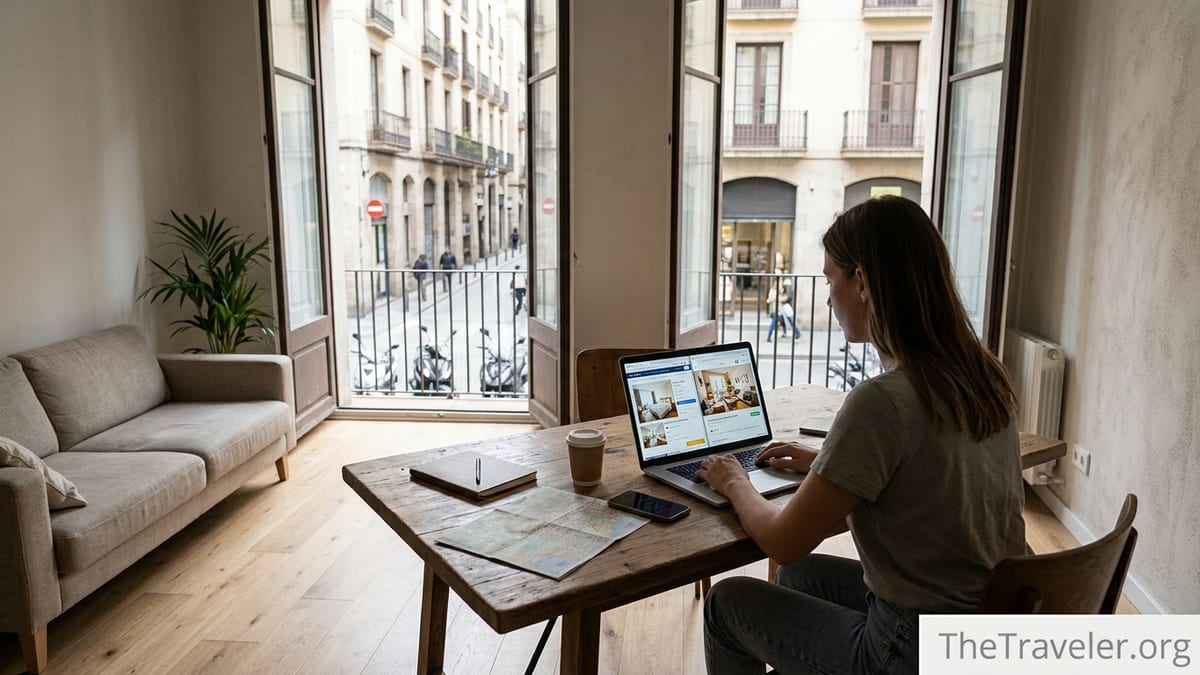
How Booking.com and Airbnb Actually Work Today
At a glance, both platforms do the same thing: connect travelers with places to sleep. In practice, they grew up serving different needs. Booking.com started as a hotel booking site and still feels that way in many cities. Open it for a weekend in Chicago and you will see a wall of hotels first, from big chains near the Magnificent Mile to budget inns by O’Hare. Increasingly, you will also find apartments and vacation rentals in that mix, but the overall experience still resembles a classic hotel search: nightly rate, star rating, breakfast or not, free cancellation or not.
Airbnb emerged from home sharing and still leans into that identity. Search for the same Chicago dates and your first screen will be mostly private apartments, lofts in Wicker Park, shared rooms in Lakeview, and the occasional boutique “guest suite” attached to someone’s house. There are hotels on Airbnb now, but they sit alongside treehouses, tiny homes and lake cabins, not at the top of the list. Where Booking.com feels like comparing hotel products, Airbnb feels like browsing individual hosts and their spaces.
Another key difference is who is visible behind the listing. On Booking.com, you usually book a property brand or management company. Reviews focus on the hotel or apartment itself. On Airbnb, you also see the host: a couple renting their spare floor in Portland, a professional manager running ten condos in Miami, or a retired teacher listing a backyard casita in Tucson. If you like the idea of a named host who messages you with check-in instructions and local tips, Airbnb leans into that. If you prefer an impersonal, front-desk-style relationship, Booking.com usually delivers that.
Finally, the booking mechanics diverge. Booking.com is heavily optimized for instant confirmation: you pick a room, enter your card, and seconds later you have a confirmed reservation. Many Airbnb stays are also instantly bookable, but some popular or quirky listings still require host approval. If you are planning a last-minute stop on a road trip and want that “book and go” certainty at 11 p.m., Booking.com’s hotel-style flow can feel less stressful.
Price, Fees and What You Really Pay
Both platforms market themselves as good value, but the way you are charged can feel different when you get to the checkout screen. On Booking.com, the nightly rate shown in search often looks like a typical hotel price. When you click through, you will see add-ons such as city taxes or resort fees if the property charges them. There is usually no separate “Booking.com service fee” line for guests; the company makes its money from commissions of roughly 10 to more than 20 percent that it charges the property on each reservation, with many hotels and rentals paying around 15 to 20 percent in 2026.
On Airbnb, the platform has been restructuring its fees, especially for hosts, and that can subtly affect what you see as a guest. For years, Airbnb used a “split” model where hosts typically paid about 3 percent and guests paid an additional service fee at checkout, which might push a 100 dollar nightly rate to roughly 115 dollars or more once fees were added. In recent years Airbnb has been expanding a “simplified pricing” model where a single service fee of about 15 percent or slightly more is paid by the host instead. Hosts are encouraged to build that fee into their base nightly rate so that guests see a cleaner price breakdown rather than a large Airbnb service line at the end.
For you as a traveler, this means two things. First, you will still want to click all the way through to the final price on Airbnb because cleaning fees and taxes can add up. A two-night stay in a 90 dollar-per-night cabin near Asheville can jump to 260 dollars or more once a 70 dollar cleaning fee, Airbnb’s baked-in service fee and occupancy taxes are included. Second, comparing a Booking.com apartment and an Airbnb apartment in the same neighborhood is not as simple as comparing the nightly headline rate. On Booking.com, owners generally factor the platform’s commission into the nightly price. On Airbnb, that service fee may be visible in the detail, baked into the rate, or both, depending on where the host is in the transition.
If you are extremely price sensitive, Booking.com can sometimes come out slightly cheaper for standard hotel rooms in busy cities where hotels compete hard on nightly rates and offer frequent deals. For example, on a random midweek in March you might see a chain hotel near Amsterdam Centraal for around 140 dollars per night on Booking.com with breakfast included and a clear total price, while comparable private apartments on Airbnb nearby might list at 125 dollars nightly but climb close to 170 dollars per night once cleaning and service fees are added. In contrast, for longer stays in a single apartment or house, Airbnb can still represent strong value when you divide a week-long total across several travelers.
Accommodation Types: Hotels, Homes and Everything In Between
One of the clearest ways to decide between the two platforms is to ask what kind of space you want. Booking.com is strongest for traditional hotels and serviced apartments. If you are heading to a conference in Singapore and need to be in a specific business district, you will probably find more reliable hotel options with clear star ratings, breakfast buffets and loyalty-program friendly bookings on Booking.com. The same is true if you are traveling to smaller European cities with established hotel stock, such as Lyon or Krakow, where families and business travelers rely on midrange hotels with 24-hour desks.
Airbnb still shines for distinctive stays and longer home-style visits. A family of four driving the California coast who wants a full kitchen and backyard in Santa Cruz is more likely to find it on Airbnb: a three-bedroom bungalow with surfboards in the garage, a hot tub and a dog-friendly yard. In mountain and countryside destinations, such as the Dolomites in Italy or the Lake District in England, Airbnb is often where owners list farm stays, cabins and cottages with a more personal touch, like homemade breakfast items waiting in the fridge or toys and books for children.
There is overlap though, and it is growing. Booking.com has aggressively added vacation rentals, so in Lisbon or Dubrovnik you will now see many of the same apartments that appear on Airbnb, often managed by the same local agencies. In parallel, Airbnb has added small hotels, guesthouses and even some chain properties, so you might find a boutique riad in Marrakech or a tiny hotel in Kyoto listed on both platforms. The differences emerge in how they are presented. Booking.com emphasizes amenities and standardized filters, such as “24-hour front desk” or “family rooms,” while Airbnb gives more space to the story and personality of the host and the property.
Think about how much independence you want. If your dream trip to Paris involves shopping the markets of Belleville and cooking at home each night, a well-equipped apartment with a washing machine and a separate living room on Airbnb might be the better choice. If your ideal weekend is a short city break in Vienna with daily housekeeping and a hotel bar downstairs, Booking.com’s hotel-heavy inventory will match that style more closely.
Flexibility, Rules and What Happens When Things Go Wrong
Cancellation policies and support structures operate in slightly different ways across the two platforms. Booking.com is known for offering a wide range of hotel rates, from deeply discounted non-refundable rooms to flexible rates that can be canceled up to the day of arrival. In practice, this means you can often book a hotel in Berlin for an August festival months in advance with free cancellation, holding a room while you wait for flight prices to drop. If your plans change, you cancel on the app and typically deal directly with the hotel if there are any issues at check-in.
Airbnb’s flexibility depends heavily on each host’s chosen policy. Some listings allow free cancellation up to a week or more before arrival, others are strict and non-refundable once you pass a short grace period. A ski chalet in Colorado run by a professional manager might have a firm policy, similar to a vacation rental agency, while a casual host renting a spare room in Dublin might be more lenient and open to date changes if you message them. When serious issues arise, such as an unclean apartment or a listing that does not match the photos, Airbnb encourages guests to report problems quickly through its Resolution Center so that it can mediate or relocate you.
Customer service feels different too. With Booking.com, front-line problem solving usually happens with the property, not the platform. If you arrive at midnight in Rome and the hotel has lost your reservation, the person at the reception desk is your first call, even though the booking technically came through an app. Booking.com support can step in, especially for overbookings or payment disputes, but many travelers still experience it as a traditional hotel relationship. On Airbnb, travelers often expect the platform itself to play a bigger role in disputes, particularly in cases of safety, misrepresentation or host cancellations at the last minute.
Your risk tolerance matters here. If you are on a backpacking trip through Southeast Asia and prioritize cheap private rooms plus generous free cancellation, Booking.com’s mix of budget hotels and guesthouses with flexible policies in cities like Bangkok, Hanoi and Kuala Lumpur can be reassuring. If you are booking a one-of-a-kind cliffside villa in Santorini for a honeymoon, you may accept a stricter Airbnb cancellation policy in exchange for the unique property, but you will want to read reviews carefully and confirm details like access, noise and privacy before you commit.
Local Regulations, Safety and Reliability
Around the world, local governments have been tightening rules on short-term rentals, especially entire apartments rented out year-round in dense cities. This has affected Airbnb far more than Booking.com because Airbnb’s core inventory is often private homes. New York City is a stark example. Following the enforcement of Local Law 18 in 2023 and ongoing crackdowns, the number of legal short-term rentals available on Airbnb for stays under 30 days has dropped sharply, and many travelers now find they must either stay in licensed hotels or book longer stays that meet local rules. In that same city, Booking.com remains dominated by hotels and registered accommodations that fit comfortably within existing hospitality regulations.
Barcelona is following a similar path. The city announced its intention to phase out thousands of tourist apartments by 2028, putting pressure on unlicensed listings that have been popular on platforms like Airbnb. For travelers, this means that an attractive, cheap apartment in the Gothic Quarter advertised as available every week of the year may not always be operating within the rules, and enforcement can lead to sudden delistings or tighter checks at check-in. Hotels and regulated guesthouses available through Booking.com are generally less affected by these crackdowns because they already operate under the city’s tourism license framework.
That does not mean Booking.com is untouched by regulation. Many of the same apartments you see on Airbnb in cities like Lisbon, Prague and Athens are distributed on Booking.com too, particularly through professional managers. The difference is that when cities impose registration requirements or cap the number of nights a property can be rented, those restrictions tend to fall hardest on unhosted, full-time vacation rentals. If your priority is staying clearly on the right side of local rules in heavily debated markets, you may gravitate toward traditional hotels, whether you find them on Booking.com or Airbnb.
Safety perceptions also vary by platform and property type rather than by brand alone. A centrally located three-star hotel in Tokyo with a staffed lobby, secure elevators and on-site security can feel more predictable than a private apartment in the same city where key handoff happens via a lockbox in an alley. Conversely, a well-reviewed Airbnb guest suite in a quiet residential area of Vancouver, hosted by someone who lives on-site, may feel safer to a solo traveler than a large, anonymous hotel. In both cases, reading recent reviews is critical, but if you are especially concerned about arriving late at night, traveling alone or carrying expensive equipment, the 24-hour staffing common in hotels booked through Booking.com can be reassuring.
Matching Platforms to Your Travel Style
Once you understand the structural differences, the platform that fits you best starts to track closely with your travel style, trip length and companions. Business travelers, for instance, tend to favor Booking.com because it lines up neatly with corporate needs: chain hotels near conference centers in Frankfurt, airport hotels in Dallas with shuttle buses, and midrange properties in suburban office parks near London or Singapore. Corporate travel policies often prefer hotels that issue invoices in standard formats and have predictable check-in times, daily housekeeping and breakfast options, all of which Booking.com surfaces clearly.
Families and small groups on vacation often lean toward Airbnb for space and homelike comfort. Two parents traveling with teenagers to Orlando may prefer a three-bedroom townhouse with a kitchen and laundry in a resort community near the theme parks, rather than booking two hotel rooms and eating out for every meal. On Airbnb, that townhouse might cost 220 dollars per night plus fees, but when you factor in the ability to cook breakfast and dinners, do laundry and have separate bedrooms, the practical value can outweigh the line-item price. The same logic applies to multi-generation trips in Tuscany, ski weeks in Colorado or month-long digital nomad stays in Mexico City.
Spontaneous city breakers and point-hunters sit somewhere in between. If you like booking a Friday afternoon train to Brussels on a whim and deciding on a place to stay in the station cafe, Booking.com’s wide inventory of last-minute hotel availability suits that style. You can filter instantly for “no prepayment needed” and “free cancellation,” and be on your way to the Grand Place with a confirmed room in minutes. If you favor quirky, slow travel, such as renting a cabin with no Wi-Fi in rural Sweden for a writing retreat, or staying on a small organic farm in Portugal, Airbnb is more likely to surface properties with that kind of personality.
Think, too, about how sociable you want your stay to be. Some Airbnb listings, especially private rooms in shared homes, naturally involve meeting hosts and sometimes their families, pets or roommates. For many solo travelers or cultural explorers, those conversations over morning coffee are half the point. In contrast, if you prefer anonymity, daily cleaning and room service, a standard hotel booked on Booking.com will protect your privacy and routine.
Strategy: When to Use Both Platforms on the Same Trip
You do not have to be loyal to one platform. Many experienced travelers mix Booking.com and Airbnb on a single trip to match each leg with the right style of stay. Consider a three-week journey through Japan. You might book standard business hotels through Booking.com in Tokyo and Osaka for their convenient station locations and reliable front desks, then switch to a traditional house on Airbnb in a smaller town like Takayama for a few slower days with a kitchen and tatami rooms. Using both lets you balance comfort, cultural immersion and budget.
The same approach works in Europe. A couple on a rail trip through Italy might stay in hotels booked on Booking.com in Milan and Florence, where they spend most of the day out and need simple, central rooms. For a week in Puglia, they could move into a trullo house or countryside villa found on Airbnb, with outdoor space and a pool, making it easier to cook, work remotely and invite friends to join. In the United States, you might fly into Denver and book a chain hotel through Booking.com near Union Station for the first night, then pick up a rental car and move into an Airbnb cabin in Estes Park or Winter Park for the rest of the trip.
This dual-platform strategy also gives you backup options. If you find that short-term rental regulations in a city like New York or Barcelona have made it difficult to find legal, good-value apartments on Airbnb for a particular date range, you can check Booking.com for hotels and professionally managed aparthotels that are fully compliant. Conversely, in remote or less touristy regions where hotel infrastructure is sparse, such as rural Iceland or parts of the Scottish Highlands, Airbnb may be where the most interesting and comfortable options live, from converted barns to modern cabins with floor-to-ceiling windows.
As you do this, keep your own patterns in mind. Some travelers like to minimize risk by reserving cancelable Booking.com hotels first, then swapping in a special Airbnb once flights are locked and vacation days are approved. Others do the opposite, grabbing a dream Airbnb farmhouse in Provence months in advance and then adding flexible urban hotel nights around it. There is no single right way, but being conscious about why you choose one platform over the other makes each booking feel more deliberate and less like guesswork.
The Takeaway
Neither Booking.com nor Airbnb is universally better. Each excels for certain kinds of trips, personalities and risk profiles. Booking.com is strongest when you want hotel-style reliability: late-night check-in after a delayed flight, standard amenities, loyalty points, and flexible cancellation on city breaks and business travel. Airbnb stands out when your priority is space, character and local flavor, from coastal cottages and desert domes to urban apartments that feel like a friend’s home.
If you travel mostly for work, prefer predictability and rarely cook on the road, you will likely feel more at home on Booking.com. If you travel slowly, often with family or friends, enjoy having a kitchen and like discovering neighborhoods through hosts’ recommendations, Airbnb may better match your style. In many cases, the savviest strategy is to treat them as complementary tools rather than rivals, switching between them based on destination, trip purpose, budget and your own comfort with uncertainty.
Whichever platform you use, the fundamentals remain the same: scrutinize recent reviews, study the final price breakdown, understand cancellation policies, and think about how local regulations might affect your stay. With those habits, you can make either Booking.com or Airbnb, or both, work in your favor and build trips that feel aligned with the way you actually like to travel.
FAQ
Q1. Is Booking.com usually cheaper than Airbnb?
Prices vary by destination and dates. Hotels on Booking.com can be cheaper for short city stays, while whole homes on Airbnb can offer better value for longer trips or groups, especially when you factor in cooking and laundry.
Q2. Which is safer: Booking.com or Airbnb?
Safety depends more on the specific property and neighborhood than the platform. Hotels booked via Booking.com often have 24-hour staff, while many Airbnbs offer a more residential feel. Reading recent reviews and considering arrival time, building access and your comfort level is essential.
Q3. How do the fees compare between Airbnb and Booking.com?
Booking.com typically charges commission to the property, which is built into the room rate, so guests rarely see a platform fee line. Airbnb uses a service fee model that is partly or fully built into the nightly price, plus cleaning fees and taxes, so the total can rise significantly between the first price you see and the checkout page.
Q4. Which platform is better for business travel?
Booking.com generally suits business travel better because it emphasizes hotels near business districts, standard amenities like desks and Wi-Fi, loyalty-friendly bookings and flexible cancellation policies that align with corporate travel rules.
Q5. Which platform is better for families?
For families, Airbnb often works well because you can book entire homes with multiple bedrooms, kitchens and laundry, which can reduce meal costs and make longer stays more comfortable. Booking.com can still be ideal if you prefer family rooms in hotels or aparthotels with breakfast and daily housekeeping.
Q6. How do local regulations affect using Airbnb vs Booking.com?
Many cities have tightened rules on short-term rentals, especially entire apartments on platforms like Airbnb, which can reduce inventory or change what is legal. Hotels and officially registered accommodations found on Booking.com are usually less affected, so in heavily regulated cities it may be simpler to book traditional properties.
Q7. Can I earn hotel points on either platform?
Some hotel chains allow you to earn or redeem points even when you book through Booking.com, but many prefer direct bookings. Airbnb does not have traditional hotel loyalty points, though some travelers value the flexibility and variety of stays more than points.
Q8. Which platform has better customer support?
On Booking.com, issues are often handled directly by the hotel or property, with the platform stepping in for serious problems. On Airbnb, guests tend to interact more with Airbnb’s support team in addition to hosts. Experiences vary, so reading reviews about responsiveness and how issues were resolved is important.
Q9. Are cleaning fees only an Airbnb thing?
Cleaning fees are more visible and commonly itemized on Airbnb, where many hosts charge a separate cleaning amount per stay. On Booking.com, cleaning is usually built into the nightly rate for hotels, though some vacation rentals there may also add explicit cleaning or service fees.
Q10. How should I decide which platform to use for my next trip?
Start with your priorities: hotel-style services and flexibility, or home-style space and character. Then compare total prices, reviews, locations and cancellation policies on both platforms for your dates. Many travelers check both sites and choose the option that best fits the specific trip rather than sticking to one platform every time.