


More news on this day
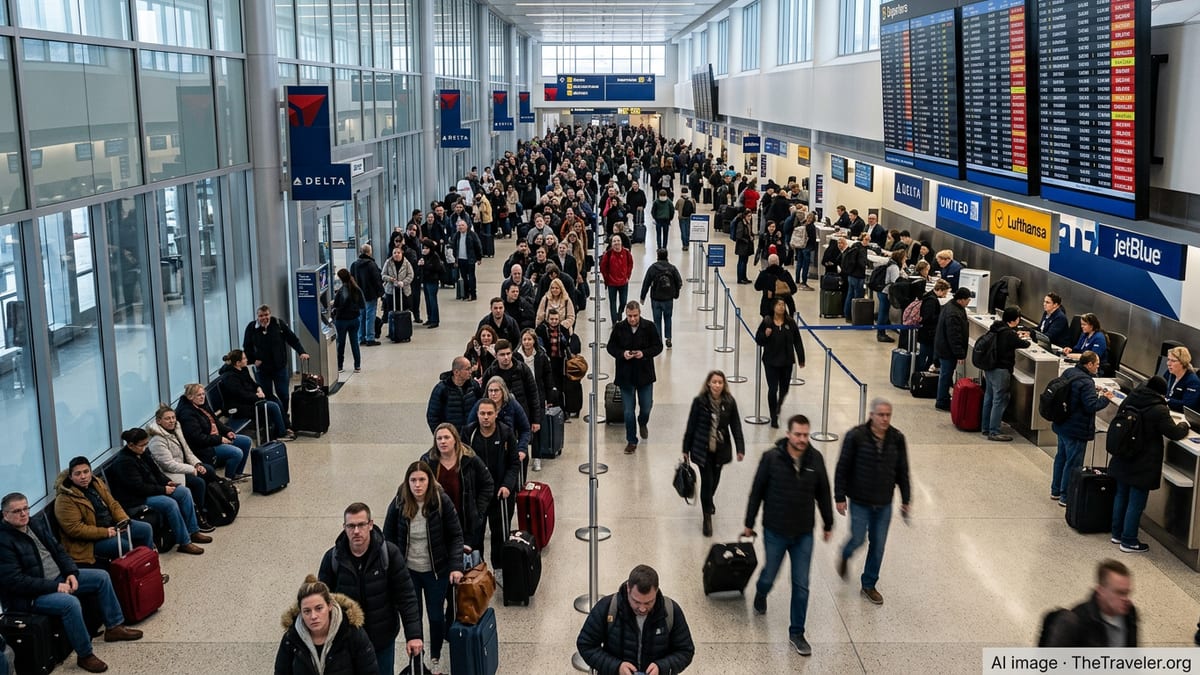
Passengers traveling through several major US airports, including Charlotte Douglas International Airport, Washington Dulles and Fort Lauderdale, faced mounting frustration as hundreds of flights were delayed or cancelled across domestic and international routes, disrupting plans for travelers heading to and from Los Angeles and other key destinations.
Get the latest news straight to your inbox!
Wave of Disruptions Across Busy U.S. Gateways
Publicly available flight-tracking data and aviation-focused coverage indicate that a new wave of operational turbulence has spread across the U.S. air network, affecting both large coastal hubs and key connecting airports inland. At Charlotte Douglas International Airport, one of the country’s busiest connection points, travelers reported hours-long waits, crowded concourses and a carousel of changing departure times as carriers worked to re-sequence schedules.
Conditions were similarly strained at Washington Dulles International Airport, where long-haul departures and inbound connections were forced into holding patterns on the ground and in the air. Flight-status boards reflected a patchwork of late departures, rolling gate changes and cancellations that rippled through domestic and transatlantic routes, leaving many passengers scrambling for alternatives.
In South Florida, Fort Lauderdale–Hollywood International Airport saw knock-on impacts as delays at other hubs bled into its tightly timed bank of departures. Travelers heading north or west from the leisure-heavy gateway encountered bottlenecks tied to late-arriving aircraft, crew time limits and lingering schedule imbalances from earlier in the day.
Across these and other affected airports, aggregated data pointed to more than 800 flights delayed or cancelled in a single operating window, underscoring how quickly small pockets of disruption can cascade through a highly interconnected system and strand passengers far from their intended destinations.
Alaska Airlines, JetBlue and Other Carriers Caught in the Snarl
The disruption did not center on a single airline. Reports indicate that Alaska Airlines, JetBlue and several other U.S. and international carriers all faced schedule challenges as the day progressed. For Alaska Airlines, which relies heavily on tight turnarounds at its West Coast hubs and major spoke airports, delays at key connection points contributed to a series of late departures and scattered cancellations on longer-haul services.
JetBlue, with a route map that leans on East Coast and Caribbean operations but also includes transcontinental links, likewise appeared in delay tallies as aircraft and crews arrived late from earlier segments. Aviation trackers and passenger accounts highlighted a mix of moderate holdups and more extended waits on routes feeding major hubs, including those that connect through Fort Lauderdale and other busy transfer points.
Other carriers, from full-service legacy airlines to low-cost operators, were also represented in the disruption figures. Some flights were reportedly cancelled outright when crew duty-time limits were reached or when aircraft could not be repositioned quickly enough to operate a later leg. In other cases, services departed significantly behind schedule, only to encounter further congestion when they landed at already-strained airports.
The result for passengers was a patchwork of outcomes: some managed to depart only slightly behind schedule, while others found themselves rebooked onto red-eye flights, routed through unfamiliar hubs, or facing overnight stays as airlines worked through backlogs created by the day’s irregular operations.
Los Angeles Routes Among Those Heavily Affected
Los Angeles, one of the most important nodes in the U.S. and Pacific air network, featured prominently in the web of disruption. Flights bound for the Los Angeles basin from Charlotte, Washington Dulles, Fort Lauderdale and other hubs were among those delayed or cancelled, affecting both leisure travelers and business passengers with onward connections.
Tracking data and itinerary snapshots shared publicly suggest that several Los Angeles–linked routes operated with substantial delays, while a smaller number were scrubbed from schedules entirely. Some passengers reported being rerouted through alternative West Coast hubs or shifted to later departures, adding hours to transcontinental journeys that would normally follow a predictable pattern.
International services feeding into Los Angeles also felt secondary impacts when their inbound aircraft or crews were delayed on earlier domestic legs. Where possible, airlines appeared to prioritize certain long-haul departures, but delays at feeder airports such as Charlotte Douglas or Fort Lauderdale still translated into missed connections and extended layovers for travelers continuing onward to Asia, Latin America or the South Pacific.
For the broader Los Angeles travel market, the day’s turbulence served as a reminder of how dependent long-haul itineraries are on the smooth functioning of domestic links, particularly when those links traverse already-congested hubs on the East Coast and in the South.
What Is Driving the Latest Round of Delays and Cancellations
While specific causes varied flight by flight, aviation coverage and operations data point to a familiar combination of factors driving the latest disruption: shifting weather systems, air-traffic management constraints, aircraft availability challenges and tight crew scheduling. Even modest storms or low-visibility periods at key airports can force ground stops and flow-control measures that ripple outward to seemingly unrelated routes hours later.
Airlines continue to operate highly optimized schedules that leave limited slack for irregular operations. When inbound flights arrive late, crews can quickly approach regulated duty limits, and a delay of even 60 to 90 minutes early in the day can compound into cancellations later if backup staffing or spare aircraft are not easily available at the right location.
Recent analyses of airline operations in the United States have also highlighted how interconnected route networks can turn localized issues into nationwide problems. A single clogged hub or a temporary technology outage can set off a chain of gate changes, rolling delays and missed connections, particularly at airports like Charlotte Douglas and Washington Dulles that serve as critical transfer points for both domestic and international traffic.
For travelers, this means that disruptions may not always be linked to obvious local conditions. A clear sky departure from one city can still be delayed by storms several states away or by earlier schedule irregularities that limit the availability of aircraft and crews across the network.
What Stranded Passengers Can Do Next Time
As thousands of travelers discovered during the latest disruption, preparation and swift action can make a significant difference when delays and cancellations spiral. Aviation consumer guidance consistently recommends monitoring flight status across multiple channels, including airline apps and independent flight-tracking platforms, in the 24 hours leading up to departure and again on the way to the airport.
When cancellations occur, publicly available information on carrier policies indicates that many airlines will attempt to rebook passengers automatically on the next available flight, though options may be limited when large numbers of services are affected at once. In some situations, travelers may be able to secure more favorable routings or departure times by using mobile rebooking tools rather than waiting in long airport queues.
Passengers facing overnight delays can review airline customer service commitments to understand what forms of assistance might be offered, which can range from meal vouchers to hotel accommodation depending on the cause of the disruption and local availability. Travel insurance policies and premium credit card protections may also provide reimbursements for additional costs such as lodging, meals or ground transportation when trips are significantly interrupted.
For those planning upcoming journeys through busy hubs such as Charlotte, Washington Dulles, Fort Lauderdale or Los Angeles, recent events highlight the value of longer connection windows, early-morning departures where feasible, and flexible itineraries that offer alternative routing options if the unexpected happens.