


More news on this day
Hundreds of passengers were left stranded at major U.S. hubs including Charlotte Douglas International Airport, Washington Dulles and Fort Lauderdale after a fresh wave of delays and cancellations rippled across the domestic network, disrupting operations for Alaska Airlines, JetBlue and several other carriers on routes to and from Los Angeles.
Get the latest news straight to your inbox!
Widespread Disruptions Hit Key East Coast and Sun Belt Hubs
Flight-tracking data and industry dashboards for late May 2026 show a sharp uptick in disruptions across the United States, with a cluster of delays and cancellations concentrated at historically busy hubs. Charlotte Douglas International Airport, Washington Dulles International Airport and Fort Lauderdale–Hollywood International Airport all reported significant schedule irregularities as weather systems and congested airspace slowed traffic in multiple regions at once.
Operational summaries compiled on May 26 and May 27 indicate that more than 800 flights nationwide were either delayed or cancelled over a short period, with at least half a dozen of those involving services linked to Los Angeles. The resulting knock-on effects left passengers facing missed connections, overnight stays and rebooked itineraries across both domestic and international networks.
Publicly available information from flight analytics firms shows that Washington Dulles alone has recently seen more than one hundred flights delayed in a single day, underscoring how vulnerable large connecting hubs remain when storms overlap with already tight schedules. Similar patterns were observed at other major gateways, where even short ground stops or flow-control measures quickly cascaded into longer waits at departure gates and on arrival ramps.
Fort Lauderdale, which has been adjusting to rapid changes in low-cost carrier operations and shifting route maps, has emerged as a particular pressure point. The airport serves as a key base for JetBlue and an important station for Alaska Airlines’ transcontinental network, which means disruptions there can spread quickly along East Coast, Caribbean and West Coast corridors.
Alaska Airlines and JetBlue Services Among Those Affected
Alaska Airlines and JetBlue, both heavily invested in transcontinental flying, have been among the carriers most visibly caught up in the latest round of irregular operations. Schedules show Alaska operating long-haul routes linking Seattle and Los Angeles with Fort Lauderdale, while JetBlue runs dense networks connecting Washington, Fort Lauderdale and Los Angeles, making these airlines particularly exposed when coastal hubs slow down.
Recent route data confirms that Alaska’s expanded presence at Los Angeles and Fort Lauderdale includes early-morning and overnight operations, where even modest delays can disturb aircraft rotations for the rest of the day. When weather or air traffic control initiatives constrain departures from the West Coast, aircraft and crews are sometimes out of position for subsequent segments to Florida or the Mid-Atlantic, increasing the odds of cancellations or rolling delays.
JetBlue’s performance has been under scrutiny throughout 2026, with independent punctuality rankings placing the carrier near the bottom of major U.S. airlines for on-time arrivals. Analysts note that a high proportion of JetBlue’s flights operate in and out of congested airspace on both coasts, meaning that any national disruption tends to be magnified in the airline’s daily operation. The latest wave of delays and cancellations affecting routes between Fort Lauderdale, Washington and Los Angeles appears to follow this pattern, with individual services running hours behind schedule or being scrubbed late in the day.
While only a handful of Alaska Airlines and JetBlue flights directly connecting to Los Angeles were fully cancelled in the most recent disruption window, the airlines’ broader networks felt the impact through missed connections and forced rebookings. Travelers reported long lines at customer service desks and heavy dependence on mobile apps to secure alternative itineraries.
National Weather and Airspace Constraints Drive the Latest Wave
Industry reporting for mid and late May 2026 links the spike in disruption to a combination of storm systems and chronic congestion in parts of the National Airspace System. Recent summaries describe single days where more than 2,000 flights across the country were delayed and close to 100 were cancelled, with the worst bottlenecks at coastal hubs such as Los Angeles, San Francisco, Phoenix, the Washington-area airports and Seattle.
Operational notes from national airspace monitoring tools show periodic ground delay programs and flow restrictions affecting the Washington region and other high-traffic corridors during peak travel hours. Even when these measures are relatively brief, they reduce the number of takeoffs and landings allowed per hour, creating queues that can take much of the day to clear. Airlines then juggle aircraft and crew assignments to stay within duty-time rules, which can result in last-minute cancellations when recovery options run out.
Charlotte Douglas and Fort Lauderdale, both heavily used as connecting points by multiple carriers, are particularly susceptible to these systemic strains. A delay on a single inbound Los Angeles service can cause a ripple effect across short-haul spokes feeding the Carolinas, Florida and the Caribbean, as aircraft that were supposed to turn quickly instead remain on the ground awaiting connecting passengers, fresh crews or better weather.
Observers note that, although the latest disruptions are substantial, they fit a broader pattern of post-pandemic volatility in U.S. air travel. Seasonal storms, tight staffing and full schedules have combined to keep delay statistics elevated, despite airlines’ efforts to pad block times and add schedule buffers.
Impact on Passengers at Charlotte, Dulles, Fort Lauderdale and Beyond
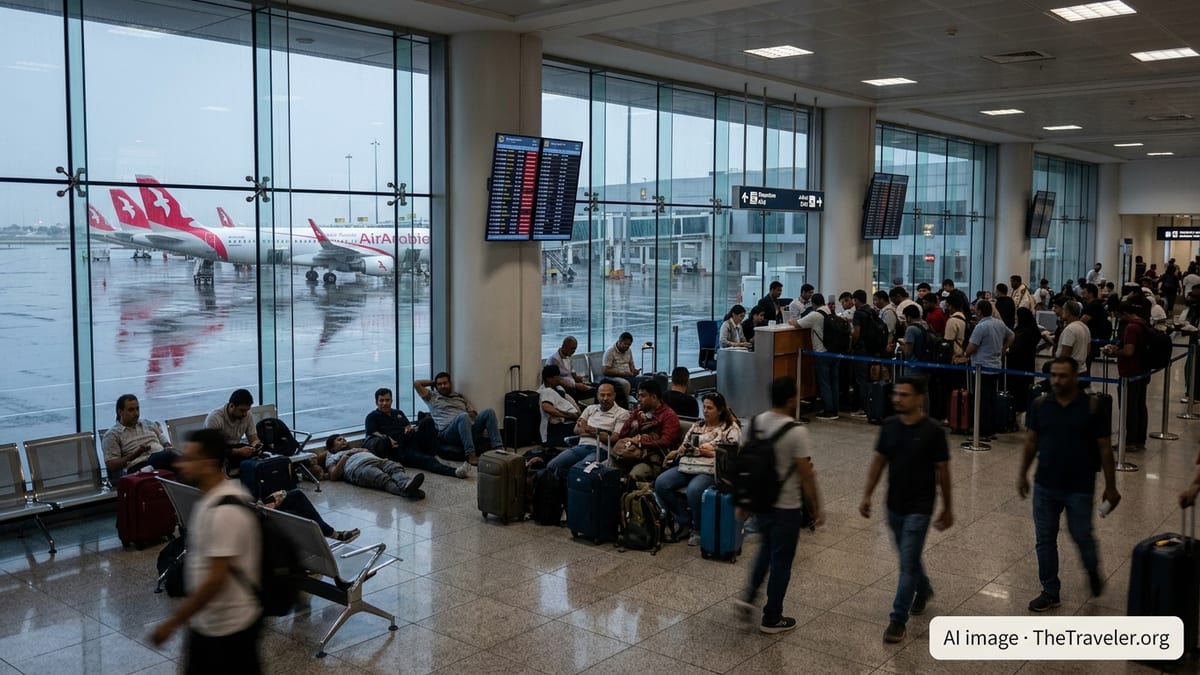
For travelers on the ground, the statistics translate into long hours in terminal seating areas and at crowded boarding gates. At Charlotte Douglas, passengers on affected departures toward the West Coast and Northeast reported extended waits as aircraft arrived late from prior segments, leading to boarding times being repeatedly pushed back.
At Washington Dulles, which serves as a major international gateway as well as a domestic hub, the latest disruptions complicated connections for long-haul passengers. When regional and transcontinental flights departed late or were cancelled outright, some travelers arriving from Europe, the Middle East and Asia were forced to overnight in the Washington area or reroute through other hubs to complete their journeys.
In Fort Lauderdale, irregular operations created particular challenges for leisure travelers heading to or from Caribbean destinations or connecting onward to Los Angeles and other West Coast cities. The airport’s role as an important transfer point for JetBlue, along with recent structural shifts in the low-cost segment, has left schedules tightly packed, so even modest weather-related disruptions have outsized effects.
Travel advocacy groups caution that, in such conditions, passengers often struggle to obtain clear, timely information about their rights and options. Some same-day travelers may be eligible for meal vouchers, hotel accommodations or rebooking at no additional fare, depending on the cause of the disruption and the individual airline’s policies.
What Travelers Can Do as Summer Demand Builds
With the peak summer travel season beginning, aviation analysts expect that episodes of large-scale disruption like those seen this week will remain a recurring risk, especially on busy coastal routes and at major hubs like Charlotte, Washington Dulles, Fort Lauderdale and Los Angeles. The combination of strong demand and complex route networks operated by Alaska Airlines, JetBlue and their competitors means that recovery windows are narrow and schedules are vulnerable when weather or airspace restrictions intervene.
Consumer guidance available from travel advisors and passenger rights organizations generally urges travelers to build flexibility into their plans during periods of heightened disruption. Flying earlier in the day, avoiding tight connections through known congestion points and monitoring flight status frequently via airline apps or airport displays are among the most common recommendations.
Travelers who experience delays or cancellations are also encouraged to review their airline’s published policies and, where relevant, to explore eligibility for compensation or refunds under applicable regulations and contractual terms. Several third-party services now aggregate data on performance, helping passengers understand whether their situation aligns with typical patterns for a given route or carrier.
As operations stabilize following this latest round of disruptions, attention is likely to remain focused on how airlines, airports and regulators manage capacity and communications during future weather events. For now, passengers moving through Charlotte, Washington Dulles, Fort Lauderdale and other major gateways are being reminded that, even in an era of high-frequency schedules, air travel in the United States can still be highly sensitive to the forces of weather and congestion.