


More news on this day
Hundreds of passengers were left in terminal queues and boarding areas across China on May 14 as Shenzhen Airlines, Lucky Air, Air China, China Eastern and several other carriers registered 287 flight delays and 26 cancellations across major hubs including Shenzhen, Kunming, Beijing and Shanghai, according to real-time tracking data and aggregated operations reports.
Get the latest news straight to your inbox!
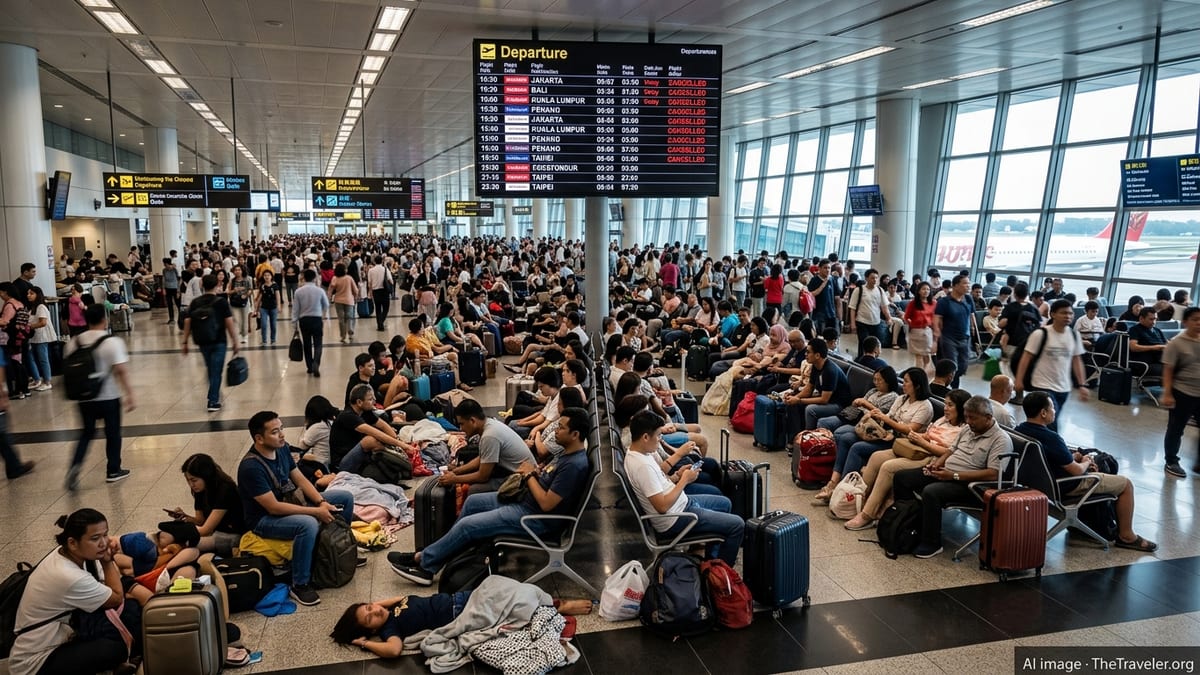
Major Chinese Hubs Grapple With Fresh Wave of Disruption
Operational data for May 14 indicates that disruption is concentrated around China’s busiest airports, with Shenzhen Bao’an, Kunming Changshui, Beijing Capital and Daxing, and Shanghai’s Pudong and Hongqiao terminals all reporting elevated levels of delays and cancellations compared with an average weekday. The latest tallies across mainland hubs point to 287 late departures and arrivals and at least 26 outright cancellations linked to a mix of full-service and low-cost carriers.
Publicly available flight-status boards show Shenzhen Airlines and Lucky Air among the most affected operators on key domestic corridors out of Shenzhen and Kunming, while national players Air China and China Eastern are registering knock-on delays on trunk routes connecting Beijing and Shanghai with southern and western cities. Several regional affiliates and partner airlines are also appearing in delay and cancellation lists, magnifying the impact for travelers relying on tight domestic connections.
Travel-industry monitoring from within the region suggests that the disruption is heaviest in mid-afternoon and evening waves, traditionally key departure banks for business and leisure traffic. As delays stretch into multiple hours for some services and cancellations remove entire rotations from the schedule, airports are reporting crowded departure halls, long rebooking queues and increased demand for last-minute hotel rooms near major terminals.
Aggregated data sets that track on-time performance across Asia point to China as one of the focal points of a broader regional spike in irregular operations this week, with today’s figures at Chinese hubs adding to an already elevated baseline of delays and cancellations recorded since early spring.
Shenzhen, Kunming and Coastal Megacities See Bottlenecks
Shenzhen Bao’an International Airport is again emerging as a pressure point, with China’s tech hub handling dense traffic flows along the south–north axis and into western provinces. Domestic route maps show Shenzhen Airlines, Air China and China Eastern all operating multiple daily rotations between Shenzhen and cities such as Beijing, Shanghai, Kunming and Chengdu, meaning even a limited number of cancellations can cascade across connecting networks.
Kunming Changshui International Airport, home base for low-cost carrier Lucky Air, is also experiencing significant knock-on effects. Real-time boards list a series of delayed departures on Yunnan-focused routes, where Lucky Air, Shenzhen Airlines and larger groups including China Eastern share capacity. When an outbound sector runs late or is cancelled, inbound aircraft and onward connections often fall out of sync, contributing to longer waits for passengers already in transit.
Along China’s eastern seaboard, Beijing and Shanghai are seeing a combination of late arrivals from weather- and congestion-affected interior routes and smaller clusters of cancellations on selected services. Earlier episodes of disruption this year at Shanghai Pudong highlighted how quickly several dozen cancellations can translate into hundreds of stranded passengers, and today’s events appear to be following a similar pattern, though on a slightly smaller scale, as airlines adjust schedules and passengers compete for limited remaining seats on alternative departures.
Secondary airports feeding these major hubs are also affected as airlines reposition aircraft and crews. Even when smaller fields report normal operations, passengers originating there may still face missed connections and forced overnights once they arrive at Beijing, Shanghai or Shenzhen and discover that their onward flight has been delayed or removed from the schedule.
Weather, Airspace Constraints and Network Adjustments Blamed
While exact causes vary by flight and carrier, a mix of adverse weather, airspace restrictions and ongoing network adjustments appears to sit behind today’s disruption. Spring in East and South China can bring fast-changing storms and low-visibility conditions that reduce airport capacity and force traffic-control authorities to meter arrivals and departures, generating rolling delays across tightly packed schedules.
In addition, regional aviation coverage over recent weeks has highlighted how military activity, temporary airspace closures and re-routed traffic across parts of Asia and the Middle East have contributed to longer flight paths and tighter turnarounds. When aircraft and crews arrive late from upstream sectors, even a modest delay window can erase buffer times built into domestic rotations, leading airlines to consolidate flights or cancel lightly booked services in order to protect peak departures.
Separately, published reports on Chinese airline planning note that several carriers, including Air China and China Eastern, have been fine-tuning domestic and short-haul international networks in response to evolving demand and cost pressures. On days with marginal weather or regional congestion, these adjustments can reduce flexibility to absorb shocks, as spare aircraft and standby crews are less readily available to plug gaps created by sudden delays or technical issues.
Observers of China’s aviation market point out that today’s figures align with a broader pattern of volatility seen since the start of the year, with some days passing largely smoothly and others marked by clusters of cancellations on key corridors that funnel traffic through a handful of mega-hubs.
Stranded Travellers Face Long Queues and Limited Options
For individual travelers, today’s statistics translate into hours spent in line at customer-service counters and departure gates as they seek clarity on revised departure times and alternative routing options. Social-media discussion and traveler forums have been carrying accounts in recent weeks of passengers in China encountering last-minute cancellations, especially on Shenzhen- and Shanghai-linked routes, and then struggling to secure prompt rebooking, refunds or accommodation.
Recent first-hand reports involving Shenzhen Airlines and China Eastern describe cases in which passengers were notified of schedule changes or cancellations close to departure, leaving little time to adjust plans. Some travelers have reported being moved to departures later the same day or the following morning at no extra charge, while others recount buying walk-up tickets on competing carriers or covering hotel costs themselves when same-day alternatives were unavailable.
Guidance from travel-rights organizations and aviation commentators emphasizes the importance of documenting every interaction with airlines, from cancellation notices to boarding passes and receipts, in case passengers later pursue refunds or compensation under carrier contracts of carriage or applicable consumer-protection rules. Information published by major Chinese airlines outlines varying levels of support for delays and cancellations, often distinguishing between disruptions caused by weather or air-traffic control and those attributed to airline operations.
With limited spare capacity on peak domestic routes, especially around public holidays and major events, travel specialists suggest that passengers build in longer connection windows when routing through Chinese hubs and consider travel insurance policies that explicitly cover missed connections, schedule changes and forced overnights due to disruption.
What Travellers Can Do If Their Flight Is Hit
Advisories issued by travel agencies and consular services in recent months recommend that passengers flying in or out of China monitor flight status closely on the day of travel and again in the hours before leaving for the airport. Many disruptions are now reflected first in carrier apps and third-party tracking platforms, giving travelers a brief but valuable window to adjust surface transport, contact hotels or rebook online before airport queues lengthen.
When cancellations occur, passengers are generally encouraged to seek written confirmation of the disruption and any rebooking or refund options offered. Public information from China’s major carriers suggests that, in some circumstances, travelers can change to a later or earlier flight without additional fees or request a refund if the new schedule no longer fits their plans. In practice, travelers often report that persistence and calm negotiation at service desks can improve their chances of securing a satisfactory outcome.
Observers also highlight the value of diversifying travel plans where possible. On routes with competitive rail alternatives, such as those linking Shenzhen, Guangzhou, Shanghai and Beijing, high-speed trains can provide a back-up option when air services are unreliable, although tickets may sell out quickly on disruption-heavy days. For longer journeys, especially those connecting to long-haul flights, travel planners suggest allowing overnight buffers in hub cities instead of relying on tight same-day transfers.
As the day progresses and airlines work through today’s backlog of 287 delays and 26 cancellations, the situation at China’s main hubs is expected to stabilize gradually. However, given the pattern of rolling disruptions seen in recent months, both frequent flyers and occasional visitors are being advised to treat schedules as subject to change and to prepare contingency plans whenever they transit the country’s busiest airports.