

More news on this day
Singapore Airlines is set to dramatically deepen its European footprint in 2026, pairing a long-awaited return to Madrid with extra capacity to Manchester, Milan, Munich and London Gatwick as it chases surging demand between Europe and Asia.
Get the latest news straight to your inbox!
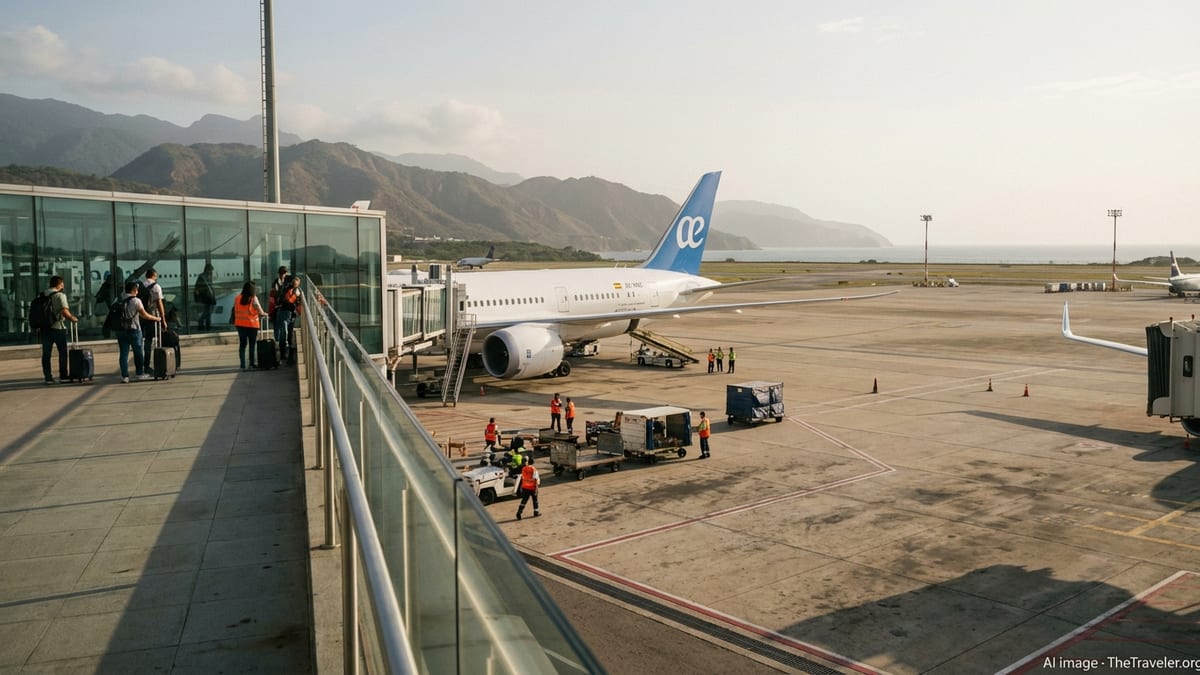
Madrid Back on the Map After More Than Two Decades
Publicly available information from Singapore Airlines and recent industry coverage indicates that the carrier will resume passenger flights to Madrid from 26 October 2026, ending a gap of more than 20 years since it last served the Spanish capital. Madrid will become the airline’s 15th destination in Europe and its second in Spain, underscoring the importance of the Iberian market for both leisure and corporate travel.
The new service is planned to operate five times weekly on a Singapore–Barcelona–Madrid routing, using the Airbus A350-900 in a long-haul configuration with 253 seats across Business, Premium Economy and Economy Class. Reports indicate that the flights will carry the existing SQ388 and SQ387 numbers, effectively extending today’s Singapore–Barcelona operation onward to Madrid with a same-aircraft service.
Industry analysis highlights that this strategy allows the airline to tap growing demand for Spain while maintaining a presence in Barcelona, traditionally one of its strongest Southern Europe gateways. By consolidating Spanish operations around a single through service, the carrier is positioning Madrid as a fresh entry point into the wider Iberian Peninsula and Latin-linked markets.
According to published coverage, tickets for the new Madrid flights are scheduled to go on sale from June 2026 through the airline’s usual sales channels and travel partners, giving both European and Asian travelers several months to plan itineraries around the launch.
Manchester, Milan, Munich and Gatwick See Frequency Boosts
The Madrid relaunch is part of a wider European enhancement that will see more seats and better timings across several key cities in 2026. Corporate statements and scheduling data show that flights between Singapore and Manchester will move from five times weekly to a daily service from 13 July 2026, reflecting strong traffic to northern England and its surrounding catchment area.
Milan, another cornerstone of the network, is also in line for a substantial upgrade. Information released by the airline indicates that the Singapore–Milan route will increase from four weekly flights to daily operations from 25 October 2026. Aviation analysts note that this shift effectively turns Milan into a daily European gateway for both point-to-point traffic and one-stop connections deeper into Italy and southern Europe.
Munich will benefit from additional capacity as well, with industry reports pointing to more frequent services designed to capture a mix of corporate travel from Bavaria’s industrial base and leisure demand into the Alpine region. London Gatwick, currently served three times weekly, is set to gain a daily service around late October 2026, complementing the carrier’s existing four daily flights to London Heathrow and creating one of the densest single-city footprints in its global network.
Timetable adjustments across these routes are being framed as a response to sustained post-pandemic demand and robust premium-cabin bookings. Public scheduling information suggests that the changes are timed to coincide with the 2026 Northern Winter season, when long-haul traffic between Europe and Asia traditionally peaks.
Hub-and-Spoke Strategy Tightens Connectivity Through Singapore
The 2026 Europe build-up is also designed to reinforce Singapore Changi Airport’s role as a connecting hub for passengers traveling between Europe and the Asia-Pacific region. By adding frequencies to Manchester, Milan, Munich and London Gatwick on top of the new Madrid link, the airline is increasing the number of one-stop options available to travelers heading to destinations across Southeast Asia, Australia and parts of North Asia.
Network-planning documents and independent analysis show that the grouping of these enhancements allows for better banked connections at Changi, where arrival and departure waves can be synchronized to reduce layover times. This is expected to be particularly attractive for travelers from secondary European cities who reach these hubs via short-haul partners before connecting onward to Singapore.
For business travelers, the move broadens the range of same-day or near-same-day options into major Asian commercial centers. For leisure travelers, it provides additional itinerary flexibility during peak holiday periods, especially in July and the October to year-end window when both European outbound and Asian inbound demand is traditionally strong.
By concentrating growth on a handful of high-demand European markets, the airline is also able to deploy widebody aircraft efficiently, aligning fleet utilization with seasons and route performance. Analysts note that such targeted expansion supports yield management while still delivering a noticeable uplift in overall capacity.
Fleet Choices and Schedule Shifts Underpin the Expansion
The use of the Airbus A350-900 on the extended Singapore–Barcelona–Madrid route reflects a broader fleet strategy focused on fuel efficiency and passenger comfort. The long-haul variant, as outlined in publicly available fleet data, offers a competitive mix of range and operating economics, suited to overnight sectors between Southeast Asia and Western Europe.
On the upgraded Manchester, Milan, Munich and London Gatwick routes, the airline is expected to continue deploying a mix of A350-900 and Boeing 777-300ER aircraft, depending on seasonal requirements and cabin demand. Industry watchers point out that this flexibility allows the carrier to fine-tune premium and economy capacity while keeping a consistent onboard product across much of its European network.
Several of the changes also involve restructured routings rather than pure capacity additions. Reports from European aviation outlets highlight that the current Singapore–Milan–Barcelona triangular service will be separated, with Barcelona and Madrid eventually served under the new configuration. This reshuffle is designed to simplify schedules, reduce backtracking for passengers and better align departure and arrival times with long-haul connection banks.
Timetable publications indicate that many of the additional frequencies and rerouted services come into effect from mid-July 2026 for Manchester and from late October 2026 for Milan, Munich, Gatwick and Madrid, giving travelers and the wider travel trade clear milestones for planning.
What the 2026 Moves Mean for Travelers
For travelers in Europe, the enhanced schedule translates into more departure days, shorter connection windows and a broader choice of entry points into Asia and the Pacific. Frequent flyers based in the UK, northern Italy, southern Germany and Spain will gain additional flexibility to depart closer to preferred times and to secure award or corporate contract seats on heavily traveled dates.
From the Asia-Pacific side, the addition of Madrid and the boost to existing European gateways will open up new itineraries for both city breaks and multi-stop trips. Travelers from Southeast Asia and Australia, for example, will have greater scope to combine Spanish and Italian cities in a single journey or to connect via Manchester and Munich into regional European destinations served by partner and interline carriers.
Travel industry observers note that the 2026 expansion may also intensify competition on Europe–Asia corridors, particularly in the premium segment where several Gulf and European carriers already operate dense schedules. More non-stop and one-stop options typically place downward pressure on fares over time, while also encouraging airlines to differentiate through in-flight service, ground experience and loyalty-programme value.
With tickets for Madrid and many of the additional European flights expected to become available from mid-2026, the coming months are likely to see a flurry of activity from both travelers and travel advisors as they recalibrate 2026 and early 2027 plans around one of Singapore Airlines’ most ambitious European network builds in years.