


More news on this day
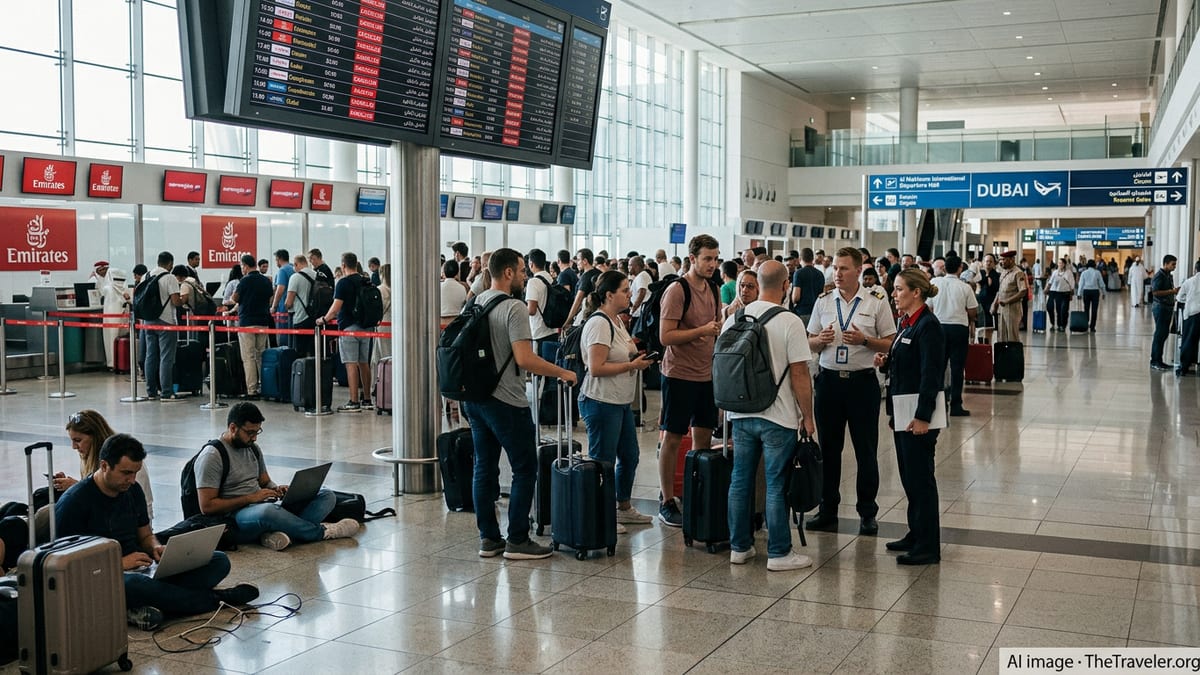
Air travel in the United Arab Emirates has come under fresh strain as Dubai and Sharjah airports report seven flight cancellations and 154 delays, disrupting operations for carriers including Airblue, FlyDubai and Air Arabia and causing knock-on chaos for passengers across the region.
Get the latest news straight to your inbox!
Fresh Wave of Disruptions at Key UAE Hubs
Published operational data from UAE aviation trackers and airport information boards indicates that Dubai International and Sharjah International have together logged seven outright cancellations alongside 154 delayed flights over a short window, underscoring how fragile Gulf air connectivity remains in mid-2026. The figures capture both departures and arrivals, with the heaviest disruption clustered around peak bank times for regional connections.
The pattern echoes several recent episodes in which tightly scheduled networks at Gulf hubs have been stretched by a mix of constrained airspace, longer routings and aircraft availability, resulting in last minute timetable changes. While most services have eventually departed, even moderate delays have cascaded through daily schedules, leaving aircraft and crews out of position and limiting spare capacity to absorb further shocks.
Publicly available information from flight status services shows that the majority of affected services have been short and medium haul routes that funnel traffic between the UAE and South Asia, the Levant and the wider Middle East. These routes are heavily served by low cost and hybrid carriers, which typically operate with high aircraft utilisation and have less flexibility to swap equipment when irregular operations occur.
Airblue, FlyDubai and Air Arabia Among Affected Airlines
Regional carriers Airblue, FlyDubai and Air Arabia feature prominently in the latest wave of disruption, according to aggregated status data. Airblue services linking the UAE with Pakistan have seen selective cancellations and significant delays, reflecting how closely these point to point flights are tied to the availability of specific aircraft and crewing patterns.
FlyDubai, which operates a dense network of Boeing 737 services out of Dubai, continues to manage rolling schedule changes after months of regional airspace challenges and reroutings. Published coverage in recent weeks has highlighted how the airline has had to adjust timings and, in some cases, trim frequencies on certain routes, leaving passengers more exposed when irregular operations force a cancellation or extended delay.
Sharjah based Air Arabia, a key low cost operator for the UAE, North Africa, South Asia and parts of Europe, has also recorded a number of delayed and cancelled flights in the current episode. Flight tracking services show selected Sharjah departures as cancelled or retimed, while others are marked with extended delays, particularly on heavily trafficked evening and late night waves when aircraft are turning around quickly to maintain multi segment itineraries.
Operational Pressures Behind the Disruptions
Industry analysts point to a combination of operational and geopolitical factors behind the recurring pattern of cancellations and delays across UAE airports. Since late February 2026, airlines using Dubai and Sharjah have been navigating restricted air corridors in parts of the wider region, leading to longer routings, extended flight times and tighter turnaround margins. Public summaries from aviation consultancies describe schedules that remain under strain even as airlines gradually refine alternative routings.
Weather has added further pressure at times, with localized storms and reduced visibility episodes contributing to temporary constraints on arrivals and departures. When combined with already stretched networks, even brief weather related slowdowns can push subsequent flights outside their scheduled departure windows, forcing airlines to prioritise certain rotations and occasionally cancel others to reset operations.
Aircraft availability and maintenance planning are another factor. Closely scheduled narrowbody fleets, typical of carriers such as FlyDubai, Air Arabia and Airblue, offer cost efficiency in normal conditions but can struggle to absorb unexpected technical checks or out of sequence maintenance without triggering schedule knock ons. Observers note that the persistence of regional tensions has encouraged some operators to hold limited reserve capacity, but in many cases this has not been sufficient to fully offset repeated disruptions.
Impact on Passengers Across the Region
The immediate impact for travellers has been missed connections, extended time in terminals and, in some cases, abandoned itineraries. Social media and passenger forums are filled with accounts of journey times extended by many hours as travellers attempt to rebook via alternative hubs or wait for delayed aircraft to be turned around. Some passengers have reported overnight stays in transit after evening services were first delayed and then cancelled.
Travel rights specialists highlight that passenger entitlements vary significantly depending on the airline, ticket type and jurisdiction governing the journey. Some carriers have been offering rebooking on the next available flight or providing credits for future travel when services are cancelled, while others have reportedly taken longer to process refunds or have focused primarily on schedule changes rather than reimbursements. This patchwork response has added to uncertainty for those whose plans depend on specific travel dates.
The disruption has been particularly challenging for travellers using Dubai and Sharjah as connection points between Europe, South Asia and East Asia. With several long haul and regional legs often stitched together in a single itinerary, a delayed or cancelled short haul segment can render onward flights unusable. In these cases, passengers have had to negotiate new routings through alternative hubs or accept extended stopovers as airlines rebuild disrupted itineraries.
What Travellers Should Watch Now
Given the latest figures on cancellations and delays, travel advisors are encouraging passengers with upcoming itineraries through Dubai and Sharjah to monitor their flights closely in the 24 hours before departure. Public flight status tools and airline communication channels remain the primary sources for up to date information on schedule changes, while airport websites provide a snapshot of same day operations but may not always show services that have been cut in advance.
Travel planning specialists also recommend building longer connection buffers when itineraries route through Gulf hubs in the current environment, particularly for journeys that combine low cost and full service carriers on separate tickets. Allowing extra time between segments can reduce the risk that a delayed arrival will jeopardise an onward departure, especially during peak evening and overnight bank periods when many flights depart within tight windows.
For those yet to book, observers suggest paying close attention to fare rules, change conditions and refund provisions, which can differ widely between airlines operating similar routes. Selecting options that provide clearer pathways to rebooking or reimbursement in the event of disruption may add modest cost upfront but can offer significant protection if schedules continue to fluctuate across UAE airports in the weeks ahead.