


More news on this day
Saudi Arabia’s aviation network is facing another wave of turbulence as live tracking data and airport information services point to 189 delayed and 12 grounded flights across Jeddah, Riyadh and Dammam, disrupting operations for Saudia, flyadeal, Flynas, FlyDubai and a string of regional and international carriers.
Get the latest news straight to your inbox!
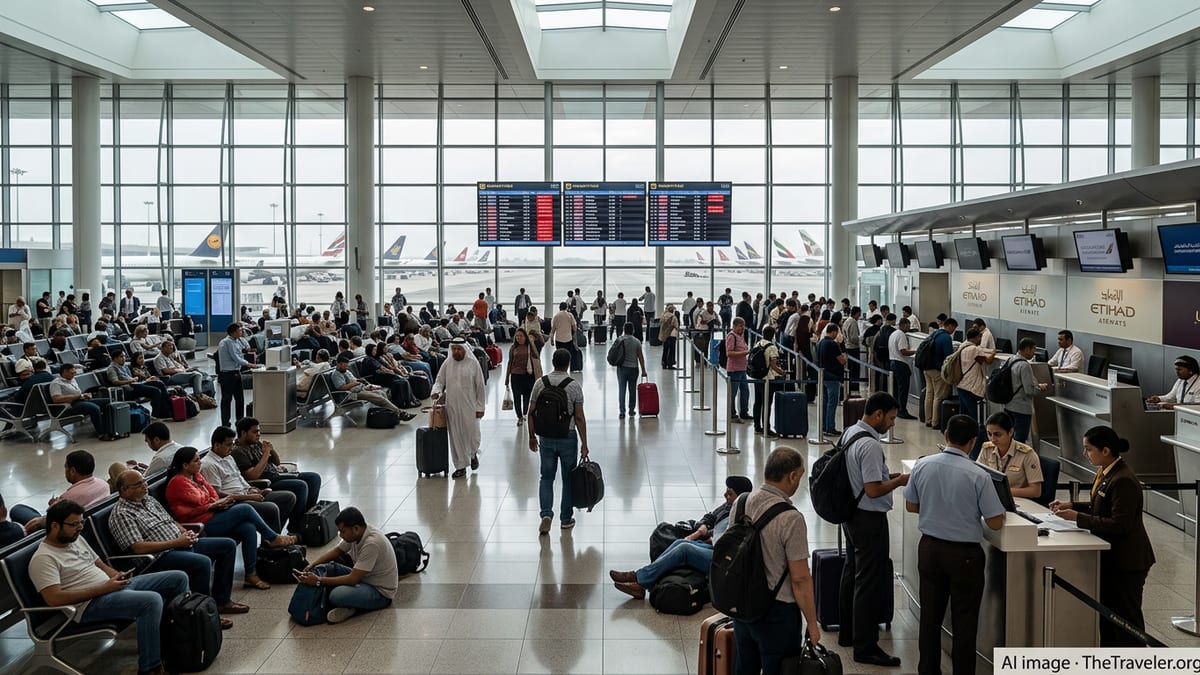
Major Hubs Struggle With Congested Schedules
The latest disruption centers on King Abdulaziz International Airport in Jeddah, King Khalid International Airport in Riyadh and King Fahd International Airport in Dammam, the three airports that handle a large share of Saudi Arabia’s domestic and international traffic. Publicly available aviation data indicate that these hubs have logged close to 189 delayed movements combined, alongside a dozen flights that have been fully grounded.
Flight status boards at these airports show a succession of late departures and arrivals, with some services pushed back by several hours. The pattern mirrors previous spikes in disruption where waves of delays at one hub quickly ripple into connecting flights, creating a knock-on effect for the broader network.
Reports from flight-tracking platforms and passenger updates suggest that the impact is being felt on both domestic trunk routes, such as Jeddah to Riyadh and Riyadh to Dammam, and on regional links to neighboring Gulf and South Asian destinations. With aircraft and crews out of position, carriers are adjusting rotations, further complicating recovery efforts.
Saudia, flyadeal, Flynas and FlyDubai Among Most Affected
National carrier Saudia and low cost operators flyadeal and Flynas, which use Jeddah, Riyadh and Dammam as key bases, appear prominently in the disruption statistics. Previous days of irregular operations in the kingdom have shown these three brands shouldering a large portion of delays when schedule pressures mount, owing to their dense domestic networks and reliance on quick turnarounds between major cities.
On international routes, FlyDubai also features among the carriers adjusting schedules. The airline connects multiple Saudi cities to Dubai, and any hold-ups in the Saudi sector can have consequences for onward connections through its hub. Regional players such as Gulf Air, Air Arabia and other Middle Eastern and South Asian airlines are also listed among services experiencing delays or cancellations when disruption peaks.
While the exact breakdown of delays by airline continues to shift as operations stabilize, patterns from recent disruption cycles in Saudi Arabia point to Saudia, flyadeal and Flynas collectively accounting for dozens of affected flights on a typical high-impact day, with a mix of short-haul domestic and medium-haul regional sectors bearing the brunt.
Knock-on Effects for Travelers Across the Region
The latest wave of delays and cancellations is extending beyond Saudi borders, as missed connections and aircraft rotations spill into schedules covering the wider Gulf, North Africa and South Asia. Travelers connecting through Jeddah and Riyadh on popular routes to Dubai, Cairo, Karachi and other high-demand cities face longer layovers, missed onward flights and rebookings that can stretch into the following day.
Publicly available information from booking platforms and airport departure boards shows that even a relatively small number of grounded flights can contribute to a larger pool of delayed services, especially when disruption hits busy morning and evening banks of departures. Once key rotations are interrupted, aircraft and crews may not be in place for subsequent flights, amplifying the original problem.
Passengers are increasingly turning to airline apps, text alerts and airport screens to track last-minute gate changes and revised departure times. Those with flexible tickets are in some cases opting to reroute through alternative hubs or shift travel to less congested times of day in an effort to avoid the heaviest disruption periods.
Recurring Strains on Saudi Arabia’s Growing Aviation Network
The current disruption comes against a backdrop of rapid growth in Saudi Arabia’s aviation activity, driven by rising domestic mobility, religious travel and an expanding roster of international routes. Jeddah, Riyadh and Dammam have all been handling elevated passenger volumes, and previous episodes of widespread delays and cancellations across the kingdom illustrate how quickly strain can build when schedules are tight.
Recent published coverage has documented several instances this year where Saudi airports reported hundreds of delayed and dozens of canceled flights within a single day, often affecting the same group of carriers. These incidents highlight the sensitivity of the network to adverse weather, airspace constraints and operational bottlenecks at peak times.
Industry observers note that the combination of ambitious growth targets and dense wave-based scheduling increases the importance of resilience measures such as spare aircraft capacity, flexible crew planning and improved real-time coordination between airports and airlines. When such buffers are thin, any localized disruption can rapidly cascade across multiple airports.
What Passengers Can Expect in the Coming Hours
As airlines work through backlogs of delayed flights and reposition aircraft, the immediate focus is on restoring on-time performance across the three main hubs. Experience from recent episodes suggests that recovery can take several hours, especially when delays coincide with already busy travel periods or when aircraft are required to operate tightly scheduled return sectors.
Travelers with bookings on Saudia, flyadeal, Flynas, FlyDubai and other affected carriers are being encouraged, through publicly available advisories and airline channels, to monitor their flight status frequently on the day of travel. Same-day schedule adjustments remain possible as operations normalize, and some passengers may be offered rebooking on later departures or alternative routes within the carriers’ networks.
While today’s tally of 189 delayed and 12 grounded flights underlines the continued vulnerability of Saudi Arabia’s air travel system to sudden disruption, it also reinforces the importance for passengers of allowing extra time for connections, staying informed about real-time schedule changes and considering travel insurance or flexible booking options when flying through Jeddah, Riyadh or Dammam during periods of elevated operational stress.