


More news on this day
If you have a Danube cruise booked for 2026, you are sailing into one of Europe’s most climate‑sensitive travel corridors, where record droughts and volatile river levels are increasingly reshaping how, and sometimes whether, ships can move.
Get the latest news straight to your inbox!
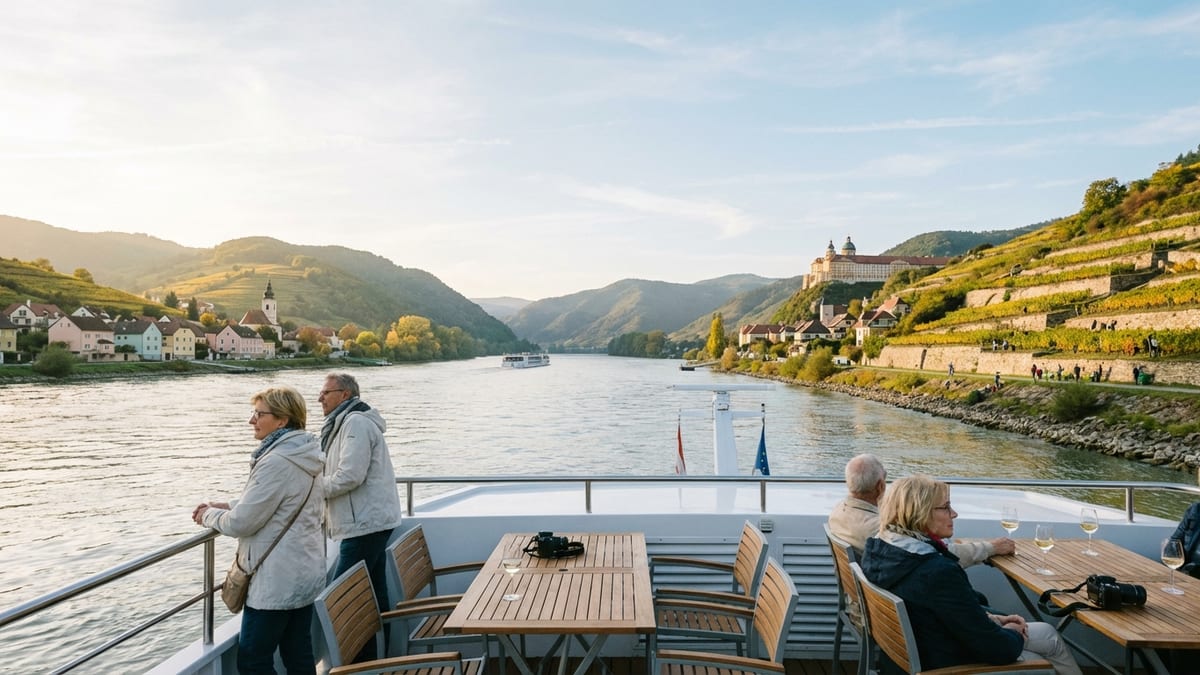
A River at the Front Line of Europe’s Drought
Hydrological data and recent reporting show that the Danube has been repeatedly hit by severe drought over the past decade, with especially low flows recorded in 2018, 2022 and again in 2024 and 2025 along key stretches in Central and Southeastern Europe. Low rainfall and prolonged heat have combined to push water levels toward historic lows in some sectors, disrupting cargo transport and even affecting energy infrastructure along the river.
European and international assessments describe a long term pattern in which droughts are becoming more frequent and more intense across much of the continent, including the Danube basin. Scientific studies attribute much of this trend to human driven climate change, which is amplifying heatwaves, drying soils and reducing summer runoff into major rivers. For travelers, the result is a river system that is more prone to both long dry spells and sudden extremes.
At the same time, conditions vary sharply from year to year. Some recent seasons have seen relatively normal or even high water levels on popular cruise segments between Germany and Hungary, while other summers have brought bottlenecks where ships could not safely transit shallow reaches. Forecasts for 2026 point to an elevated risk of continued water stress in parts of Europe, but do not offer precise predictions for specific sailing weeks or individual stretches of the Danube.
For anyone booked on a 2026 voyage, this means that climate context matters, but it does not automatically translate into a canceled cruise. It does, however, increase the likelihood that cruise lines will need to adjust itineraries on short notice as they navigate a river under growing hydrological pressure.
What Low Water Really Means for a Danube Cruise
Low water on the Danube rarely looks dramatic from a ship’s sundeck, but it can be critical beneath the surface. River cruise vessels are designed with shallow drafts, yet they still require a minimum navigable depth to clear sandbars and rocky sections. When gauges fall below certain thresholds, navigation authorities impose restrictions that can force operators to reduce loads, change operating times or halt traffic entirely along specific reaches.
For cruise passengers, this does not necessarily mean the entire vacation is lost. Recent seasons have shown a spectrum of responses: ship swaps in the middle of an itinerary, where guests disembark on one vessel, travel a short distance by road around a low water section, and board a sister ship on the other side; modified routes that skip certain ports but add time in others; and, in more severe cases, partial or full replacement of sailing days with coach based touring along the river.
Travel industry coverage and traveler reports from 2018 through 2024 indicate that such disruption is no longer a rare anomaly, particularly in hot, dry summers. Some operators have had to cancel select departures or consolidate sailings when stretches of the Upper or Middle Danube became too shallow. Others have leaned heavily on alternative embarkation and disembarkation points, quietly adjusting logistics to keep itineraries running even when ships could not complete their full programmed routes.
This operational reality has an important implication for 2026 bookings: the main risk is not that the Danube itself will be entirely off limits, but that your specific sailing might involve more buses than brochures suggest, shorter scenic stretches on the water or a rearranged sequence of ports. The landscape and many experiences will still be there, but the way you move between them may change rapidly in response to river gauges.
How Cruise Lines Are Adapting Their Danube Operations
Major river cruise brands that operate on the Danube have spent the past several low water episodes refining their contingency playbooks. Publicly available itineraries, advisories and past season recaps show a growing emphasis on flexibility: fleets are positioned so that ships can be swapped, itineraries are written with optional alternative ports, and shore excursion teams are prepared to convert sailing days into land based touring at short notice.
Some companies have invested in vessels with slightly different technical characteristics, such as reduced draft or adjustable structures, to provide more options on shallow stretches. Others highlight their ability to deploy coaches and regional hotels quickly when a section of river becomes non navigable. The language used in brochures and terms and conditions has also evolved, with more explicit references to potential “operational adjustments” when water levels are unusually high or low.
Insurance and booking policies are another area where adaptation is visible. Travel protection plans sold with many European river cruises now explicitly mention natural conditions such as low water and high water, often framing them as covered reasons for trip interruption rather than for cancellation before departure. The practical outcome is that many travelers have been able to continue with their journey in a modified form, while only reclaiming certain additional expenses or lost prepaid services.
Prospective 2026 guests should be aware that cruise lines generally do not decide on significant changes months in advance. Because river levels can shift within days, most operational calls are made shortly before a ship reaches a critical section. That makes it difficult to obtain firm guarantees long ahead of time, even in a year when drought risk is clearly elevated.
What 2026 Passengers Can Do Now
For travelers holding Danube bookings in 2026, preparation starts with the terms of the ticket. Carefully reading your cruise contract, any water level clauses, and the fine print of travel insurance can clarify what is likely to happen if drought disrupts your itinerary. In recent years, many guests on affected sailings have still received most of their planned land experiences, but compensation for lost scenic sailing time or missed ports has varied by company and policy.
Timing is another lever within travelers’ control. Historical data show that the worst low water episodes on the Danube have often occurred in late summer and early autumn, after prolonged heat and limited rainfall. That pattern is not guaranteed, but guests still considering dates may wish to weigh early spring, late autumn or the Christmas market season, when the river can be less vulnerable to prolonged drought, against their weather and daylight preferences.
Once a cruise is booked, monitoring independent river information can also help manage expectations. Hydrological services, regional media and traveler communities frequently discuss current Danube gauge readings and navigational constraints. While this will not change the operational decisions made by cruise lines, it can give passengers a more realistic sense of why a last minute route adjustment might be necessary and how unusual, or typical, a situation really is for that time of year.
Ultimately, a Danube cruise in 2026 is still likely to deliver many of the cultural, historical and culinary experiences that draw travelers to Central Europe. The difference is that drought and river variability are now central features of the journey, not background risks. Approaching your trip with flexible expectations, robust insurance and a clear understanding of how low water is handled can turn a potential disruption into a more manageable part of the story rather than the headline of your holiday.