


More news on this day
European air travel faced another bruising day as a fresh wave of disruption swept through major hubs, with Munich among the worst affected and thousands of passengers caught in a tangle of delays and cancellations.
Get the latest news straight to your inbox!
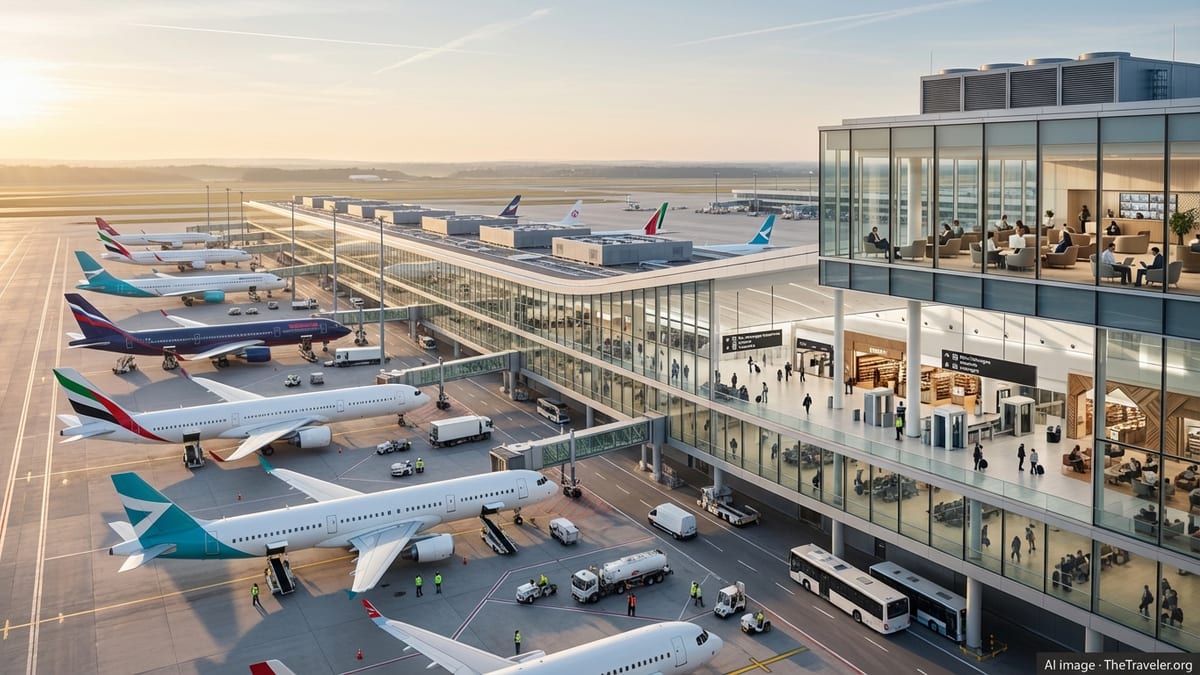
Munich Emerges As One Of The Hardest Hit Hubs
Munich Airport has again become a focal point for operational disruption in Europe, with publicly available tracking data indicating thousands of delayed departures and arrivals in a single operating period and 174 flights canceled across the wider network. While the figures span multiple European hubs, Munich features prominently among the airports where disruption has been most visible to travelers.
Reports from passengers at the Bavarian hub describe long queues at check in and customer service desks, as well as crowded departure halls as travelers attempt to rebook or reroute. Social media posts and online forums show images of passengers waiting on terminal floors with luggage piled nearby, illustrating the scale of the backlog as airlines work through reassignments.
Operational data compiled by flight analytics platforms suggest that the disruption in Munich has had a knock on effect across the continent, as aircraft and crew scheduled to rotate through the airport missed their next sectors. That pattern has contributed to a growing tally of 2,845 delayed flights associated with the current disruption, affecting destinations across Germany, the Netherlands, Italy and other markets.
Although Munich is accustomed to handling high traffic volumes and seasonal peaks, the present constellation of delays and cancellations has tested contingency measures, particularly during busy departure waves in the morning and late afternoon. Travelers transiting through the hub have been especially vulnerable to missed connections when inbound services arrive significantly behind schedule.
Ripple Effects Felt Across Europe’s Major Gateways
The disruption has not been confined to southern Germany. Data from commercial tracking services show that the same operational pressures that hit Munich have also been felt at other major European airports, including Frankfurt, Amsterdam Schiphol and several key regional gateways. As aircraft are rotated through multiple hubs in a single day, delays have multiplied along entire route chains.
At some airports, schedules have remained largely intact but with wide ranging knock on delays of 30 minutes to several hours, making it harder for passengers to maintain tight connections. At others, airlines have resorted to targeted cancellations as a way to stabilize operations and concentrate resources on a reduced but more manageable timetable.
Across the continent, airport operations teams have faced the challenge of clearing backlogs while staying within overnight curfews and local noise restrictions. Where late running flights could not be dispatched before cut off times, services have been canceled or rescheduled for the following day, adding to the overall count of affected passengers.
The disruptions come at a time when Europe’s air traffic volumes remain robust, driven by leisure and business demand. Analysts note that this high baseline activity leaves less room for the system to absorb shocks when weather, staffing constraints or technical issues occur simultaneously.
Multiple Causes Behind 2,845 Delays And 174 Cancellations
Publicly available information points to a combination of factors behind the 2,845 delays and 174 cancellations reported across Europe during the current disruption. Weather has played a recurring role, with low visibility, thunderstorms and strong winds periodically throttling capacity at several major hubs, including Munich.
In addition to weather related constraints, airline and airport staffing remain a persistent pressure point. Industry analyses published in recent months highlight that some carriers and ground handling providers are still balancing workforce levels against strong demand. When rosters are tight, even small disruptions can cascade quickly, especially if they coincide with technical inspections or unplanned maintenance requirements for aircraft.
Network level constraints have added another layer of complexity. Air traffic flow management initiatives introduced to maintain safety during peak periods can reduce the number of aircraft allowed into certain sectors of European airspace each hour. When these flow restrictions intersect with busy holiday or business travel periods, the result can be a significant build up of delays that propagate across the network.
Observers also point to strike activity and labor negotiations in parts of Europe as a background factor that has periodically contributed to cancellations and schedule reductions over the past year. Even when industrial action is limited in scope, the need for airlines to reposition aircraft and crews can complicate efforts to keep timetables stable.
Passengers Face Long Waits But May Have Strong Compensation Rights
For travelers caught up in the latest disruption, the immediate impact has included long waits in terminals, missed events and the challenge of securing last minute accommodation. Accounts shared on travel forums describe passengers spending several hours in customer service lines to secure hotel vouchers or new routings, particularly at Munich and other major German hubs.
However, European consumer protection rules offer potentially significant safeguards. Under the EU’s passenger rights framework, which applies to flights departing from EU airports and to many services operated by European carriers, travelers whose flights are heavily delayed or canceled may, in some circumstances, be entitled to care, rebooking and financial compensation. Eligibility depends on factors such as the length of delay, total distance flown and the underlying cause of the disruption.
Specialist air passenger rights organizations report that millions of travelers across Europe have been affected by delays and cancellations in recent years, and they encourage passengers to keep detailed records of boarding passes, booking confirmations and any written communication from airlines. Such documentation can be important if travelers later file compensation or reimbursement claims.
Given the current volume of affected flights, consumer advocates suggest that many of the passengers impacted by the 2,845 delays and 174 cancellations may qualify for some form of redress, particularly where issues were not solely caused by extraordinary circumstances such as severe weather or airspace closures.
What Travelers Can Do If Their Flight Is Disrupted
With disruption still rippling through the European network, travelers are being urged by publicly available advisories to monitor their flight status closely before heading to the airport. Many airlines provide real time updates through mobile applications and text alerts, which can help passengers respond more quickly to schedule changes.
Experts in travel planning recommend that passengers whose flights are canceled or heavily delayed first seek clarification through official airline channels, such as self service rebooking tools or staffed service desks at the airport. In periods of mass disruption, phone lines and online chat services can experience long wait times, so travelers may need to try several options in parallel.
For those with onward connections, particularly at complex hubs like Munich, it can be useful to identify alternative routings to present when speaking with airline staff. Flexibility regarding departure times, intermediate stops and even nearby airports can improve the chances of securing a workable rebooking, especially while many flights across the region are still operating with limited spare seat availability.
Travel insurance policies that include trip interruption benefits may provide additional support, including reimbursement for accommodation, meals or replacement transport in some situations. Policy terms vary widely, so passengers affected by the current wave of delays and cancellations are advised to review their coverage carefully and retain receipts for any unexpected expenses incurred while stranded.