


More news on this day
Travelers using Bahrain International Airport are facing fresh disruption as six flights were suspended and at least fifty five delayed, snarling connections across the Gulf, Europe, Türkiye, Germany, the United States and other major long haul markets and prompting renewed warnings for passengers to verify their flight status before leaving for the airport.
Get the latest news straight to your inbox!
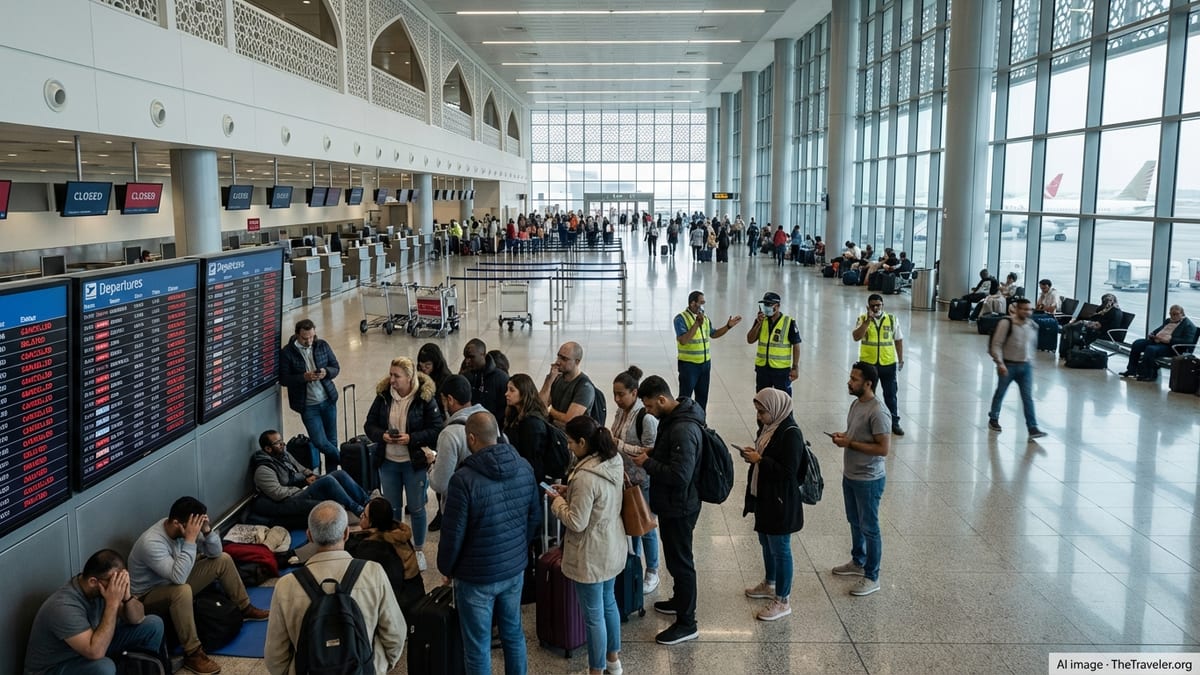
Broad Disruptions Hit Key Regional and Long Haul Routes
Published operational data and aviation tracking services for July 9 indicate that Bahrain International Airport remains open but is experiencing a significant wave of schedule disruptions affecting both departures and arrivals. The latest figures point to six outright flight suspensions and around fifty five delays concentrated over a relatively short window, a pattern consistent with wider capacity pressures across Middle East airspace since early 2026.
The impact is being felt first on short haul Gulf connections that usually feed larger long haul services. Flights linking Bahrain with Dubai, Abu Dhabi, Doha and Kuwait have reported altered timings, rolling delays or temporary suspensions on selected rotations, reducing options for passengers relying on these routes to connect onward to Europe, Türkiye and North America.
Medium haul routes to Türkiye and Germany have also been affected, with schedule data showing longer ground times, retimed departures and aircraft substitutions. These adjustments can cascade through airline networks, meaning a disrupted departure from Bahrain can lead to missed onward flights at major hubs such as Istanbul or Frankfurt, compounding delays for travelers headed to cities across Europe and the United States.
Long haul services between Bahrain and key North American and European gateways remain scheduled but are operating against a background of constrained airspace and tight turnaround times. Even when a flight is not formally canceled or suspended, small upstream delays on regional feeder services can cause missed connections and extended layovers for passengers traveling onward to the US and other distant markets.
Airspace Constraints and Regional Instability Add Pressure
Recent travel and supply chain advisories focused on the Middle East describe a prolonged period of disruption affecting several Gulf and Levant states. Earlier in the year, Bahrain’s airspace was briefly closed and airport operations were largely halted following regional security incidents, creating a backlog that took time to clear and leaving airlines cautious about capacity planning.
Subsequent regional assessments have noted that while Bahrain International Airport has reopened and is handling commercial traffic, airlines continue to navigate a shifting operational environment. Flight paths over sensitive areas have been altered, air corridors adjusted and crew duty times stretched by reroutings, all of which can reduce scheduling flexibility and make networks more vulnerable to knock on delays.
Reports focused on Middle East logistics further indicate limited capacity and selective suspensions on routes serving Bahrain, Kuwait and neighboring markets. These constraints encourage carriers to consolidate services and operate fewer but fuller flights, which can magnify the impact when any one rotation is delayed or canceled, particularly at relatively compact hubs such as Bahrain International Airport.
Against this backdrop, the latest cluster of suspensions and delays in Bahrain is part of a wider regional pattern rather than an isolated event. Even routine issues such as aircraft maintenance or localized weather can now trigger more extensive timetable reshuffling when airlines have little spare capacity to absorb schedule shocks.
Passenger Experience: Missed Connections and Lengthy Layovers
For individual travelers, the operational nuances translate into very practical problems. Delays on Bahrain’s short haul Gulf routes can break carefully timed itineraries built around one to two hour connections onto long haul flights to Europe or North America. When a feeder flight arrives late, rebooking options may be limited, leaving passengers facing long overnight layovers or multi stop re routings.
Experiences shared on travel forums and social media in recent weeks from airports worldwide, including Gulf hubs, describe a growing sense of unpredictability in international air travel during the current busy summer season. Travelers recount strings of maintenance related delays, missed onward flights and unplanned overnight stays as tightly scheduled networks struggle to recover from even minor disruptions.
Bahrain’s role as a connector between regional cities and long haul destinations makes it particularly sensitive to these dynamics. A delayed departure to a nearby Gulf hub may not seem serious in isolation, but for passengers onward to the United States or northern Europe it can mean arriving a day later than planned, incurring extra accommodation costs and disrupting business or holiday schedules.
Families and leisure travelers are especially exposed during peak summer travel periods when aircraft are heavily booked and spare seats on alternative services are scarce. When flights are suspended entirely, options to switch carriers at short notice may be limited, particularly on routes that see only one or two daily departures.
What Travelers Should Do Before Heading to the Airport
Given the fluid situation, aviation and travel industry guidance consistently stresses the importance of proactive planning. Passengers scheduled to depart from or connect through Bahrain International Airport in the coming days are strongly advised to check their flight status directly with their airline or through official airport and flight tracking channels immediately before leaving for the airport.
Same day schedule changes, equipment swaps and rolling delays are all possible as carriers respond to airspace constraints and manage aircraft and crew availability. Travelers holding separate tickets for connecting journeys should be particularly careful, as protections for missed onward flights may be limited when segments are booked on different reservations or carriers.
Those with time sensitive commitments at their destination may wish to build in a larger buffer between connecting flights than they might have considered necessary in previous years. Allowing additional time can reduce the risk that a modest delay on a regional sector leads to a missed long haul departure and a forced overnight stay.
Travelers are also encouraged to monitor any advisories issued by their airline, tour operator or insurer and to keep digital copies of booking confirmations and receipts for any extra expenses incurred as a result of disruption. While compensation rules vary widely between jurisdictions and carriers, clear documentation can make it easier to pursue claims where policies allow.
Outlook: More Disruptions Possible as Summer Peaks
As the northern hemisphere summer travel season reaches its busiest weeks, the combination of high demand, tight aircraft utilization and a still unsettled regional airspace picture suggests that Bahrain International Airport may continue to experience intermittent disruptions. The current tally of six suspended flights and more than fifty delayed services underscores how quickly problems can accumulate within a single operating day.
Regional and international carriers are expected to keep adjusting schedules, reallocating aircraft and fine tuning routings in an effort to preserve core connections between Bahrain, Gulf neighbors and major hubs in Türkiye, Germany and the United States. However, such measures can take time to stabilize networks and may themselves introduce short term uncertainty as timetables are updated.
For now, the most practical step for travelers is to treat departure and arrival times as subject to change until close to the flight and to plan journeys with greater flexibility where possible. Those yet to book should consider routing options with more robust connection windows and, when feasible, direct flights that avoid multiple tight transfers.
While Bahrain International Airport remains operational and continues to function as a key regional hub, the latest wave of suspensions and delays is a reminder that conditions in the wider Middle East aviation environment remain dynamic. Travelers transiting the region in the coming days would be well served by staying informed, building in extra time and checking their flight status repeatedly as departure approaches.