


More news on this day
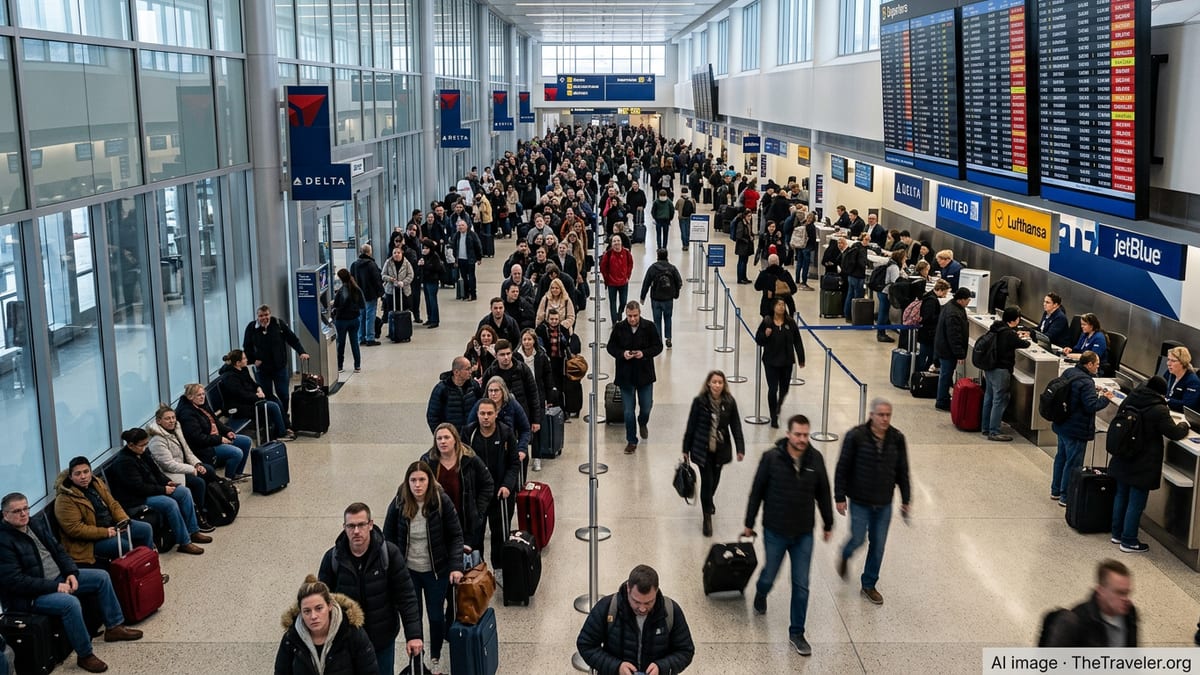
Relentless summer storms are once again disrupting U.S. air travel, with waves of delays and cancellations rippling across major hubs as heavy rain sweeps through key corridors. Behind the frustration at the departure boards, however, new federal rules and long-standing international protections mean passengers may be entitled to more than they realize, from full cash refunds to meal vouchers and complimentary hotel rooms in some circumstances.
Get the latest news straight to your inbox!
New U.S. Refund Rules Raise the Floor On Passenger Rights
For travelers facing weather-related chaos, one of the most significant recent changes is a new U.S. law that clarifies when airlines must return passengers’ money. Federal code now requires carriers operating flights to, from, or within the United States to provide a full refund, including taxes and many ancillary fees, when a scheduled flight is canceled or significantly delayed and the passenger chooses not to travel. This applies even to nonrefundable tickets, a major shift in favor of consumers.
The U.S. Department of Transportation has followed up with updated public guidance explaining that a “significant delay” typically means a schedule change of several hours compared with the original itinerary. The agency’s consumer materials indicate that if an airline moves a domestic departure by three hours or more, or an international flight by six hours or more, and the traveler decides not to take the trip, a refund is generally owed in cash rather than as a voucher or credit.
These rules apply regardless of the cause of the disruption, including heavy rain or other adverse weather. Airlines are not required to offer additional compensation when storms are to blame, but they cannot insist that passengers accept a credit in place of a refund if the carrier cancels or significantly changes the flight and the traveler declines alternative arrangements.
Consumer advocates note that this distinction is critical in stormy seasons. While airlines often promote travel credits or bonus vouchers, federal policy emphasizes that the legal right in qualifying cases is to a refund back to the original form of payment if the passenger no longer wishes to fly.
When Weather Delays Can Still Lead To Hotel Nights And Meal Vouchers
Rain itself is considered outside an airline’s control, and international industry bodies such as the International Air Transport Association stress that carriers should not be held financially responsible for weather-driven disruptions. Even so, many U.S. airlines voluntarily provide overnight hotel rooms, ground transportation and meal vouchers when delays or cancellations stretch into the night, especially when the disruption is linked to issues within the carrier’s control such as maintenance or crew shortages.
The U.S. Department of Transportation’s Airline Cancellation and Delay Dashboard, a publicly available comparison tool, shows that most major U.S. airlines now commit to complimentary hotel accommodation and meal vouchers when passengers are stuck overnight due to a cancellation or lengthy delay that is deemed controllable. Airline customer commitment documents published in 2025 and 2026 go further, outlining when carriers will reimburse reasonable hotel expenses or provide transportation to and from lodging if a same-day rebooking cannot be arranged.
In practice, weather and operations often blend together. A line of thunderstorms might trigger initial delays, but subsequent crew misplacements or equipment problems can shift the cause of some cancellations into the “controllable” category. Travel law resources advise passengers to ask airline representatives how a disruption is being coded internally and to keep receipts for any hotel and meal costs, as several major U.S. carriers now accept post-travel reimbursement claims in situations where their policies promise care and assistance.
Specialized guidance documents circulated this year for large carriers outline detailed mechanical cancellation rights, including meal vouchers after three-hour delays, hotel accommodation for overnight disruptions and full cash refunds if the traveler elects not to continue. These commitments sit on top of the federal refund requirement and can be particularly useful when heavy rain exposes weaknesses in airline scheduling or aircraft maintenance plans.
European-Style Protections Still Matter For Transatlantic Storm Disruptions
For passengers flying between the United States, the United Kingdom and Europe, protections do not stop at U.S. borders. The European Union’s longstanding Regulation 261, along with post-Brexit and national guidance in the UK and other states, continues to guarantee a right to care and assistance when flights are significantly delayed or canceled, regardless of whether storms or operational problems are to blame.
Under these frameworks, airlines operating from EU or UK airports are expected to provide meals and refreshments during long waits, along with hotel accommodation and transport between the airport and hotel when an overnight stay becomes necessary. Official travel guides published by European governments emphasize that these obligations apply even when poor weather is the root cause, although additional cash compensation for inconvenience is generally limited to cases where the airline is at fault.
National aviation agencies in Europe reiterate that hotel stays are part of a “right to care” when rebooking requires passengers to remain overnight, and that this duty can extend for multiple days during widespread disruption. In such cases, travelers on transatlantic itineraries affected by heavy rain may find that a European departure or connection point unlocks more generous on-the-ground assistance than what they might receive on a purely domestic U.S. route.
Legal analyses of recent European case law also note that when a ticket covers multiple legs, refunds for partial non-use may be calculated based on the distance of the affected flight segment relative to the total journey, ensuring that travelers are not left without recourse if only one portion of a longer itinerary is disrupted by storms.
How Travelers Can Use New One-Page Summaries And Dashboards
Regulators have acknowledged that complex rulebooks are difficult to navigate in the middle of a weather emergency. In April 2026, the U.S. Department of Transportation introduced a standardized one-page summary that airlines must make available, outlining passenger rights related to delays, diversions, cancellations, baggage and boarding. The document is intended to give travelers a quick reference to compensation and care options for disruptions of varying lengths.
Consumer materials explain that this summary, along with the online cancellation and delay dashboard, can help passengers quickly compare what their airline promises against what is being offered at the gate. If a carrier advertises hotel accommodation for overnight controllable cancellations, for instance, travelers can point to those commitments when negotiating assistance at an airport service desk or when later submitting reimbursement claims.
Advocacy groups advise keeping digital or printed copies of both the federal summary and airline-specific customer commitment documents while traveling during storm seasons. Having these materials on hand can make it easier to request the correct remedy, whether that is a cash refund for a significantly delayed flight that a passenger no longer wishes to take or a hotel night and meal support after a missed connection caused by operational knock-on effects from earlier heavy rain.
Outside the United States, government travel guides serve a similar function, summarizing when airlines must provide written information on passenger rights, assistance at the airport and lodging in the event of an overnight delay. Together, these tools are designed to bridge the gap between complex aviation regulations and the real-time decisions passengers must make when severe weather leaves them stranded far from home.
Practical Steps To Protect Yourself When Storms Hit
Travel advisors recommend that passengers build a basic checklist for storm-prone periods. The first step is to document everything: photos of departure boards, screenshots of airline app messages and any written explanation of the cause of a delay or cancellation. This record can help later if there is a dispute about whether a disruption was truly weather-related or linked to the airline’s own operations.
Experts also suggest that travelers evaluate their options as soon as it becomes clear that a schedule will slip. Under current U.S. rules, if a delay crosses the “significant” threshold and a traveler no longer wishes to make the trip, requesting a refund instead of a credit can prevent money from being tied up in an airline-specific voucher. For those who still need to reach their destination, asking about rebooking on partner or competing airlines, as discussed in official consumer guidance, can sometimes shorten a lengthy weather delay.
When overnight holds become unavoidable, passengers may wish to ask directly whether their situation qualifies for hotel and meal support under the airline’s posted policies. If frontline agents are unable to provide vouchers on the spot, keeping receipts for reasonable expenses and submitting a claim afterward is increasingly recognized by major carriers, particularly for disruptions that blend weather with mechanical or staffing challenges.
While heavy rain and storms will continue to disrupt aviation, evolving regulations and public commitments are shifting more of the financial burden away from passengers. Understanding when refunds are mandatory and when hotels and meals are part of the package can turn a chaotic travel day into a more manageable setback.