


More news on this day
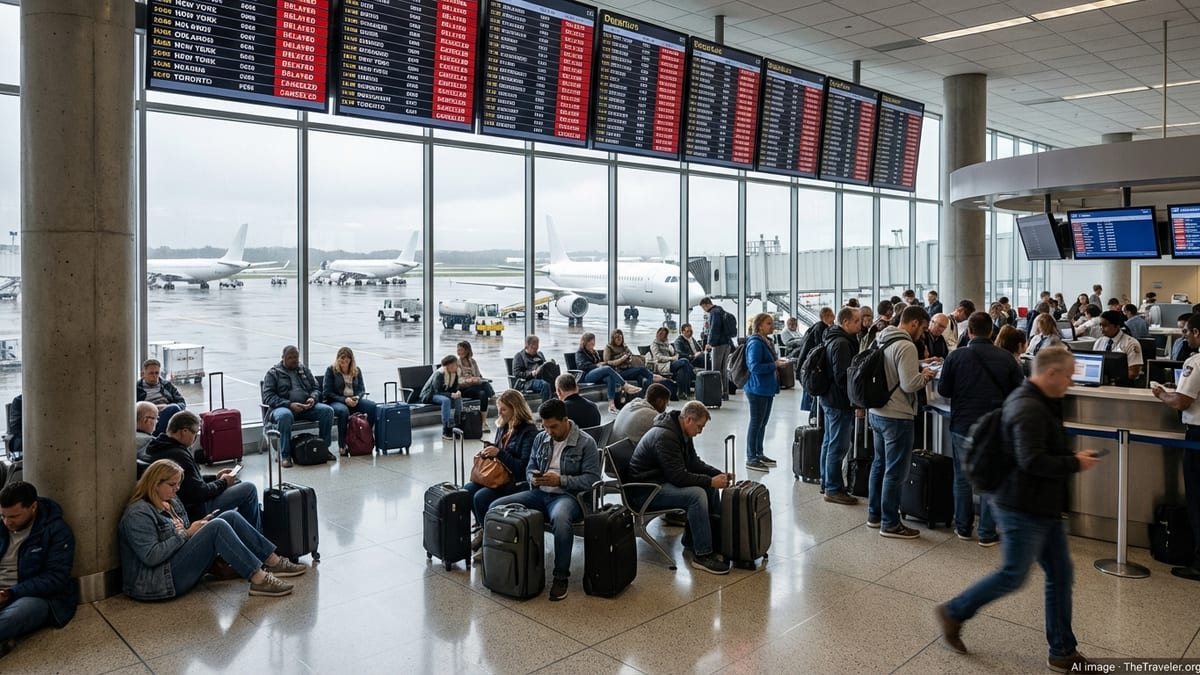
Air traffic began resuming Monday after a series of ground stops briefly froze arrivals at major Northeast airports, including New York’s John F. Kennedy International Airport and LaGuardia, as airlines worked through heavy delays and scattered cancellations into the evening.
Get the latest news straight to your inbox!
What triggered the ground stops across the Northeast
Published coverage indicates the disruption stemmed from a communications failure tied to air traffic control systems serving the region, prompting the Federal Aviation Administration to restrict or halt certain inbound flights as a safety measure.
Reports described the problem as involving fiber communications lines connected to air traffic operations centered around the Philadelphia-area approach control facility, a critical node for routing traffic into and out of busy New York and New Jersey airspace. Coverage also indicated a backup line was damaged during nearby rail construction work, complicating the recovery.
The impact radiated quickly beyond New York City. Newark Liberty International, Philadelphia International, and Teterboro were repeatedly cited among airports placed under FAA ground stops, with knock-on effects for departures and connections across the country as aircraft and crews ended up out of position.
JFK and LaGuardia restart, but delays linger
Flights began moving again at LaGuardia on Monday afternoon, with additional reporting later in the day indicating ground stops were lifted and operations resumed more broadly. Even so, travelers encountered a backlog that could not clear immediately once restrictions eased.
At JFK and LaGuardia, the restart did not mean an instant return to normal schedules. When arrivals are paused, gates fill and departure banks can collapse, forcing airlines to reshuffle aircraft rotations and crews, and delaying inbound planes that are needed for later flights.
For passengers, the practical effect was extended wait times for updates, rebookings, and standby options, especially for short-haul routes that feed evening departures. Travelers with tight connections were among those most vulnerable as the day’s schedule shifted later into the night.
Newark and Philadelphia take the hardest hit
Newark appeared to experience the most severe operational standstill. According to published coverage drawing on flight-tracking data, commercial arrivals were largely halted for much of the day, with inbound traffic resuming later in the afternoon.
Reuters reporting described widespread delays tied to the Philadelphia approach control area, with hundreds of flights delayed across Newark and Philadelphia during the peak of the disruption. That scale is consistent with how quickly congestion can build when a high-volume corridor loses capacity.
Even after repairs, the recovery can be uneven. When the first wave of arrivals restarts, air traffic controllers meter aircraft to prevent gridlock, and airlines may cancel select flights rather than operate severely delayed trips that would disrupt the next day’s schedule.
What travelers should do next if flying today or Tuesday
Travelers scheduled through the New York City area should expect residual delays into Tuesday, September 22, 2026, particularly during the morning and late-afternoon push when runway demand is highest. Checking flight status early is crucial because a flight can show “on time” before aircraft assignment and crew legality are fully reconciled.
The most reliable first stop is an airline’s app for real-time gate, aircraft, and rebooking updates, followed by the FAA’s airport status pages for an overview of ground stops, ground delay programs, and expected arrival delays. Travelers heading to JFK or LaGuardia should also factor in the possibility that curbside and terminal congestion may lag operational recovery.
For those already disrupted, flexibility matters more than perfect routing. Same-day changes to a nearby airport can help, but only if the alternative has available seats and the traveler can reach it quickly. With New York-area airports tightly linked, switching between JFK, LaGuardia, and Newark may not avoid delays if the wider airspace system is still clearing a backlog.