


More news on this day
Hundreds of Amtrak passengers traveling between Miami and New York were stranded on board for nearly 24 hours in northern Florida after fast-moving wildfires forced the train to halt along the route, disrupting rail service into and out of the state and drawing fresh scrutiny of passenger care during extreme events.
Get the latest news straight to your inbox!
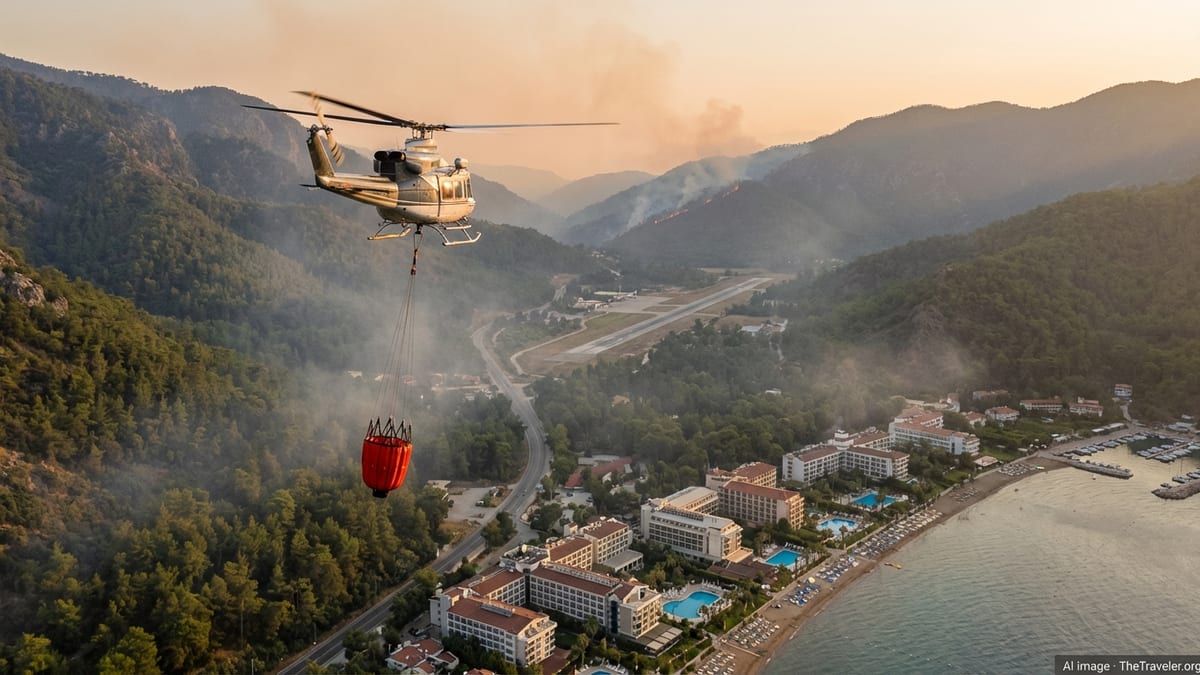
Wildfire shuts down key Amtrak corridor in northern Florida
According to published coverage, the disruption began on Sunday, April 19, when brush fires flared near the Clay County and Putnam County line in northern Florida, close to a segment used by Amtrak’s Silver Meteor service. Reports indicate that fire activity and smoke near the right of way prompted rail traffic to be suspended so ground crews could focus on containing the flames and keeping the area clear of additional ignition sources.
The affected train, identified as Train 98 on the Silver Meteor route linking Miami and New York, was brought to a stop near the Jacksonville area as conditions worsened. News reports describe the train remaining in place for many hours while railroad and emergency personnel monitored shifting fire lines and evaluated when it would be safe to move equipment through the zone.
As the delay stretched well beyond a standard service disruption, photos and accounts circulated widely on social and traditional media, depicting a stationary train surrounded by smoke haze in parts of north and central Florida. Publicly available information shows that by the time movement resumed, some travelers had been on board for close to a full day, with many never reaching their intended destinations before the train was ultimately rerouted.
Coverage from multiple outlets notes that the same outbreak of wildfires temporarily curtailed other Amtrak services in the region, including Auto Train operations between Sanford, Florida, and Lorton, Virginia. The cluster of fires effectively severed a major passenger rail gateway for Florida over parts of the weekend and into Monday.
Onboard conditions spark frustration and health concerns
As hours passed, accounts from passengers shared in regional and national coverage described mounting discomfort inside the halted train. Reports indicate that restroom facilities became increasingly strained, with some passengers describing toilets that stopped functioning properly and limited access to running water. The lengthy stop also meant that snacks and beverages on board were in short supply.
News features and broadcast segments highlight that some riders began to worry about medical needs as the delay neared the 24 hour mark. Passengers recounted situations in which individuals were nearing the end of essential medications and were weighing whether to call emergency services from the train. These descriptions underscore how swiftly a schedule disruption can evolve into a welfare concern when passengers have no clear timeline for relief.
Temperature and air quality were additional issues. While there were no widespread reports of power loss, some travelers told local outlets that cabin air grew stuffy as the train sat idle, particularly for those in coach seating. With windows sealed and the train confined to a single location, concerns grew about the effects of smoke and poor ventilation on older riders, children, and those with respiratory conditions.
The combination of limited information, constrained movement, and basic service problems contributed to a sense of frustration onboard. Video clips circulated by passengers showed tense but orderly scenes in the aisles and vestibules, as travelers tried to understand whether buses, alternative trains, or a controlled evacuation to a nearby roadway might be arranged.
Amtrak cites safety priorities as train returns to Miami
Publicly available statements reported in national outlets indicate that Amtrak ultimately decided to reverse the halted train and send it back to South Florida once it became clear that passage through the wildfire zone would not be possible within a reasonable window. Company information shared in news coverage notes that the train, carrying roughly 230 passengers, traveled back toward Miami after many hours near DeLand and other communities in central and northern Florida.
According to those reports, Amtrak emphasized that its overriding priority was to keep passengers away from active fire areas and to avoid putting additional people and equipment into a dynamic wildfire response zone. The decision to return the train south meant many travelers ended their journey hundreds of miles from their intended destinations, with onward connections and hotel stays needing to be rebooked at short notice.
Accounts compiled by regional stations describe a mix of relief and exasperation for those finally able to leave the train once it reached a terminal with platform access and transportation options. Some passengers opted to abandon rail travel entirely and switch to rental cars or flights, while others accepted rebooked itineraries on later Amtrak departures once tracks reopened.
Reports also note that, by April 21, Amtrak had resumed much of its scheduled service in central Florida, although select trains remained affected as crews continued to monitor hotspots and weakened terrain adjacent to the line. The episode has renewed attention on how passenger rail operators communicate evolving plans when severe weather or natural disasters block key routes.
Wildfire risks intersect with growing rail travel demand
The Florida incident unfolded during a period of rising interest in long distance train travel in the United States, with more travelers looking to rail as an alternative to driving and short haul flights. At the same time, wildfire seasons in many regions have become longer and more intense, increasing the chances that passenger routes will intersect with fast changing fire activity.
Transportation analysts cited in prior coverage of similar disruptions have warned that rail operators must adapt to a landscape in which fire, flood, and storm events can cut off mainline corridors with little warning. Tracks often run through remote areas that are difficult to reach quickly by road, which can complicate efforts to bring in relief trains, buses, or emergency responders when passengers are stranded.
In Florida, reports indicate that portions of the wildfire complex burned close to highways and utility corridors as well as the rail line, highlighting how densely interconnected infrastructure can magnify the impact of a single event. For travelers, this means that a wildfire that begins miles from any station can still rapidly affect long distance journeys, including overnight trips where riders have limited options to disembark.
Public safety agencies and rail companies already collaborate on evacuation and closure protocols, but the experience of Train 98 has prompted new public discussion about whether additional contingency measures are needed for multi hour stoppages. Among ideas raised in commentary and rider forums are prepositioned supplies, clearer thresholds for deboarding under supervision, and closer integration with local emergency shelters along major routes.
Questions grow over passenger care and contingency planning
While coverage underscores that the wildfires themselves were the root cause of the shutdown, the prolonged onboard experience has focused attention on Amtrak’s contingency planning. Commentators and riders have questioned whether earlier decisions might have reduced the time passengers spent in a static location, including the possibility of returning to the previous station sooner or arranging escorted transfers to buses outside the fire perimeter.
Passenger accounts compiled across multiple outlets point to communication as a recurring theme. Many travelers reported receiving intermittent updates, with few concrete time frames for when a decision would be made about the train’s next move. In a confined environment with limited services, the absence of regular, detailed information can heighten anxiety and leave passengers feeling unsupported.
Industry background materials describe how Amtrak’s national operations centers and train control systems are designed to monitor severe weather and coordinate responses across routes. However, the Florida wildfires have raised practical questions about how those systems translate into on the ground decisions that prioritize both safety and comfort when trains become immobilized for many hours.
For travel planners and passengers, the incident serves as a reminder that long distance rail journeys, like other forms of transportation, carry inherent exposure to natural hazards. As Amtrak reviews its response and wildfire season continues across parts of the country, travelers may increasingly weigh how rail operators prepare not only to protect lives, but also to maintain humane conditions if circumstances force a train to sit still far longer than scheduled.