


More news on this day
Hundreds of rail passengers in Florida faced overnight delays, diversions and canceled trips this week after fast-moving wildfires near key north–south rail corridors forced Amtrak to halt multiple services and leave trains standing on open track for hours.
Get the latest news straight to your inbox!
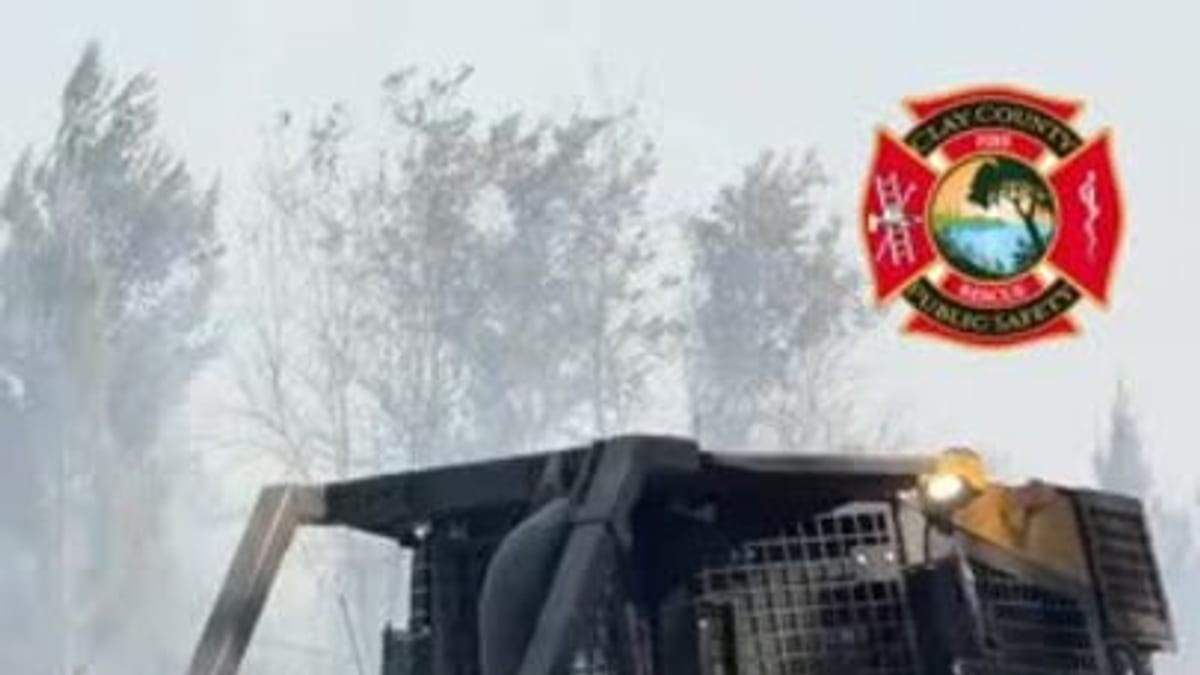
Wildfire activity near tracks halts trains in place
Publicly available information shows that a complex of wildfires along the Clay and Putnam County line in northern Florida intensified over the weekend, burning thousands of acres close to an important freight and passenger rail corridor. As fire crews focused on containment, dispatchers temporarily stopped all rail movements through the affected stretch, forcing several Amtrak trains to halt in remote areas with passengers still on board.
Coverage from national and local outlets indicates that at least one northbound Silver Meteor train from Miami to New York and other long-distance services, including the Auto Train between Sanford, Florida, and Lorton, Virginia, were directly affected. Some trains remained stationary for close to a full day while crews waited for clearance to move or for alternative arrangements to be organized.
Rail operations data and media reports describe smoke and fire burning on both sides of the tracks in parts of the corridor, creating unsafe conditions for continued train movements. With the rail line effectively cut, on-board staff were required to keep passengers in place until conditions improved and dispatchers could safely route trains away from the fire zone.
Passengers endure waits of 18 to 24 hours
Accounts compiled from news segments and social media posts describe passengers sitting on stalled trains in northern Florida for 18 to 24 hours with limited information about when service would resume. One train traveling north from Miami came to a stop near DeLand and remained there for much of the day and night, while another service halted closer to Palatka as conditions around the tracks deteriorated.
Individual travelers reported that the extended stop created mounting frustration as hours passed without a clear timeline for movement. Some posts referenced stretched food supplies, difficulties for families with small children and pets, and concerns about access to medication and fresh air in packed rail cars. In several accounts, passengers said they were discouraged from disembarking because the train was on open track some distance from public roads.
Published coverage highlights that despite the lengthy delay, rail crews kept power, lighting, and basic services operating on board while coordinating with operations centers farther up the line. After fire conditions improved enough to allow limited movements, some stalled trains reversed direction or were rerouted to stations where passengers could finally disembark or transfer to other transport.
Cancellations, short turns and bus bridges ripple across network
Schedules released by Amtrak and summarized in media reports show that the wildfire disruption triggered widespread changes to Florida services beginning Monday. Auto Train departures between Sanford and Lorton were canceled on at least one day, while the Silver Meteor route operated only between Jacksonville and the Northeast, with its South Florida segment suspended.
Other long-distance services, including a route that connects Miami and Chicago via Washington, were temporarily shortened to start and end in Savannah, Georgia, rather than South Florida. Some departures were canceled outright as dispatchers worked around closed track segments and prioritized equipment positioning for when the line could safely reopen.
Bus bridges were added on short notice to carry passengers between Jacksonville and South Florida for select departures, but capacity was limited and trip times were significantly longer than usual rail journeys. Travelers already en route encountered missed connections and overnight stays as the ripple effects spread up and down the East Coast timetable.
For many passengers, the disruption meant last-minute changes to vacation plans, delayed arrivals for cruises or flights, and unexpected costs for hotels and meals. Travel industry observers note that such events can have a cascading impact on regional tourism, especially during busy spring travel periods.
Fire risk adds to climate and reliability concerns for rail
The Florida incidents underscore how climate-related hazards are increasingly intersecting with long-distance rail operations. Federal transportation analyses have previously noted that wildfires and wildfire smoke can impair visibility, damage infrastructure and require sudden closures of lines when flames encroach on rights of way, leading to cascading delays across large networks.
In Florida, a combination of dry vegetation, gusty winds and warm temperatures has set the stage for fast-spreading fires during the spring, with the Clay and Putnam County complex growing rapidly over several days. Rail lines that run through forest and scrubland are particularly exposed when fires ignite in adjacent terrain, and closures can be prolonged if burning occurs on both sides of the track.
Travel planners point out that, as these events become more frequent, railroads and public agencies may need to expand early-warning systems, add more flexible bus backup options and improve information channels with passengers. For travelers, the Florida disruption serves as a reminder that even ground transportation can face severe interruption when extreme weather and fire conditions align.
What travelers should know before boarding
For passengers planning upcoming train journeys through wildfire-prone regions, recent events in Florida illustrate the value of monitoring conditions and building flexibility into itineraries. Publicly available guidance from transportation and emergency management agencies generally recommends checking both railway notices and regional fire updates on the day of departure, especially during dry seasons.
Travel specialists suggest that passengers on long-distance routes consider packing extra water, snacks, any required medications and portable phone chargers in case of extended delays on board. Having key contacts and confirmation numbers stored offline can help if mobile connectivity is disrupted while a train is held between stations.
When disruptions occur, rail companies typically offer rebooking or refunds for canceled segments, along with substitute bus transportation where feasible. However, capacity constraints and safety restrictions around fire zones mean that options may be limited. Observers note that travelers who maintain flexible arrival times and backup plans for hotels or onward connections are often better positioned to adapt when services are interrupted.
For now, reports indicate that most Amtrak services in Florida are gradually returning to normal as fire crews make progress on containment. Even so, the episode has added a new layer of concern for passengers who rely on long-distance trains, highlighting how quickly wildfires can turn a routine journey into an overnight ordeal.