


More news on this day
Raging wildfires in northeast Florida have brought key Amtrak routes to a standstill, leaving hundreds of passengers stuck on parked trains for more than a day and fueling growing frustration over delays, limited information and deteriorating onboard conditions.
Get the latest news straight to your inbox!
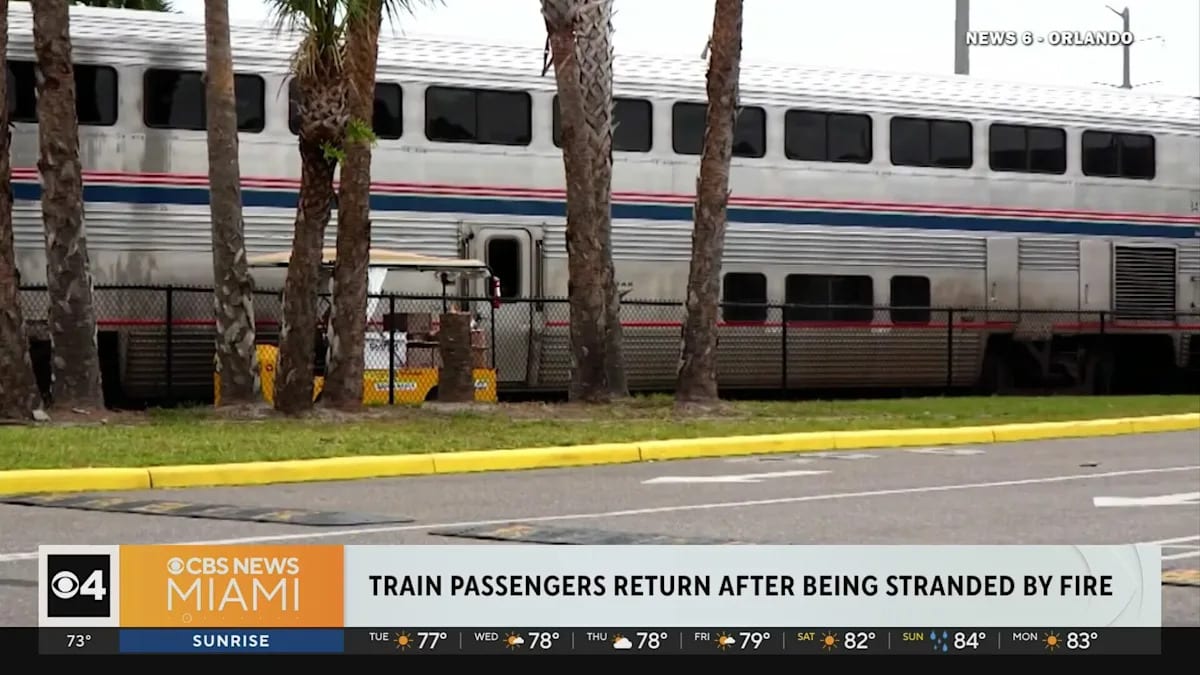
Crews Road Fire shuts tracks and traps trains in place
The disruption centers on the fast-moving Crews Road Fire burning along the border of Clay and Putnam counties south of Jacksonville. Publicly available information from state wildfire trackers describes a fire that has raced across thousands of acres in a matter of days, sending thick smoke across highways and rail lines that connect central and north Florida.
Rail traffic through the area, including long-distance Amtrak services, has been halted where tracks run close to the fire zone. Reports indicate that multiple trains were ordered to stop on open track as conditions worsened, with dispatchers and railroad partners blocking movements while crews worked to contain advancing flames and clear heavy smoke.
Passenger accounts shared with television stations and online forums describe trains standing idle for long stretches near DeLand and in other parts of northeast Florida, with little sense of when it would be safe to move again. For many on board, what began as a routine intercity journey quickly turned into an overnight ordeal in remote areas with no access to stations.
Hours stretch into a day as onboard conditions decline
As the fire expanded and closures remained in place, what passengers initially expected to be a brief pause turned into delays of 18 to nearly 30 hours for some trains. Riders on the Silver Meteor and other long-distance services have reported being held in place through the night and well into the following day while railroad managers waited for clearance to resume operations.
Frustration grew as the long stoppage began to strain onboard systems designed for normal trip lengths. Social media posts and passenger interviews collected by regional news outlets describe dwindling water supplies, stretched food stocks and toilets reaching capacity on at least one northbound train, contributing to mounting discomfort for travelers confined to their cars.
Several riders have complained publicly about inconsistent updates and long gaps between announcements, saying they struggled to understand whether they were being rerouted, held for a crew change or simply waiting for fire conditions to improve. While some messages acknowledged the wildfire threat and track closures, passengers say they received few concrete timelines, deepening the sense of uncertainty on board.
Amtrak cancels services and reroutes around the fire zone
As conditions worsened on April 20, Amtrak publicly announced sweeping changes to Florida operations, canceling its popular Auto Train between Sanford, near Orlando, and Lorton, Virginia, and truncating several other long-distance routes. According to published coverage, the Silver Meteor began and ended in Jacksonville instead of South Florida, while the Floridian route was shortened to operate only as far south as Savannah.
The railroad also introduced substitute bus service on portions of the disrupted corridor, attempting to move passengers around the closed segment between Jacksonville and central and south Florida. However, those measures came too late for customers already on trains that had been ordered to stop near the wildfire, who remained stuck until rail traffic could safely resume or equipment could be repositioned.
Rail industry reports note that Amtrak operates over tracks owned and controlled by freight railroads in much of Florida, which can complicate responses during fast-changing emergencies. Dispatch decisions about when to close or reopen a corridor near an active fire typically involve host freight carriers and state agencies, leaving Amtrak to adapt service plans around those calls.
Travelers question emergency preparedness and communication
The extended delays have prompted broader questions from riders about how the railroad prepares for and manages extreme-weather disruptions. Passengers who shared their experiences online described feeling unprepared for such a long stoppage, saying they had limited access to fresh water and could not easily obtain medical or mobility assistance while the train remained far from a station platform.
Some frequent riders pointed to past incidents in other parts of the country, where storms or infrastructure problems have left trains stranded for long periods, arguing that the Florida wildfire delays reflect a recurring challenge for long-distance passenger rail. They have called for clearer contingency plans, including backup supplies, improved sanitation strategies and more detailed communication when trains are held in remote locations.
Rail advocates counter in public commentary that wildfires present complex safety and logistical constraints, especially in regions where there are few alternative rail routes. They note that keeping passengers on board can in some cases be safer than disembarking in active fire zones or along isolated track segments, even as it creates difficult conditions inside the train.
Wildfire season underscores vulnerability of Florida rail travel
The Crews Road Fire is part of a broader pattern of 2026 wildfires across Florida, where prolonged drought and high winds have combined to create elevated fire danger in multiple regions. State forestry data and regional news coverage indicate that northeast Florida has been particularly hard hit, with evacuations, highway closures and a series of smoke-related travel disruptions.
For rail passengers, the latest incident underscores how quickly such fires can unravel even meticulously planned itineraries. Long-distance routes that link Florida to major cities in the Northeast and Midwest often traverse isolated terrain, leaving little margin for alternative paths when a single corridor is compromised by flames or thick smoke.
Travel analysts note that the disruption comes at a time of renewed interest in rail as an alternative to congested highways and short-haul flights. How Amtrak addresses the fallout from the wildfire delays, including passenger complaints and calls for stronger emergency protocols, is likely to shape traveler perceptions of reliability on some of its most important Florida routes in the weeks ahead.