


More news on this day
Dozens of UK-bound passengers have been left stranded at Milan’s airports in recent days, as lengthy border control queues linked to the European Union’s new biometric Entry/Exit System cause flights to depart with large numbers of empty seats.
Get the latest news straight to your inbox!
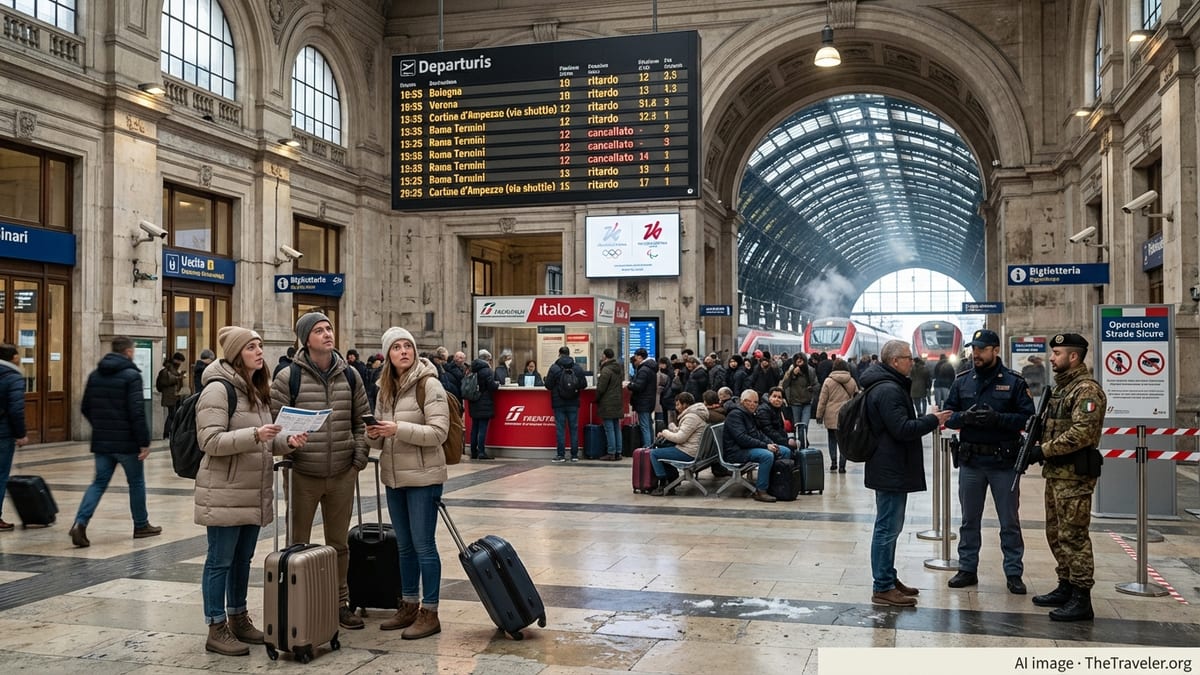
Long queues leave flights to the UK departing half empty
Reports from Italian and UK travel coverage indicate that disruption has intensified across Milan’s airports since mid-April, with particular pressure at Linate and Bergamo, both key gateways for low-cost services to the United Kingdom. Passengers describe joining non-EU passport lines only to find waits stretching beyond two or even three hours, far exceeding the time they had allowed before departure.
According to recent published accounts, one easyJet service from Milan Linate to Manchester in mid-April left with more than 100 ticketed passengers still stuck in passport control. Separate coverage of Ryanair operations from the Milan area to Manchester highlights similar scenes, with flights leaving on time but with dozens of empty seats because travellers could not clear border checks in time to board.
Online travel forums and social media posts from April 21 and 22 add to the picture, with contributors warning that early morning departures to the UK are particularly affected. One widely shared account referenced queues at Milan Linate described as “everlasting,” with claims that around 100 people missed a single UK-bound departure despite arriving at the airport several hours before take-off.
While delays have been reported at other European airports, Milan has emerged as a focal point because of its heavy reliance on UK leisure and business traffic and a dense schedule of short-haul departures clustered at peak times.
New biometric Entry/Exit System under scrutiny
The disruptions coincide with the full roll-out of the EU’s Entry/Exit System, a biometric database designed to register non-EU nationals as they cross the bloc’s external borders. Under the scheme, UK passport holders are treated as third-country travellers and are required to provide fingerprints and facial images on their first entry, with subsequent crossings verified against the stored records.
Industry bodies and specialist visa platforms note that although the system is intended to enhance security and automate overstay detection, early implementation has produced longer processing times than anticipated. Airlines and airport groups have publicly highlighted examples of border queues of two to three hours at several European hubs, with flights to the UK singled out in some briefings as leaving with significantly fewer passengers than booked.
Travel industry analysis suggests that the pressure is being felt most acutely at airports where non-EU traffic is concentrated in specific banks of departures and where border facilities have limited spare capacity. In Milan’s case, the combination of popular weekend city-break traffic, school holiday demand and the introduction of biometric checks appears to have created a near-perfect bottleneck at passport control.
Some commentary has also pointed to staffing and layout issues at certain terminals, including Linate, where passengers transferring from Schengen to non-Schengen flights must negotiate both bus transfers and repeat security screening in addition to the new biometric procedures.
Human cost for stranded UK passengers
For those caught in the delays, the impact goes far beyond inconvenience. Accounts compiled in UK and Italian media describe families with children and older travellers being left in departure halls after watching their flights push back without them, despite holding valid boarding passes and arriving within the suggested check-in window.
Several passengers have reported spending hundreds or even thousands of pounds on last-minute replacement tickets, extra hotel nights and alternative routes home via other European cities. Others have described sleeping overnight in Milan while waiting for the next available seat to the UK, with some services reportedly sold out for days during peak holiday periods.
Consumer rights writers note that many travellers are discovering only after the event that standard air passenger compensation rules are unlikely to apply. Because the disruption arises from border control operations and not from airline-controlled factors such as crew or technical issues, specialists say it is typically treated as an “extraordinary circumstance,” limiting the scope for cash payouts even when flights leave with significant numbers of booked passengers still in the terminal.
Nonetheless, experts advise that affected travellers still retain the right to assistance at the airport in certain situations, including meals or accommodation during long waits, depending on the length of delay and the airline’s policies.
Calls for clearer guidance and better crowd management
As reports of missed flights accumulate, travel commentators and passenger groups are increasingly focused on the question of communication. Many of the most widely shared accounts from Milan describe confusion over when to proceed through passport control, limited signage about expected waiting times and a lack of real-time updates about the likelihood of making a specific flight.
Several incident reports suggest that some passengers remained in the public area of the terminal waiting for gate information, only to find that passport queues became unmanageable once gate numbers were finally posted. Others say they were held in long lines with little visible triage for imminent departures, even as boarding times approached.
Analysts argue that relatively simple measures, such as earlier prompts to clear border control for non-Schengen flights, queue lanes dedicated to travellers with flights closing soon and more consistent public announcements, could reduce the number of people left behind. At airports like Milan Linate, where space is constrained, crowd flow planning is viewed as particularly critical.
Airport operators and industry associations, in public briefings about the new system, have urged governments to provide flexibility in the early stages of implementation, including the ability to adjust staffing levels and temporarily relax some procedural constraints where safe to do so, in order to prevent chronic congestion.
What UK travellers using Milan airports should expect now
With the busy summer season approaching, travel experts are urging UK passengers flying home from Milan to build in significant extra time before departure. Recent advisory pieces suggest allowing at least three and a half hours at the airport for non-Schengen flights while the new border system beds in, particularly for morning and evening peaks when multiple UK-bound services depart within a short window.
Practical guidance emerging from recent cases includes checking in at the first opportunity, proceeding to passport control immediately after bag drop rather than waiting for gate announcements, and keeping digital or physical records of any disruption, such as photographs of queue lengths and screenshots of boarding time messages.
Passengers with tight onward connections in the UK are also being encouraged to factor in the risk of missed departures from Milan when planning itineraries. Travel writers note that flexible tickets or travel insurance policies explicitly covering missed connections due to immigration delays may be especially valuable while the Entry/Exit System remains in its early, more disruption-prone phase.
For now, Milan’s experience offers an early case study of how a major policy change at Europe’s borders can ripple through everyday travel. With biometric checks now a fixed part of the landscape for UK visitors, the immediate challenge for airports, carriers and passengers alike is to adapt quickly enough to prevent more holidaymakers and business travellers from being left stranded at the gate.