


More news on this day
Kazakhstan’s low cost carrier FlyArystan has resumed direct flights between Almaty and Samarkand for the 2026 season, reinstating a short air bridge that is expected to strengthen tourism flows, cultural exchange and business travel between Kazakhstan and Uzbekistan.
Get the latest news straight to your inbox!
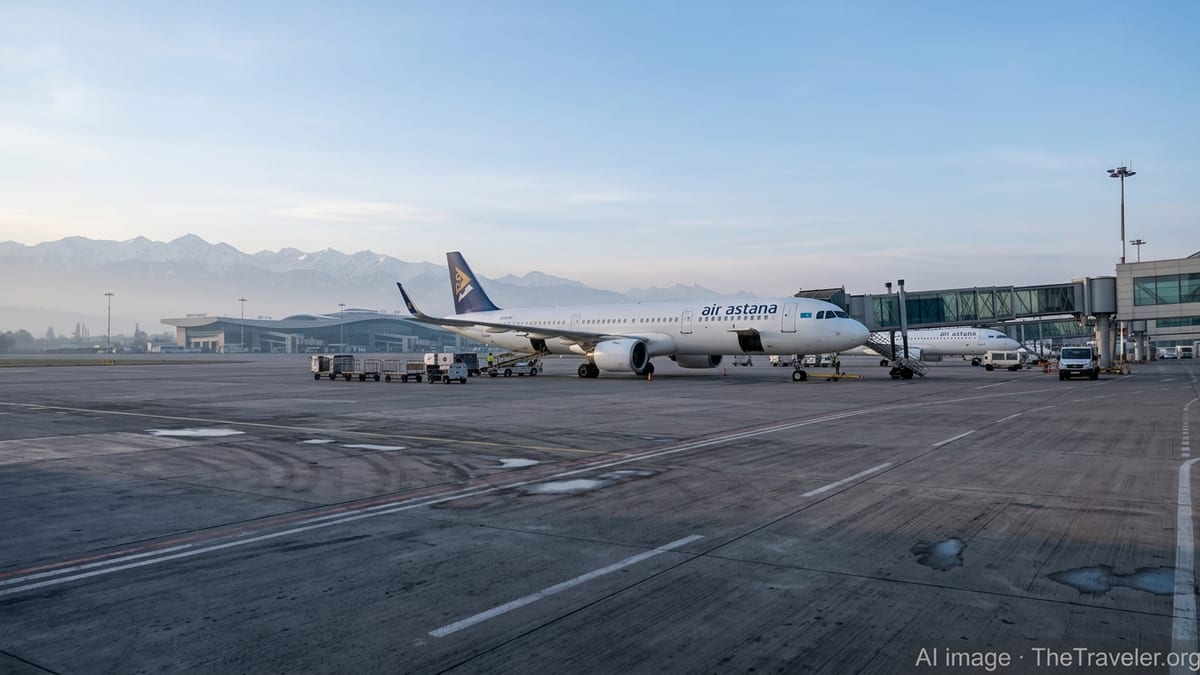
Seasonal Direct Flights Return on Key Central Asian Route
According to publicly available information from the airline, FlyArystan has relaunched ticket sales for nonstop services on the Almaty–Samarkand–Almaty route within its spring and autumn schedules for 2026. The move restores a direct connection between Kazakhstan’s largest city and one of Uzbekistan’s most visited heritage destinations after a period in which nonstop low cost options were limited.
The route is scheduled to operate twice weekly, on Tuesdays and Saturdays. For the spring timetable, flights are set to run from 21 March to 30 May 2026, before resuming for the autumn period from 1 September to 24 October 2026. Flight tracking and timetable platforms show the service operating as flight FS7879 in at least one direction, using single class Airbus A320 family aircraft configured for high density short haul operations.
Independent schedule data indicates a block flight time of around 1 hour 50 minutes for the 935 kilometer sector between Almaty International Airport and Samarkand. The short duration significantly reduces travel time compared with rail or multi stop itineraries via Tashkent or other Central Asian hubs, making short breaks and weekend trips more feasible for both leisure and business travelers.
Industry observers note that FlyArystan has been steadily rebuilding and expanding its network of regional international routes from Kazakhstan, with Samarkand returning to the map alongside new services to destinations in Turkey and China. The resumed flights add another spoke from Almaty into a growing web of point to point connections across Eurasia.
Boost for Tourism to One of the Silk Road’s Iconic Cities
Travel industry reports suggest that the restoration of direct flights is expected to give a measurable lift to tourism in Samarkand, a city that has been positioning itself as a flagship Silk Road destination. The city’s UNESCO listed Registan ensemble, Bibi Khanym Mosque and Shah i Zinda necropolis have become fixtures on regional itineraries that often combine Kazakhstan and Uzbekistan in a single trip.
Previously, many visitors from Kazakhstan either connected via Tashkent or traveled overland on longer multi day journeys to reach Samarkand. The renewed nonstop link from Almaty shortens that journey to a same day hop, allowing travelers to arrive in the late morning or around midday and begin touring historic sites almost immediately.
Tour operators active in Central Asia have already begun advertising new packages that pair Almaty’s mountain scenery and urban attractions with Samarkand’s architectural heritage, using the FlyArystan schedule to create three to five day circuits. Publicly available marketing materials highlight the appeal for first time visitors from Europe and Asia who want to experience two countries in one trip without adding complex transfers.
Local stakeholders in Samarkand’s hospitality sector are also expected to benefit. More frequent and predictable air links from Kazakhstan support higher hotel occupancy in shoulder seasons, when international arrivals can be more volatile. The 2026 spring and autumn windows chosen for the route align with milder weather and peak interest in cultural touring, which can help smooth seasonal demand.
Strengthening Cross Border Cultural and People to People Links
Beyond visitor numbers, the resumption of direct flights between Almaty and Samarkand carries symbolic weight for regional connectivity. Analysts of Central Asian transport networks point out that relatively few low cost, short haul international routes within the region are operated on a regular basis, and that point to point links can play an important role in supporting cultural and educational exchanges.
The route connects two cities that share deep historical ties through trade and scholarship along historic Silk Road corridors. Contemporary links include student exchanges, academic cooperation in fields such as history and archaeology, and a growing number of cultural events that draw participants from both Kazakhstan and Uzbekistan.
The availability of a low fare, short duration flight is expected to make it easier for residents of both cities to visit family, attend festivals or take part in conferences without routing through larger hubs. For young travelers in particular, budget friendly options can open up opportunities for first time international trips within the region.
Observers of Central Asian integration trends note that transport links such as Almaty–Samarkand complement broader government level initiatives aimed at improving cross border mobility. Visa liberalization, simplified customs procedures and collaborative tourism branding campaigns gain practical impact when backed by reliable air services that reduce cost and travel time.
Economic Connectivity and the Role of Low Cost Carriers
From an economic perspective, the return of the Almaty–Samarkand route underscores the growing role of low cost carriers in knitting together secondary and regional cities across Central Asia. FlyArystan, headquartered in Almaty as part of the Air Astana Group, has built a model focused on high aircraft utilization, simplified service and competitive base fares, which can stimulate new demand on relatively short sectors.
Business travelers and small and medium sized enterprises are expected to benefit from easier access to markets in southern Kazakhstan and central Uzbekistan. Publicly available route analyses indicate that passengers on the Almaty–Samarkand flight include traders, tour operators, students and professionals in sectors such as construction, agriculture and services.
Almaty’s role as a financial and commercial center makes it a natural origin and destination for corporate travel, while Samarkand is home to growing logistics hubs and investment projects tied to tourism, infrastructure and manufacturing. Regular, low cost air links help support this emerging economic ecosystem by enabling frequent, relatively low cost trips for meetings, site visits and negotiations.
Regional aviation specialists highlight that each additional direct route within Central Asia can have multiplier effects, encouraging airports to invest in facilities, supporting ground handling and catering businesses, and creating employment opportunities in both origin and destination cities. The twice weekly Almaty–Samarkand flights may be modest in frequency, but they form part of a wider pattern of incremental improvements in regional air connectivity.
Almaty and Samarkand Position for a More Connected Future
The timing of FlyArystan’s seasonal restart also coincides with infrastructure upgrades at both ends of the route. Almaty International Airport has expanded its capacity with a new international terminal dedicated to handling growing passenger volumes, including those from low cost carriers and new foreign entrants. In Samarkand, airport expansion and the emergence of a home based airline have been part of a broader strategy to position the city as a gateway for tourism and investment.
Travel analysts view the Almaty–Samarkand service as one of several new or renewed connections that, taken together, are reshaping how travelers move around Central Asia. Rather than relying solely on a few major hubs, passengers increasingly have the option of flying directly between secondary cities, cutting journey times and diversifying itineraries.
For airlines, such routes can serve as testing grounds for demand, with the possibility of increasing frequencies or extending seasons if passenger numbers develop as expected. For travelers, they offer greater flexibility, particularly when combined with relaxed visa regimes that allow multi entry stays across neighboring states.
As the 2026 travel season approaches, the performance of the Almaty–Samarkand route will be closely watched by industry observers interested in the evolution of Central Asia’s aviation landscape. Its success could encourage additional cross border routes that bring the region’s historic cities and modern economic centers into closer and more frequent contact.