


More news on this day
Travelers flying between Thailand and key Middle East hubs are facing fresh disruption as Gulf Air, Qatar Airways, and several partner airlines cancel or reroute more than a dozen services, affecting links to Doha, Tel Aviv, Bangkok, and onward connections across Europe and Asia.
Get the latest news straight to your inbox!
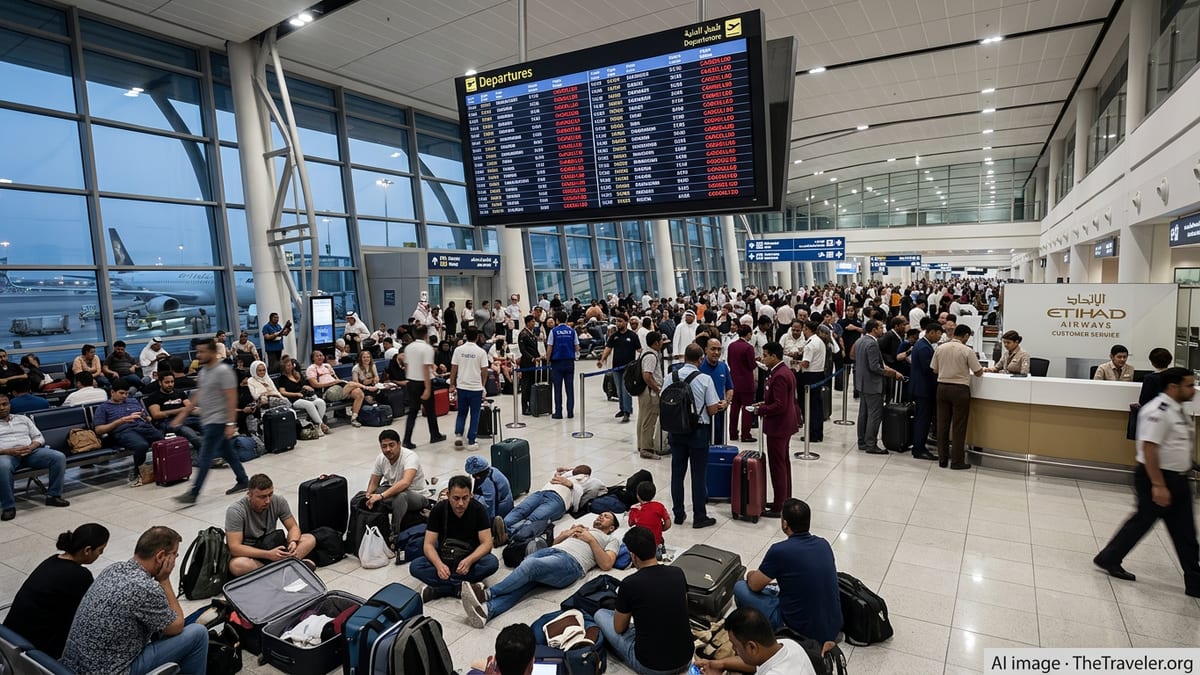
New Wave of Cancellations Hits Thailand–Gulf Corridors
Publicly available schedules and tracking data for mid June 2026 show a new round of cancellations on routes linking Thailand with Gulf hubs, after months of rolling disruption tied to airspace restrictions and regional tensions. Several flights that normally connect Bangkok and other Thai cities with Doha and beyond have disappeared from timetables or are listed as cancelled close to departure.
Gulf Air and Qatar Airways are among the most affected operators on Thailand–Gulf routes, with services to and from Doha and Bahrain adjusted or dropped on short notice. Observed patterns in airline systems indicate that some Bangkok to Doha frequencies, as well as selected connecting flights onward to Europe and the Middle East, have been pulled for specific days or temporarily removed from sale.
The latest changes come on top of earlier suspensions of flights serving Tel Aviv and other regional destinations, which had already narrowed options for travelers transiting through the Gulf. With several carriers still limiting or avoiding certain air corridors, routings that once relied on seamless connections through Doha or Bahrain are now subject to last minute changes.
While core trunk routes between Bangkok and major Gulf hubs remain in operation on many days, the patchwork of cancellations means that passengers can no longer assume previously daily services will run as scheduled. Instead, travelers are being advised by industry observers to monitor bookings frequently and be prepared for rebooking or alternative routings at short notice.
Impact on Routes to Doha, Tel Aviv, and Beyond
The sharpest impact is being felt on itineraries that rely on Doha as a connecting gateway between Thailand and Europe or the eastern Mediterranean. Flight data for June 15 and 16 point to trimmed frequencies on specific Bangkok–Doha services, with some overnight departures withdrawn and others consolidated into fewer daily rotations.
Passengers heading to or from Tel Aviv face even tighter constraints. A number of international airlines had already extended suspensions of their Ben Gurion operations earlier in the year, and more recent reports highlight continued volatility in schedules. This has reduced the viability of traditional one stop Thailand–Tel Aviv journeys via Gulf hubs, pushing travelers onto longer routings through alternative European or Asian gateways.
Knock on effects are also being seen on connecting traffic to secondary European destinations, where seats that would normally be supplied by smooth Gulf connections are now limited. Travel forums and booking platforms show examples of travelers struggling to find economy seats on non Gulf routings from Bangkok for the coming days, suggesting that pressure is building on remaining corridors.
Within Thailand, Bangkok remains the focal point for affected traffic, but cancellations on long haul services can also ripple out to domestic legs and regional links that feed Gulf bound flights. For travelers flying in from Phuket, Chiang Mai, or other tourist centers to connect in Bangkok, tighter minimum connection times and reduced backup options are adding to the sense of uncertainty.
Why Airlines Are Pulling Flights at Short Notice
The latest wave of cancellations appears to be driven by a mix of operational limitations and risk assessments tied to the broader Middle East security climate. Previous months saw extended airspace restrictions, temporary airport closures, and shifting guidance to airlines, all of which have undermined the reliability of long haul schedules through the Gulf.
According to published coverage, some Gulf based carriers have gradually restored much of their global network, but pockets of instability remain. Where airspace closures or route restrictions persist, airlines are required to refile flight plans or divert around affected regions, sometimes adding hours to flight times and stretching crew and fleet resources.
In parallel, several non Gulf carriers have opted to keep their own services to Doha, Riyadh, Abu Dhabi, or Tel Aviv suspended for longer, citing uncertainty around the pace of normalization. This in turn impacts codeshare and interline itineraries, as tickets originally sold on partner metal via a Gulf hub may no longer be operable on the same dates or timings.
The result for passengers is a fragmented picture in which one day’s schedule can look nearly normal, while the next day shows multiple cancellations or aircraft swaps. Even where a particular flight number appears in booking engines, final operating decisions may not be visible until days or sometimes hours before departure.
What Travelers in Thailand Should Expect Right Now
For travelers currently in Thailand or planning imminent trips involving Doha or Tel Aviv, the most immediate effect is the risk of missed connections and forced itinerary changes. With more than a dozen flights across multiple days reportedly affected, the odds of disruption on complex multi segment journeys have risen.
Some passengers whose flights have been withdrawn are being rebooked on alternative departures through the same hub, while others are being rerouted via non Gulf gateways in East Asia or Europe. In cases where capacity is tight, rebooking options may involve overnight layovers or travel on different dates than originally planned.
Travel industry advisories recommend that passengers allow more generous connection times where possible and avoid tight back to back itineraries that rely on a single daily flight. Flexible or refundable tickets provide more room to maneuver when schedules shift, especially for long haul trips that cross multiple regions with evolving airspace conditions.
There are early signs that airlines are continuing to fine tune their June and July schedules, meaning that the current pattern of cancellations may shift again in the coming weeks. However, with several regional flashpoints still unresolved, industry analysts caution that sporadic disruption is likely to remain a feature of Thailand–Gulf travel in the near term.
How to Navigate Bookings Amid Ongoing Disruptions
Travelers affected by cancellations on Gulf Air, Qatar Airways, or partner airlines are generally being offered standard remedies such as free rebooking, route changes where available, or refunds, depending on the fare rules and point of sale. Policies can differ between airlines and even between tickets booked on the same carrier through different channels, so carefully checking the conditions attached to each booking is essential.
Publicly accessible airline support pages and travel agency advisories emphasize that passengers should avoid making independent changes until a flight is formally listed as cancelled or significantly retimed. Once a cancellation is processed in the airline’s system, additional options, including rerouting on other carriers, may become available.
Experts also highlight the importance of monitoring flight status directly through airline and airport channels in the 24 to 48 hours before departure, rather than relying solely on third party travel apps or emailed itineraries. In the current environment, last minute adjustments to aircraft type, departure time, or even operating carrier are not uncommon.
For those yet to book, one practical strategy involves building in extra resilience by choosing itineraries with multiple daily frequencies on each leg, or by selecting routes that can be reconfigured via different hubs if necessary. While no plan can eliminate all risk of disruption, understanding the current pattern of cancellations around Thailand and key Gulf hubs can help travelers make more informed choices.