


More news on this day
Several governments updated their foreign office travel advice on Thursday afternoon, issuing or maintaining alerts covering 14 countries where security, conflict or health conditions now present elevated risks for visitors.
Get the latest news straight to your inbox!
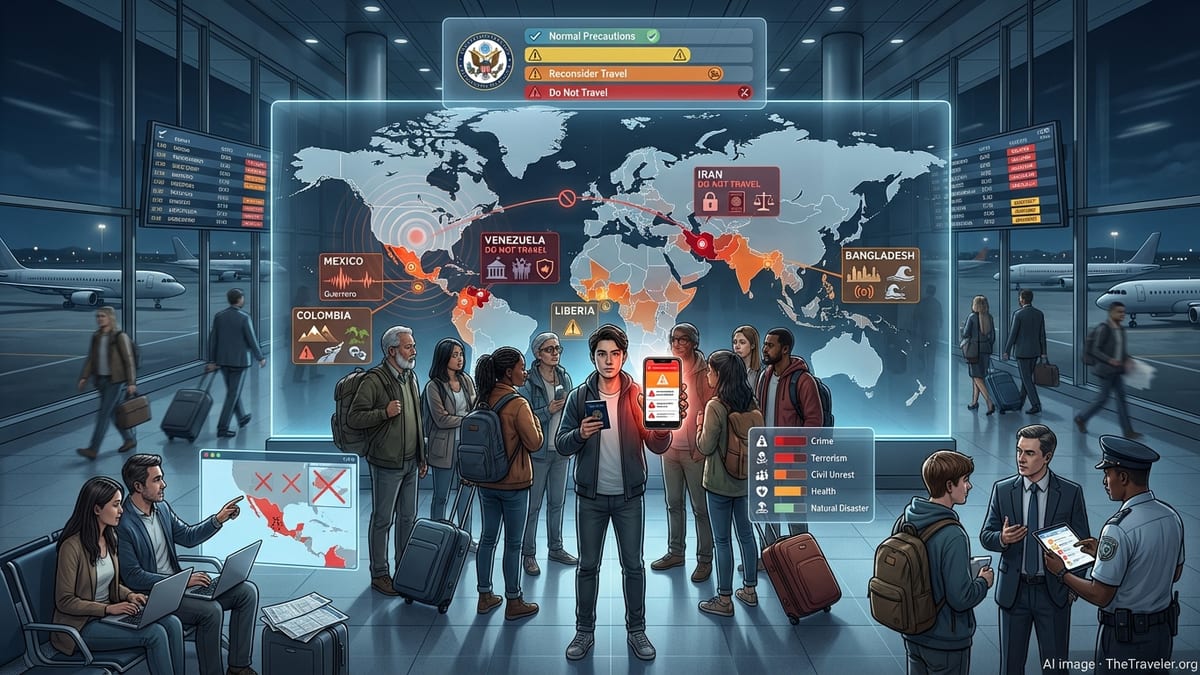
Mixed picture as travel alerts cluster around conflict zones
According to published coverage of recent advisories, a significant share of the latest alerts focus on countries affected by ongoing conflict and regional instability. Updated notices highlight heightened risks around active military operations, missile and drone strikes, and localised shelling in and around border regions. Travelers are being told that conditions can change quickly, with short-notice curfews, air raids and transport disruption still possible in several destinations.
Recent foreign office updates on Ukraine, for example, underline the impact of sustained attacks on critical energy infrastructure, leading to rolling power cuts, pressure on healthcare services and reduced rail reliability. Publicly available information shows that some governments continue to advise against all travel to front-line areas and non-essential travel to large parts of the country, while permitting limited movement elsewhere under strict precautions.
Other advisories for the wider region flag the risk of spillover tensions, particularly along borders shared with active conflict zones. While commercial flights and cross-border routes remain open in many cases, travelers are being encouraged to maintain contingency plans, stay informed via local alert systems and be prepared to shelter quickly if air alerts or security warnings are issued.
Security analysts note that these conflict-linked advisories can remain in place for extended periods, even when frontline conditions show periods of relative calm. For travelers, that means carefully reading the detail of each country’s advice page rather than relying on headline risk levels alone.
Middle East and Gulf: downgrades for some, volatility for others
In the Middle East and Gulf, the latest travel picture is patchy. Reports indicate that a small number of states have recently relaxed strict “do not travel” guidance for selected hubs where the immediate risk of regional escalation has eased. One widely reported change this week involved the removal of blanket restrictions on travel to a major Gulf aviation hub, a move welcomed by airlines and tour operators who see it as a step toward more normal traffic flows.
At the same time, other notices for the region remain at elevated caution levels. Publicly available advisories continue to warn about the potential for sudden airspace closures, disruption to transit routes and localised unrest. In several Gulf and Levant states, travelers are urged to avoid demonstrations, keep a low profile in crowded places and follow any instructions issued through national alert systems.
Australia’s most recent revision of its Middle East guidance, widely covered in regional media, illustrates this mixed trend. Officials there have downgraded some warnings but continue to recommend that travelers reconsider non-essential trips and remain ready for last-minute itinerary changes. Similar language appears in advice issued by European foreign ministries, which stress that the security environment remains fluid even where commercial activity looks largely normal on the ground.
For holidaymakers heading to popular stopover cities or resort destinations, the practical impact is that travel may be possible but is framed by robust situational awareness and flexible booking conditions. Insurance providers in particular are directing customers to check whether their policy remains valid if government advice later changes before or during a trip.
Central Asia alert underscores regional knock-on risks
The newest addition to the Thursday alert list comes from Central Asia. Coverage by regional news outlets notes that Kazakhstan’s Ministry of Foreign Affairs has recommended that its citizens refrain from travelling to 14 countries, largely in connection with developments in the Middle East and broader security concerns. Although this guidance is aimed at Kazakh travelers, it illustrates how instability in one region can reshape travel risk assessments far beyond the immediate conflict zone.
Public reports on the Kazakh advisory indicate that the warning is framed around a combination of heightened terrorism risk, potential disruption to air routes and uncertainty about the availability of consular support in certain destinations. The list is understood to focus on countries experiencing active conflict or severe internal tensions, including several that already appear at higher alert levels in Western foreign office systems.
Travel policy analysts point out that such outbound advisories often mirror, rather than contradict, wider global sentiment. When one state calls on its citizens to avoid a cluster of destinations, that move can prompt other governments and private-sector risk consultants to review their own assessments. Over time, this can lead to more consistent messaging across different advisory systems, although thresholds for warning levels still vary from country to country.
For international travelers, the main takeaway is that even advisories aimed at another nationality can serve as an early indicator of shifting perceptions of risk. Monitoring regional statements can help travelers anticipate where airline schedules, insurance coverage or tour operations may tighten next.
Europe and North America: lower baseline, but targeted cautions
Outside traditional hotspots, Thursday’s foreign office updates suggest a relatively low baseline of risk across much of Europe and North America, but with targeted cautions linked to protests, major events and isolated security concerns. Several European capitals have recently added short-term notices relating to political demonstrations, large sports tournaments and climate protests, advising visitors to avoid protest routes and expect localised transport disruption.
Recent updates to travel advice for Switzerland, for instance, highlight demonstrations connected to high-profile diplomatic gatherings in Geneva. While these notices do not materially change the overall security assessment, they signal a need for practical planning around city-centre movements, particularly near government buildings and international organisations where marches and rallies are most likely.
North America, which is preparing to host a series of major sporting events through 2026, is also the subject of evolving advisory language. Travel risk briefings produced for the forthcoming global football tournament emphasise crowd safety, petty crime and the risk of opportunistic scams around stadiums and fan zones. Publicly available guidance also encourages visitors to pre-book accommodation, verify ticket sources and keep copies of identification documents offline in case of loss or theft.
Despite these targeted cautions, most Western foreign offices continue to classify much of Europe and North America at their lowest risk tiers. Travelers are generally advised to exercise normal precautions, monitor local news and remain aware of any city-specific alerts that might arise shortly before or during their stay.
What travelers should do in response to the new alerts
Travel experts say the expanding patchwork of advisories across 14 countries underlines the importance of checking official guidance for every destination on an itinerary, including transit hubs. Because foreign office assessments differ slightly between governments, reviewing more than one source can give a fuller picture of both baseline risks and emerging flashpoints.
Before booking, travelers are encouraged to confirm whether their insurance policies explicitly reference foreign office advice. Many standard products exclude cover for trips that go ahead against “do not travel” or “reconsider travel” guidance, or they may limit evacuation and disruption benefits once an alert is raised. Clarifying these clauses can avoid disputes later if flights are cancelled or routes become unsafe.
Once on the road, registering with consular alert services where available can provide timely information on sudden developments, from airspace closures to natural disasters. Simple steps such as sharing itineraries with relatives, backing up documents digitally and keeping some emergency cash separate from main wallets also remain widely recommended in public guidance.
Ultimately, the new Thursday alerts do not close the door on international travel, but they do reinforce a shift toward more self-reliant trip planning. As governments refine their warning systems, the burden is increasingly on travelers to understand the risk language, make informed decisions and build enough flexibility into their plans to adapt if conditions change.