


More news on this day
African aviation’s brightest growth story is colliding with one of its darkest financial headaches, as Ethiopian Airlines, the continent’s largest carrier by capacity, grapples with an estimated 90 million dollars trapped in foreign markets amid worsening currency shortages and sanctions-driven payment restrictions across Africa and the Middle East.
Get the latest news straight to your inbox!
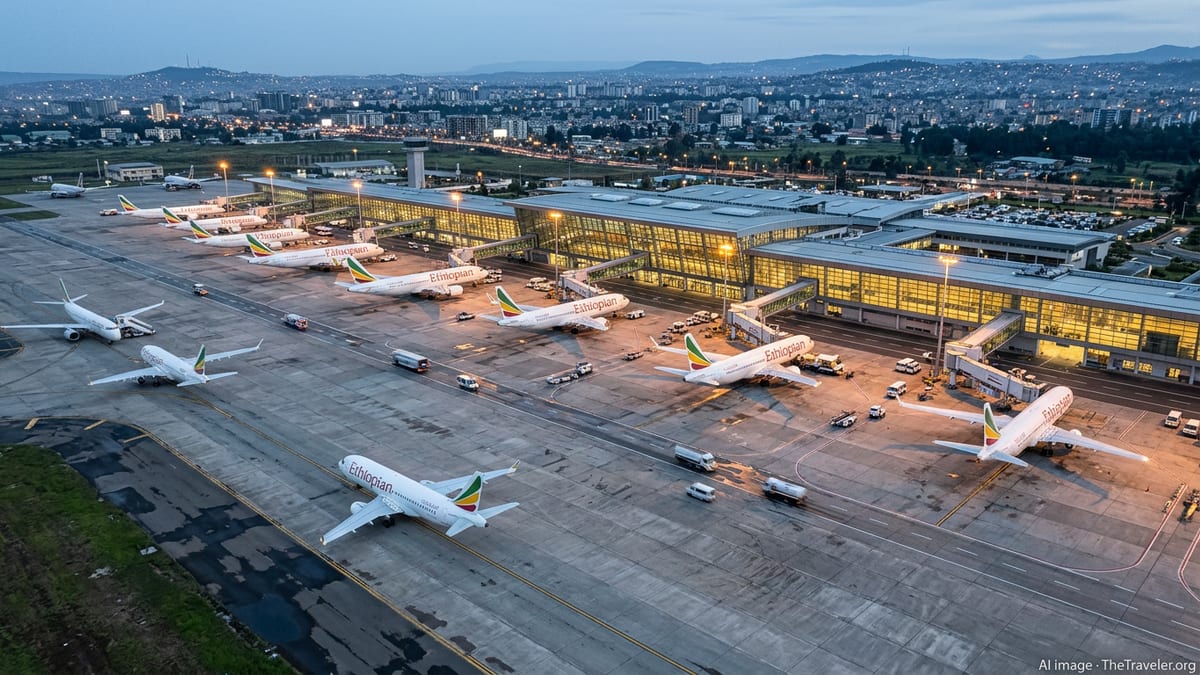
Blocked airline funds surge across Africa
Industry data from the International Air Transport Association shows that governments are holding about 1.2 billion dollars in airline revenues globally, with approximately four fifths of that total located in Africa and the wider Middle East region. Much of this money comes from ticket and cargo sales that cannot be repatriated because of strict foreign exchange controls, illiquid currency markets, or administrative caps on dollar access.
Policy papers from African aviation bodies and recent analysis highlight that at least seven African jurisdictions rank among the world’s largest sources of blocked airline funds, including Algeria, Ethiopia, Angola, Mozambique, Eritrea, Zimbabwe and countries using the Central African CFA franc. In these markets, carriers that have already provided services and carried passengers are left waiting months or years before they can access the proceeds in hard currency.
As travel demand rebounds and airlines add capacity into key hubs such as Addis Ababa, Cairo and Lagos, the amount of cash frozen in local banking systems is rising. Reports indicate that blocked balances on the continent are now approaching the one billion dollar mark, up from significantly lower levels in the immediate post‑pandemic period, even as regulators publicly pledge to improve access to foreign exchange.
Analysts warn that, beyond the immediate liquidity hit to airlines, the blocked funds trend reflects deeper macroeconomic distress. Many of the worst‑affected states are battling steep currency depreciation, double‑digit inflation and shortfalls in foreign reserves, prompting authorities to ration dollars and prioritise fuel, food and debt service ahead of commercial remittances.
Africa’s largest airline feels the strain
Against this backdrop, Ethiopian Airlines has emerged as both a regional success story and a high‑profile casualty of the repatriation squeeze. Capacity data compiled by aviation intelligence providers indicates that Ethiopian is Africa’s largest carrier in mid‑2026, operating more than two million scheduled seats a month and expanding its network faster than many global rivals.
Publicly available information shows that the airline has recently reported record annual revenues and double‑digit passenger growth, strengthening its position as the linchpin of Addis Ababa’s hub strategy and a major source of foreign currency earnings for Ethiopia. Yet despite these headline gains, a growing share of its income remains locked in overseas markets where hard currency payments are constrained.
Regional media coverage and sector reports indicate that Ethiopian now has around 90 million dollars of revenue classified as blocked or significantly delayed, spread across several African and Middle Eastern states. This total includes balances in countries struggling with chronic dollar shortages and at least one neighbour where political tensions have spilled over into aviation payments, leaving ticket sales frozen and remittances stalled.
The airline is still pressing ahead with long‑term investments, including a multibillion‑dollar new airport project outside Addis Ababa and fleet expansion to serve new intercontinental routes. However, the cash that cannot be repatriated reduces financial flexibility, increases exposure to exchange‑rate swings, and complicates decisions on route economics and aircraft deployment.
Forex shortages, sanctions and politics deepen the crisis
The mechanics behind the trapped funds problem are varied, but most trace back to limited access to foreign currency. In several African economies, central banks are managing severe shortages of US dollars and other reserve currencies, prompting authorities and commercial banks to delay or partially settle repatriation requests. Airlines often find themselves at the back of the queue after fuel importers, food traders and government obligations.
Sanctions and diplomatic rifts are adding another layer of risk. Some carriers, including Ethiopian Airlines, face payment interruptions in countries affected by international sanctions or strained bilateral relations, where banks are either unwilling or unable to process cross‑border settlements. In at least one case involving a neighbouring state, recent coverage describes airline ticket revenues being frozen amid a broader deterioration in political ties and security concerns.
Where funds are blocked for extended periods, the losses are not only about cash flow. If a local currency depreciates sharply while revenues sit in restricted accounts, the dollar value of those balances can shrink dramatically by the time conversion is allowed. For an airline operating on thin margins in a capital‑intensive industry, that erosion can quickly become material.
Industry observers also point to the administrative burden created by complex approval processes and opaque allocation rules. Carriers may be required to submit repeated applications for repatriation, navigate shifting documentation requirements, or accept partial settlements at unfavourable exchange rates, all of which add costs and uncertainty to route planning and pricing.
Impact on fares, connectivity and tourism
The financial pressures generated by blocked funds are increasingly shaping the travel experience for passengers. To mitigate the risk of accumulating unrecoverable balances, airlines have introduced higher fares in markets with severe repatriation constraints, reduced capacity, or shifted sales toward currencies and channels that offer better dollar access. In some extreme cases on the continent, carriers have cut routes entirely or limited frequencies to cities where cash extraction is most difficult.
For Ethiopian Airlines, which serves more than 60 African destinations and connects them to Asia, Europe and the Americas through its Addis Ababa hub, such adjustments can ripple across the network. When frequencies are trimmed or aircraft types are downgraded on a given route because of forex risk, onward connections for business travellers, migrant workers and tourists may become less convenient or more expensive.
Tourism boards and trade bodies warn that persistent blocked funds could blunt the economic upside of Africa’s aviation recovery. Visitor arrivals are rising across safari, beach and city destinations, but elevated ticket prices or reduced connectivity threaten to divert demand to alternative hubs in the Gulf or Europe. Smaller African carriers, with thinner balance sheets than Ethiopian Airlines, may be even more vulnerable to capacity cuts and potential insolvency if they cannot release cash from high‑risk markets.
Air cargo, a critical enabler of trade in perishables, pharmaceuticals and high‑value goods, is also exposed. Where passenger flights are reduced because of currency controls, belly‑hold freight capacity shrinks, affecting exporters that rely on frequent, reliable lift to reach global markets.
Calls grow for policy fixes and regional coordination
Aviation associations and economic think tanks are stepping up pressure on governments to tackle the blocked funds problem before it derails investment in new routes and infrastructure. Policy papers circulated in recent weeks urge regulators to honour bilateral air services agreements, simplify approval procedures for repatriation, and work with international financial institutions to stabilise foreign exchange markets.
Some African states have experimented with partial solutions, including allowing airlines to use trapped local‑currency balances to cover domestic operating costs such as airport fees and maintenance, or arranging currency swaps with large investors that hold hard‑currency claims on the same country. While these mechanisms can ease short‑term pressure, they do not fully resolve the underlying scarcity of dollars or the risk of future restrictions.
For Ethiopian Airlines and its peers, the outcome of these policy debates will help determine how aggressively they can pursue expansion over the next decade. The carrier’s scale, diversified network and strategic importance to Ethiopia’s economy provide a buffer, but sustained growth depends on the ability to convert rising passenger numbers into freely usable cash.
Analysts note that the broader signal sent to global investors is just as important as the immediate impact on airlines. If foreign companies perceive that profits in local currencies cannot be moved offshore in a predictable way, they may hesitate to commit capital to airport projects, tourism infrastructure and related services. For a continent banking on aviation to underpin trade, tourism and integration, resolving the blocked funds crisis has become a central test of economic and regulatory credibility.