


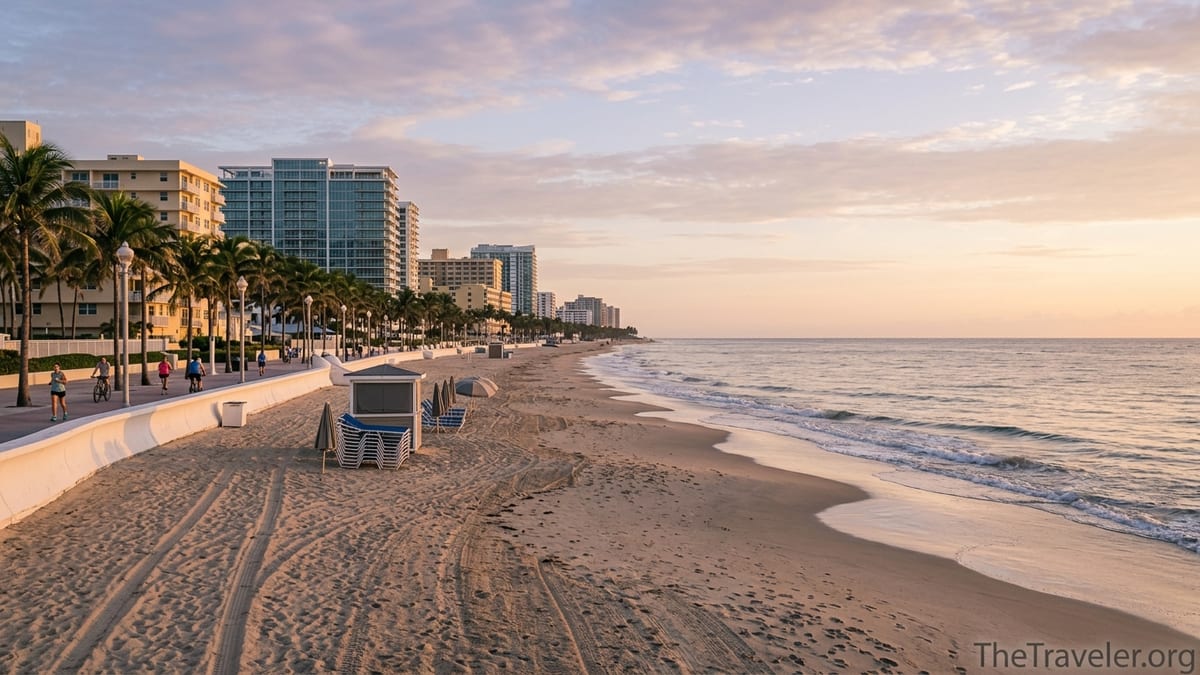
Fort Lauderdale’s main beach stretches along a broad curve of soft sand backed by palms, a white wave wall and a busy promenade of hotels, bars and restaurants. Whether you are coming for a quick beach day or a weeklong vacation, choosing the right stretch of sand and knowing how the promenade, parking, beach chair rentals and nearby neighborhoods fit together will save time and money and shape the kind of trip you have, from party weekend to quiet family escape.
Get the latest updates straight to your inbox!
Getting Oriented: The Promenade and Main Beach Zones
Fort Lauderdale’s primary beach runs along the barrier island, parallel to State Road A1A, with the ocean on one side and a continuous line of hotels, restaurants and shops on the other. The heart of the action is around the intersection of Las Olas Boulevard and A1A, often treated as the central reference point for visitors. From here, a paved beachfront promenade runs north and south, separated from traffic by the city’s signature low, white “wave wall” and lined with palms, benches and beach access points.
To the south of Las Olas, the feel is more open and park-like as you approach Fort Lauderdale Beach Park near Seabreeze Boulevard, with volleyball courts, picnic tables and a broader area of sand that families favor for spreading out. Farther north, the beach becomes a bit narrower in places but is closely framed by large resort hotels and high-rise condos, giving the area a more urban resort atmosphere. The whole stretch is walkable, and you can realistically cover the core promenade area on foot, choosing your exact spot on the sand based on how lively or quiet you want it to be.
Several nearby beach towns are easy alternatives or complements to the main strip. LauderdalebytheSea, a few miles north, offers a more lowrise, smalltown experience with boutique hotels and a fishing pier, while Dania Beach to the south is lower key and known for relatively affordable lodging nearby. Many travelers use Fort Lauderdale Beach as the main hub but devote at least one day to these neighboring beaches for contrast.
The promenade itself is designed for strolling rather than driving. A1A carries traffic and has frequent crosswalks, but the real pleasure is walking along the broad sidewalk by the sand in the morning or evening when temperatures are milder, stopping for coffee, ice cream or happy hour as you go. This is where you will find outdoor patios filled at sunset and the city’s classic mix of resort guests, cruise passengers and locals squeezing in an afterwork swim.
Best Areas Near the Sand: Choosing Your Base
Where you stay along the beach can significantly change your experience. Around Las Olas Oceanside Park, immediately north and south of the Las Olas and A1A junction, you are at the center of the promenade with easy access to events, food trucks, outdoor markets and frequent live music. This area suits travelers who want to step out of the hotel and be right in the middle of the beachfront buzz, with only a short walk to the sand and nightlife.
Head north along A1A and the feel shifts a bit more upscale. Properties such as the Westin Fort Lauderdale Beach Resort and Hilton Fort Lauderdale Beach Resort sit directly across from the sand, with elevated walkways or crosswalks leading from the hotel side of A1A to the beach. Rooms in this zone often come with balconies facing the ocean, and you are still within a pleasant walk or short rideshare of Las Olas Boulevard for dining and shopping. Travelers looking for a comfortable resort environment with quick beach access often gravitate here.
Farther north again, around the Pelican Grand Beach Resort and similar properties, you find one of the few stretches where some hotels sit directly on the sand rather than across A1A. The atmosphere tends to be quieter, with fewer bars and late night venues in the immediate vicinity. This suits couples and families who prioritize tranquil mornings and easy walks from their room straight to the beach, and who do not mind taking a short drive or rideshare to the busier promenade areas for dinner.
To the south, near Fort Lauderdale Beach Park and toward the entrance to Port Everglades, the scene is more relaxed and residential. Larger fullservice resorts, including those with extensive pool and kids’ club facilities, share space with condos and smaller hotels. This end of the strip is a smart choice for families who want roomier beach areas, playgrounds and picnic facilities, but still value being a short walk or quick trolley ride from central nightlife and restaurants.
Beachfront Hotels: From Big Resorts to Boutique Stays
Fort Lauderdale’s beach hotels fall along a spectrum from large, fullservice resorts to compact, designfocused properties. Along the main strip near the promenade, major names like the Westin Fort Lauderdale Beach Resort, Hilton Fort Lauderdale Beach Resort and Conrad Fort Lauderdale Beach offer multiple dining outlets, spas, pools facing the ocean and dedicated beach services. Many guests choose these for the convenience of charging beach chairs, food and drinks to their room and for kids’ programs available during high season.
On the slightly quieter northern stretch of A1A, properties such as the AC Hotel Fort Lauderdale Beach and Cambria Hotel Fort Lauderdale Beach position themselves as modern, midscale options. These hotels typically stand one short block from the sand, which keeps nightly rates somewhat lower than direct beachfront resorts while still making it easy to walk over with a towel and beach bag. They often have rooftop or elevated pools with ocean views, which can be a significant perk on windy days when sand is blowing along the shore.
For travelers who prioritize being literally on the sand, places like Pelican Grand Beach Resort north of the main promenade, or resortstyle properties closer to Harbor Beach near Port Everglades, are worth considering. At these hotels, you exit the lobby and step almost immediately onto the sand, often with a private or semi private beach area serviced by the hotel’s own attendants. This setup appeals to families with young children and anyone who wants to avoid crossing A1A with beach gear.
Those on tighter budgets often look at smaller independent hotels and retrostyle motels that line the back streets just west of A1A or in LauderdalebytheSea. While they may not have sprawling pool decks or onsite restaurants, many of these properties still sit within a five to ten minute walk of the sand, and some include kitchenettes that help reduce meal costs. You trade a little convenience and brandname predictability for lower prices and a more lowkey local atmosphere.
Where to Eat and Drink Along the Beach
Food and drink scenes along Fort Lauderdale Beach range from casual toesinthesand spots to polished hotel restaurants. Around the Las Olas and A1A intersection, you will find a mix of American grills, seafood houses and bars directly across from the sand. Many offer openair patios where breakfast might be a simple plate of eggs and coffee while you watch early morning joggers go by, and evenings bring happy hour specials with ocean views.
Las Olas Boulevard itself, just a few minutes’ walk inland from the beach, broadens your options with higherend steakhouses, Italian trattorias, sushi bars and sidewalk cafes. This area is often the go to for dinner if you want a slightly more sophisticated setting but still plan to wander back to the beach afterward for a nightcap. It is common for visitors to spend the day on the sand, head to their room to change, then walk along Las Olas for dinner before returning to the promenade.
North and south along A1A, many of the resort hotels have signature restaurants that are open to non guests. Oceanfront grills and rooftop lounges often highlight fresh local seafood, light salads and shareable plates. Checking daily specials can be worthwhile, as some properties offer discounted menus at early evening hours, useful for families who prefer to eat before the livelier bar crowd arrives.
For a more neighborhood feel, small clusters of restaurants in LauderdalebytheSea and Dania Beach offer everything from casual fish tacos to oldFlorida style seafood places with wood decks and expansive water views. These areas tend to quiet down earlier at night than the main strip, making them good choices for relaxed dinners after a day trip or for travelers who prefer conversationfriendly settings over highvolume music.
Swimming, Beach Chairs and Practical Beach Services
The main Fort Lauderdale beach is generally well suited for swimming, with a gradual sandy entry and lifeguard towers positioned at regular intervals along the central stretches. Conditions can vary with weather and tides, so visitors should always pay attention to posted flags and lifeguard guidance. On calm days, the water is typically clear and warm enough for long swims and casual floating almost yearround, though winter months can occasionally bring cooler currents and choppier seas.
Beach chair and umbrella rentals are widely available along the busier parts of the promenade. Concession operators typically set up neat rows of loungers and umbrellas early in the morning, and attendants manage rentals by the hour or for the full day. Exact prices change over time and can vary by operator and season, but visitors commonly encounter packages priced for a pair of chairs with a single umbrella, with higher rates on peak weekends and holidays. Many fullservice resorts offer their own branded chairs and umbrellas directly in front of the hotel, sometimes included in a daily resort fee and sometimes charged separately.
If you prefer to bring your own gear, there are no shortage of places to buy inexpensive folding chairs, coolers and beach carts at bigbox stores or local shops inland from the beach. Some visitors pick up a wheeled beach cart to make the walk from parking to the sand easier, especially if they are carrying umbrellas, snacks and gear for children. Do note that certain areas may restrict large tents or canopies, so it is wise to check posted rules near the access point you use.
Showers, restrooms and water fountains can be found at Fort Lauderdale Beach Park and at several public access points along the promenade, but they are not available at every lifeguard stand. Families and daytrippers often choose to base themselves close to a park or restroom facility to simplify midday breaks and clothing changes. As with any busy beach, it is smart to keep valuables to a minimum and avoid leaving phones, wallets and cameras unattended while everyone is in the water.
Parking, Getting Around and Staying Close to the Sand
Parking near Fort Lauderdale Beach can be one of the more challenging aspects of a visit, particularly on sunny weekends and during winter high season. The city operates a mix of metered street spaces and public lots and garages along and just off A1A, with hourly rates that are typically higher close to the sand and slightly lower a few blocks inland. Nonresidents should expect to pay for most convenient parking near the beach and may see dynamic pricing or event rates in effect during festivals and holiday weekends.
Fort Lauderdale Beach Park, just south of the main promenade, has a dedicated parking area that many families use as their base for the day. Elsewhere along the strip, garage parking near Las Olas Boulevard can be a good compromise between proximity and price, though spots fill early in the day during peak periods. It is wise to download and set up the city’s recommended parking app before arriving so you can extend time from the beach and avoid walking back to feed a meter.
Many beachfront hotels charge separate fees for selfparking or valet service, which can add significantly to nightly costs. Travelers planning to focus primarily on the beach and promenade sometimes find it more efficient to rely on rideshare services, especially if they are staying in a hotel a bit inland or using vacation rentals in nearby neighborhoods. For short distances along the promenade, walking is usually the most pleasant option, and bike or scooter rentals are available from various operators for those comfortable navigating traffic and sharing paths with pedestrians.
If you want to stay as close to the sand as possible without paying top tier room rates, consider properties one or two short blocks inland from A1A. The walk to the beach is still just a few minutes, but room prices and parking fees can be noticeably lower. This approach works particularly well for travelers who do not plan to spend all day in the room and care more about easy access to the promenade and ocean than a direct oceanfront balcony.
Nightlife, Atmosphere and Family Friendly Vibes
Fort Lauderdale Beach has evolved from its Spring Break reputation into a more balanced destination that mixes nightlife with families and couples. Around the central promenade, evenings bring a steady but not overwhelming bar scene, with live music, outdoor patios and sports bars filling up after sunset. The crowd is diverse, spanning groups of friends, cruise passengers overnighting before a sailing, and locals enjoying the ocean breeze after work.
Nightlife is concentrated in certain clusters of bars and restaurants along A1A and on nearby stretches of Las Olas Boulevard. This means that if you want to be in the middle of the action, choosing a hotel close to these areas will keep walking times short. Conversely, if early nights and quiet sleep are priorities, you may prefer a resort slightly north or south of the liveliest blocks, or a hotel on a side street that is set back from the main traffic and music.
Families will find plenty of kidfriendly options along the beach, from simple pizza and burger spots to gelato stands and casual seafood restaurants where shorts and flipflops are the norm. Fort Lauderdale Beach Park’s playgrounds, picnic areas and open spaces create a natural hub for daytime family activities, and many larger resorts organize poolside games, crafts and movie nights when demand is high. Nearby LauderdalebytheSea and Harbor Beach areas tend to feel more lowkey in the evenings, which appeals to parents looking for mellow walks and early bedtimes.
For couples, the combination of beach days and evenings spent at rooftop bars or waterfront restaurants makes Fort Lauderdale a flexible choice. You can plan a relaxed sunset walk along the promenade one night and a more dressedup dinner on Las Olas the next, with taxis and rideshares connecting the different zones in just a few minutes. The range of atmospheres within a small area lets you dial nightlife intensity up or down without changing your base.
The Takeaway
Fort Lauderdale Beach offers a compact but varied stretch of coastline where the right choice of hotel, neighborhood and beach access point can tailor your stay from highenergy to quietly relaxed. The central promenade around Las Olas Boulevard puts you amid restaurants, bars and events, while the northern and southern ends of the beach offer more space, calmer evenings and easier access to parks and quieter sand.
Paying attention to practical details such as parking costs, whether your hotel’s resort fee includes beach chairs, and how far you are from lifeguard towers and restrooms will make daytodays on the sand smoother. Consider whether you prefer a hotel right on the beachfront, a resort across A1A with a skybridge, or a more modest property a short walk away that frees up budget for dining and activities.
With thoughtful planning, Fort Lauderdale’s main beach and its neighboring stretches at LauderdalebytheSea and Dania Beach can offer a satisfying mix of warm water, reliable sunshine, approachable dining and a nightlife scene that you can embrace or largely sidestep. Anchor your plans around the promenade, then adjust north or south along the sand to find the mix of convenience, atmosphere and value that best matches your trip.
FAQ
Q1. Which part of Fort Lauderdale Beach is best for families?
Families often prefer the area around Fort Lauderdale Beach Park at the south end of the main strip, where the sand is broad and there are playgrounds, picnic tables and restrooms close by. Larger fullservice resorts in this zone and slightly south toward Harbor Beach also tend to offer kids’ programs and roomy pool decks.
Q2. Where should I stay if I want to be closest to the nightlife?
If nightlife is a priority, look for hotels along A1A near the intersection with Las Olas Boulevard, or within a short walk of that central stretch of the promenade. This area clusters many of the beachfront bars, live music venues and late night restaurants, allowing you to walk back to your room without long rideshare trips.
Q3. Are there hotels directly on the sand, not across the street?
Most large resorts sit across A1A from the beach, but there are some exceptions, particularly on the quieter northern section of the strip and near Harbor Beach, where properties back directly onto the sand. These hotels are ideal for travelers who want to step from the pool area straight onto the beach without crossing a road.
Q4. Do I need a car to enjoy Fort Lauderdale Beach?
You can comfortably enjoy a beachfocused stay without a car if you book a hotel within easy walking distance of the promenade and use rideshare services for occasional trips to Las Olas Boulevard or other neighborhoods. However, visitors who plan to explore multiple beach towns or shopping areas in one trip may appreciate the flexibility of having a rental car.
Q5. How expensive is parking near the beach?
Parking close to the sand generally comes at a premium, especially during busy weekends and winter months. Expect metered street spaces and public lots or garages to charge hourly rates that add up over a full beach day, and note that many beachfront hotels have separate daily fees for selfparking or valet service.
Q6. Are beach chairs and umbrellas included with my hotel stay?
Policies vary by property. Some resorts bundle a set number of chairs and an umbrella into a daily resort fee, while others charge separately or offer discounted rates through affiliated vendors. It is worth confirming details before arrival so you can budget accurately or decide whether to bring your own gear.
Q7. What is the swimming like at Fort Lauderdale Beach?
The main beach typically offers gentle, sandy entries and warm water suitable for casual swimming much of the year, with lifeguard towers along busy stretches. Conditions can change with weather and tides, so swimmers should always heed posted flags and advice from on duty lifeguards.
Q8. Is Fort Lauderdale Beach noisy at night?
Noise levels depend heavily on where you stay. The blocks around the central promenade and Las Olas Boulevard stay lively into the late evening, while areas farther north or south, and side street hotels set back from A1A, tend to be noticeably quieter once restaurants and bars wind down.
Q9. What nearby beaches are good alternatives for a day trip?
LauderdalebytheSea, just to the north, is popular for its smaller scale, fishing pier and relaxed vibe, while Dania Beach to the south offers a quieter, less builtup stretch of sand. Both make easy day trips from a base on Fort Lauderdale’s main beach.
Q10. When is the best time of year to visit Fort Lauderdale Beach?
Weather is warm yearround, but the most popular season runs roughly from late fall through early spring, when humidity is lower and ocean temperatures remain comfortable. Summer can be hotter and more humid, with frequent afternoon showers, but often brings lower hotel rates and fewer crowds outside major holiday weekends.