


More news on this day
Hundreds of travellers were left stranded across France today as major hubs in Paris, Lyon, Marseille and Nice reported 538 delayed and 21 cancelled flights, disrupting operations at Air France, Vueling, Transavia France, Lufthansa, Ryanair and several other carriers.
Get the latest news straight to your inbox!
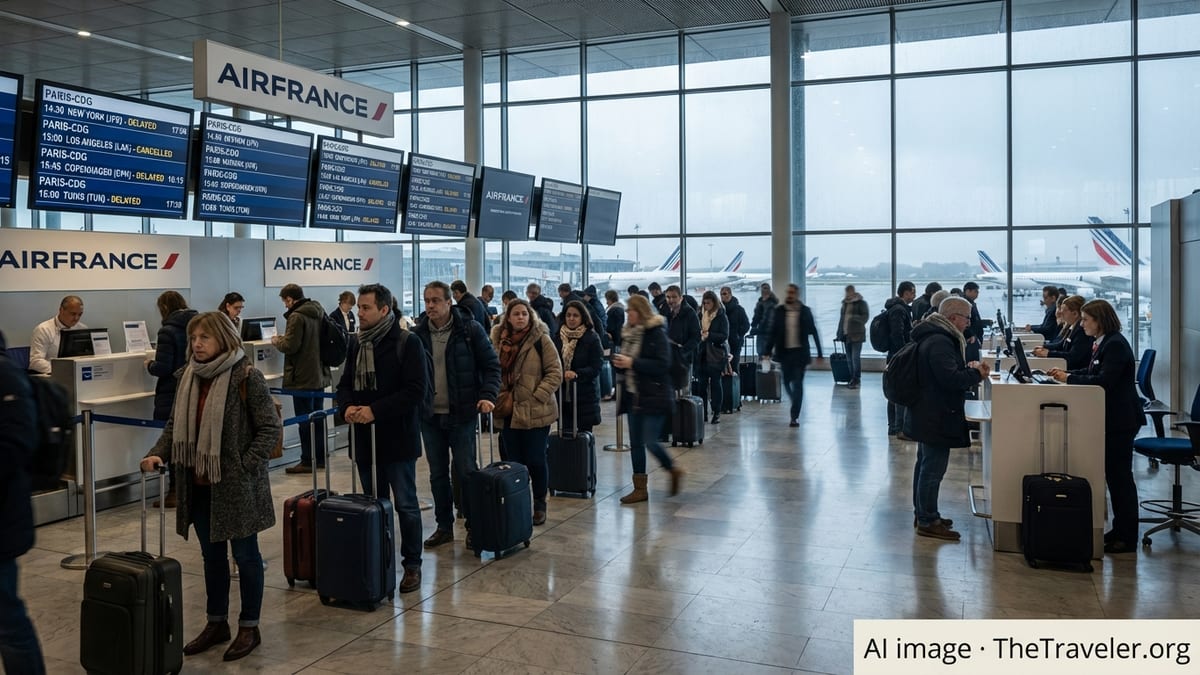
French Hubs Grapple With a Heavily Disrupted Flight Schedule
Publicly available flight-tracking data for April 14 indicates that delays rather than outright cancellations dominated disruption patterns at France’s key airports, with a combined 538 flights operating behind schedule across Paris, Lyon, Marseille and Nice. Only 21 flights were cancelled outright, but the imbalance between delays and cancellations still created widespread knock-on problems for passengers with tight connections or evening arrivals.
At the Paris airports, which handle the bulk of long-haul and connecting traffic, operational bottlenecks meant that relatively modest cancellation numbers translated into significant terminal crowding and gate changes. Travellers connecting through Charles de Gaulle and Orly faced extended waits at security and passport control as delayed arrivals and departures compressed activity into fewer hours of the day.
Lyon, Marseille and Nice saw fewer cancellations but a high concentration of delayed departures, especially on short and medium haul routes within Europe and the Mediterranean region. These secondary hubs play a crucial role in distributing traffic around France and to nearby countries, so even small schedule shifts early in the day created growing queues of late-running flights by afternoon.
Travel industry data for recent weeks shows that this pattern of many delays and comparatively few cancellations has become increasingly common at busy European airports. Airlines appear more inclined to operate flights later in the day, rather than cancel them outright, in an effort to protect completion rates while still coping with staffing constraints, slot limitations and changing airspace requirements.
Air France, Vueling, Transavia France and Partners Under Pressure
The disruption has hit a wide range of carriers, but French and pan European airlines bore much of the operational strain. Air France and low cost subsidiary Transavia France, which rely heavily on Paris, Lyon, Marseille and Nice as key bases, faced a mix of delayed departures and a smaller number of cancellations on intra European and domestic services. Even where aircraft did eventually depart, extended ground times complicated crew rotations and aircraft positioning later in the day.
Spanish low cost airline Vueling also saw its schedules affected on routes linking French airports with Spain and other Mediterranean destinations. Because many of these flights are tightly scheduled with quick turnarounds, a delay of even 45 minutes on an early rotation can ripple through multiple flights, leading to late evening arrivals and missed last train or bus connections for passengers at their final destinations.
Lufthansa and its partners, already contending with separate operational challenges elsewhere in Europe, reported scattered delays on flights touching French airspace or relying on French airports for feeder traffic. These disruptions sometimes intersected with earlier issues in Germany and other hubs, compounding missed connections for travellers attempting multi segment journeys across the continent.
Ryanair and other low cost carriers were not immune either, with select services into and out of Marseille, Lyon and secondary Paris airports experiencing departure and arrival delays. Given the point to point nature of many low cost routes, even limited disruption can have an outsized impact on travellers who lack alternative same day routing options or interline agreements with other airlines.
Knock On Effects for Passengers Across Europe
The immediate impact for travellers in France has been missed connections, extended waits in crowded departure halls and difficulties rebooking onto later flights. Even where flights did eventually operate, delayed arrivals often pushed passengers past connecting windows at onward hubs, particularly for itineraries involving non European destinations.
Holidaymakers heading to Mediterranean resorts and business travellers moving between European capitals were among those most affected, according to published coverage and aggregated tracking data. For many, a delay of several hours at Paris, Lyon, Marseille or Nice turned what should have been a straightforward hop into an unplanned overnight stay or a scramble for last minute rail tickets.
Because today’s disruption coincides with broader operational strains across European aviation, including recent industrial actions and capacity adjustments at other hubs, the effects have not been contained within France. Late running French feeder flights into regional airports around the continent have in some cases led to aircraft and crews arriving out of position for early morning departures on April 15.
Travel analysis from recent months suggests that such reactionary delays, where one late flight triggers subsequent knock ons along the network, remain a leading cause of schedule unreliability. This dynamic is particularly acute in Europe’s dense airspace, where limited spare capacity, curfews and slot constraints give airlines little flexibility once a day begins to unravel.
Underlying Drivers: Weather, Congestion and Wider Regional Tensions
While no single cause explains today’s figures, early assessments point to a mix of localized weather, airspace congestion and wider operational pressures linked to ongoing geopolitical tensions. Recent reporting highlights how evolving security dynamics and airspace restrictions in parts of the Middle East and surrounding regions are forcing European carriers to adjust routings and schedules, feeding additional complexity into already busy networks.
Within France, seasonal weather variations and strong winds over parts of Western Europe have periodically constrained air traffic control capacity in recent weeks, prompting flow management measures that slow the rate at which aircraft can arrive and depart at major hubs. Even relatively short restrictions during peak hours can quickly build into long queues of delayed flights.
These immediate pressures sit atop structural challenges that French airports share with many of their European counterparts. Staff resourcing remains tight in several ground handling and security functions, and airlines continue to fine tune schedules after post pandemic capacity rebuilds. When daily operations are already running close to their limits, any disruption, whether technical, meteorological or geopolitical, can cascade quickly.
Analysts tracking performance metrics note that French airports such as Nice and Paris have periodically appeared among Europe’s more delay prone hubs in recent data sets, underscoring how today’s events are part of a broader pattern rather than a complete outlier.
What Travellers Can Expect in the Coming Hours
With only 21 flights cancelled so far, most affected passengers in France today are facing long delays rather than total loss of their journeys. However, aviation data for previous disruption days suggests that evening wave traffic may remain unstable, especially for departures relying on aircraft arriving late from earlier rotations.
Travellers scheduled to depart later today from Paris, Lyon, Marseille or Nice are being urged by airlines and airports, through public advisories and digital channels, to monitor their flight status closely and to allow extra time at the airport. Same day rebooking options may be limited on heavily used domestic and European routes, particularly for those hoping to travel in groups or with checked baggage.
For those already stranded at French airports, consumer protection rules within the European Union provide certain entitlements to care in cases of long delays and cancellations, including refreshments and accommodation in defined circumstances. Eligibility can depend on the exact cause of disruption and the length of the delay, so passengers are advised to review formal guidance provided by carriers and regulators.
With schedules still in flux and wider regional aviation networks under ongoing strain, observers expect that the after effects of today’s French disruptions could continue into tomorrow’s early morning departures, especially on heavily trafficked routes that connect through Paris and the country’s southern gateways.