


More news on this day
Passengers traveling through Dubai International Airport and Sharjah International Airport are facing widespread disruption after 156 flights were delayed and 11 canceled, affecting services operated by Emirates, Flydubai, Air Arabia, IndiGo, Qatar Airways and other carriers on key routes linking the Gulf to Europe and Asia.
Get the latest news straight to your inbox!
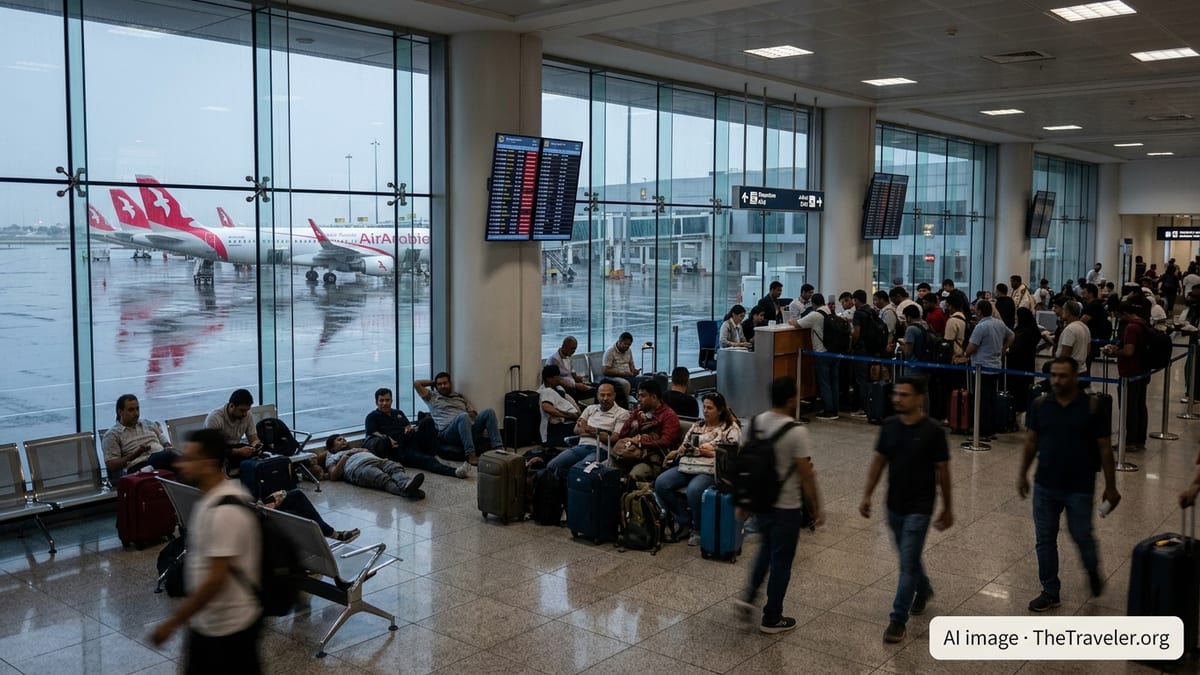
Ripple Effects Across Gulf Aviation Hubs
Publicly available flight tracking data and disruption summaries indicate that the latest wave of delays has concentrated on Dubai International and Sharjah International, two of the region’s busiest hubs for connecting traffic. The combined tally of 156 delayed and 11 canceled flights reflects a single day of disruption, pointing to pressure across both arrivals and departures.
Reports from aviation analytics providers show that services touching major destinations such as London, Mumbai, Riyadh and Istanbul have been particularly affected, as well as connections to other Gulf and South Asian cities. With many itineraries built around tight transfer windows through Dubai and Sharjah, even short delays are creating missed connections and extended layovers for through‑passengers.
Operational updates suggest that the disruption is not limited to one airline or alliance. Instead, it is spread across a mix of full‑service and low‑cost carriers, including large network operators based in the Gulf and high‑frequency regional airlines serving India, Pakistan and other nearby markets.
The disruption also comes at a time when airports across the United Arab Emirates have been managing intermittent constraints linked to regional airspace issues and congestion. Industry data from recent weeks has repeatedly highlighted spikes in delays and cancellations at Dubai, Abu Dhabi and Sharjah, underscoring the vulnerability of tightly scheduled hub operations when routes or flight paths are adjusted at short notice.
Multiple Airlines and Routes Affected
According to aggregated delay statistics from flight compensation platforms and scheduling databases, Emirates, Flydubai, Air Arabia, IndiGo and Qatar Airways appear among the airlines most exposed to the current disruption at Dubai and Sharjah. Their operations form the backbone of traffic through the two airports, meaning that any network‑wide adjustment can quickly cascade across dozens of flights.
Services between Dubai and London are among those showing significant schedule changes, reflecting both strong demand on the route and the central role of London in onward European connections. Flights linking Dubai and Sharjah with Mumbai and other major Indian cities are also reporting notable delays, a pattern that aligns with the heavy daily frequency operated by Gulf and Indian carriers on these corridors.
Routes into Riyadh and other Saudi destinations, as well as Istanbul and wider Turkish points, are similarly affected. These links act as important feeders for business, labor and leisure travel, and even moderate disruptions can leave travelers facing long queues at transfer desks or last‑minute rebookings onto alternative departures.
Published coverage of recent weeks’ disruptions across the wider region shows that carriers have, at times, been forced to retime or reroute services to avoid congested or restricted airspace. When aircraft are held on the ground or diverted, rotations fall behind schedule, and subsequent flights departing Dubai and Sharjah often inherit those delays.
Knock‑On Impact for Passengers in Transit
For many travelers, the most immediate impact of the latest disruption is being felt at connection points. Dubai International in particular is built around fast transfers, with many itineraries scheduled with two to three hours between flights. When an inbound service arrives late, passengers bound for Europe, South Asia or Africa may find that their onward sector has already closed, forcing rebooking and potentially overnight stays.
Accounts shared on public forums over recent months describe passengers missing long‑haul departures from Dubai after regional feeder flights operated behind schedule, as well as travelers arriving into Sharjah to find onward links retimed or canceled. These experiences mirror the structural challenge of operating dense wave banks of flights, where one delayed arrival can affect an entire chain of connections.
Travel specialists note that routes to London, Mumbai and other high‑volume destinations are particularly sensitive to such knock‑on effects. When flights are already running at or near capacity, spare seats on later departures can be limited, leaving disrupted passengers with fewer immediate alternatives. In some cases, travelers have reported being moved onto flights the following day when same‑day options were no longer available.
Beyond immediate schedule changes, delays of this magnitude can also affect baggage handling and airport services. Luggage misconnections typically increase when connections are compressed, while longer waiting times can strain lounge capacity, customer service counters and ground transport arrangements for those forced to stay overnight.
Operational and Economic Consequences
Industry analyses of recent disruption episodes at UAE airports suggest that each hour of delay at a major hub like Dubai International can translate into substantial added costs for airlines and lost productivity for passengers. Estimates cited in publicly available reports place the hourly impact in the millions of dollars when fuel burn, crew repositioning, aircraft utilization and passenger care are taken into account.
In the current event, the combination of 156 delays and 11 cancellations across two airports in a single day indicates a pronounced operational shock. Even if most flights eventually depart, increased turnaround times reduce the number of rotations an aircraft can complete, potentially affecting schedule reliability in the days that follow.
Carriers such as Emirates, Flydubai, Air Arabia, IndiGo and Qatar Airways have spent recent months adjusting timetables and flight paths to maintain connectivity while navigating regional challenges. Publicly available information from earlier disruption phases shows that airlines have sometimes resorted to deploying additional aircraft or crews, extending flight times via alternative routings, or consolidating lightly booked services.
Airport operators, for their part, have been emphasizing the need for passengers to check real‑time flight status updates and to avoid heading to terminals without confirmed bookings. This approach is intended to reduce crowding in check‑in halls and security areas when a high volume of flights is experiencing irregular operations.
What Travelers Can Do if Affected
Consumer organizations and passenger rights platforms advise that travelers affected by delays or cancellations at Dubai and Sharjah should first verify the status of their flight through the airline’s official channels or the airport’s live departures and arrivals boards. Given the fluid situation, a flight that appears on time earlier in the day can shift to delayed or canceled closer to departure.
Once a disruption is confirmed, travelers are generally directed to work directly with their carrier to explore rebooking, refunds or alternative routings. Many airlines serving Dubai and Sharjah allow changes to tickets issued during periods of irregular operations, although the precise options can vary depending on fare type, route and applicable regulations.
Passengers on routes linking the UAE with the European Union or the United Kingdom may also fall under specific consumer protection regimes if their flight is operated by an EU or UK carrier, or departs from EU or UK territory. Guidance from travel‑rights advocates stresses the importance of keeping boarding passes, booking confirmations and any written notification of delays or cancellations in case a later claim is pursued.
With disruption levels remaining elevated across parts of the Middle East network in recent months, experienced travelers recommend building in additional connection time when routing through major Gulf hubs. For those with critical time‑sensitive travel, such as onward cruises, business meetings or events, contingency plans such as flexible hotel bookings or travel insurance with disruption coverage can help mitigate the impact of unexpected delays.