


More news on this day
Hundreds of airline passengers were left stranded across France on July 6 and 7 as a wave of disruptions hit major hubs including Paris, Nice, Lyon and Marseille, with operational data indicating more than 500 flight delays and over 40 cancellations affecting services operated by Air France, easyJet, Lufthansa and Ryanair.
Get the latest news straight to your inbox!
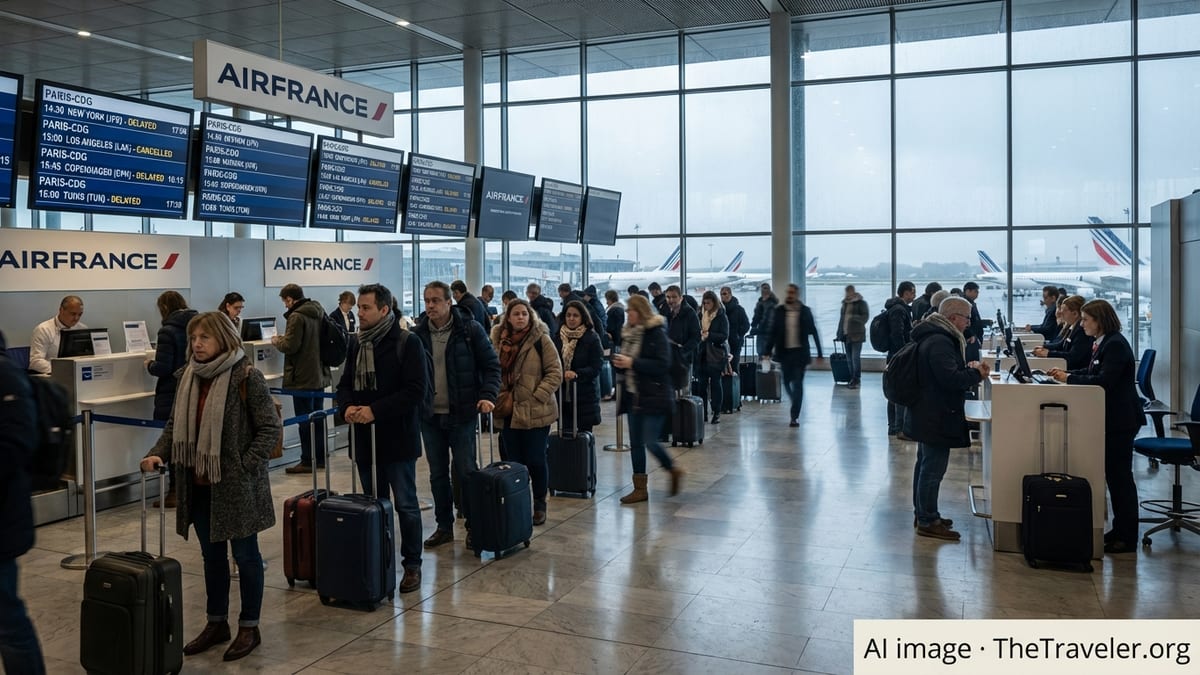
Wide-Ranging Disruptions Across the French Network
Operational monitoring data for the French airspace shows a total of 508 delayed flights and 44 cancellations across the country in just one day of peak summer travel, severely impacting domestic and European connections. The figures span major airports such as Paris Charles de Gaulle, Paris Orly, Nice Côte d’Azur, Lyon Saint-Exupéry and Marseille Provence, underscoring how widely the disruption has rippled through the network.
Charles de Gaulle in Paris recorded the most acute impact, with close to 300 delayed flights and dozens of cancellations reported in a single operational day, according to data cited in French aviation coverage. Paris Orly and Nice Côte d’Azur also saw high levels of schedule disruption, with more than 100 delays at Orly and nearly 180 delays at Nice reported over the same period.
Lyon and Marseille registered smaller but still significant numbers of delayed and cancelled flights, with real-time boards showing scrubbed departures on key European routes, including services to and from Germany. For passengers starting or ending journeys in these regional hubs, missed connections and last-minute rebookings compounded the impact of the initial delay or cancellation.
The disruptions affected both short-haul and medium-haul services, with knock-on effects across the wider European network. Travellers heading to or from secondary French cities often faced lengthy detours or overnight stays as airlines struggled to reposition aircraft and crews.
Air France, easyJet, Lufthansa and Ryanair Among Most Affected
Publicly available flight-tracking information indicates that national carrier Air France bore a significant share of the disruption, particularly at Paris Charles de Gaulle, where the airline concentrates much of its European and long-haul traffic. A large number of delayed departures and arrivals on domestic routes, such as Paris to Nice and Paris to Marseille, contributed to cascading delays later in the day.
Low-cost operator easyJet, a major player on French domestic and leisure routes, also experienced noticeable disruption on Paris to Mediterranean services, especially into Nice. Flight-history data shows repeated delays on Paris–Nice rotations in early July, reflecting tight turnarounds and heavy airport congestion during peak hours.
German carrier Lufthansa and Irish low-cost airline Ryanair were likewise affected, particularly on cross-border routes linking French airports with Germany, Italy, Spain and the United Kingdom. Cancellations on services to and from Lyon and Marseille cut key business and leisure links, forcing travellers onto alternative flights, trains or overnight accommodation.
For many passengers, the combination of full summer bookings and widespread disruption meant that same-day rebooking options were limited or unavailable. Some travellers reported being rerouted through secondary hubs or shifted to flights departing the following day, stretching already long travel days into overnight ordeals.
Peak-Summer Pressure and Structural Capacity Strains
French aviation publications point to a mix of factors behind the spike in delays and cancellations, with peak-season demand placing intense pressure on airport infrastructure, ground handling and air traffic management. The country’s civil aviation authorities have previously warned that heavy traffic volumes, staffing constraints and occasional industrial action can sharply reduce capacity at key hubs.
Earlier analyses of French domestic routes highlighted a broader deterioration in punctuality since 2024, with some busy pairs such as Nice–Paris and Bordeaux–Marseille recording close to one flight in two arriving late. Those trends have set the stage for particularly acute disruptions when traffic peaks, as small operational issues quickly snowball into system-wide delays.
Weather has also periodically contributed to congestion, especially at coastal airports like Nice, where storms or reduced visibility can force temporary suspensions of arrivals and departures. When that occurs at the same time as heavy summer traffic, aircraft may be held in stacks, diverted to alternate airports or forced into significant departure delays from origin cities.
Industry reports suggest that airlines have limited spare capacity to absorb shocks during the busiest travel weeks. Aircraft and crew operate tight schedules across Europe, so a delay on an early domestic leg can propagate across multiple international rotations, magnifying the effect far beyond the original airport.
Impact on Travellers Across France and Europe
For passengers, the operational numbers translated into long queues at check-in and customer service desks, crowded departure halls and uncertainty over onward connections. Travellers departing Paris, Nice, Lyon and Marseille reported missed train links, forfeited hotel bookings and unexpected extra nights away from home or holiday destinations.
Long-haul passengers transiting through Paris Charles de Gaulle were among the most exposed, as missed feeder flights from regional French cities or nearby European hubs threatened to break complex itineraries. Some were rebooked on later long-haul departures, while others faced extended layovers while waiting for the next available connection.
Families beginning summer holidays on the Mediterranean coast faced particular challenges when flights into Nice or Marseille were delayed by several hours or cancelled outright. Late-evening arrivals translated into limited ground transport and the risk of arriving at closed rental car desks or reception offices at smaller coastal resorts.
Travel forums and social media posts from the first week of July reflect mounting frustration, with some travellers reconsidering future flight choices within France. Several noted recent experiences of rail delays as well, suggesting that both air and rail networks are under strain during peak travel windows.
What Passengers Should Know About Rights and Alternatives
Under European air passenger regulations, travellers departing from or arriving in the European Union on covered carriers may be entitled to assistance, rerouting and in some cases financial compensation when flights are heavily delayed or cancelled. The specific entitlements depend on the length of delay, distance of the route and reasons cited for the disruption.
Consumer-rights organisations advise passengers affected by delays in France to keep boarding passes, booking confirmations and any written notices from airlines, as these documents are typically required to pursue claims. Travellers are also encouraged to document out-of-pocket expenses such as meals, local transport and accommodation incurred while waiting for replacement flights.
Given the ongoing pressure on French airports, travel advisers recommend allowing extra connection time when planning itineraries that pass through Paris Charles de Gaulle, Paris Orly, Nice, Lyon or Marseille during July and August. Building in a wider buffer between flights and onward trains or ferries can help reduce the risk of missed connections.
For shorter journeys within France, some travellers are considering high-speed rail as an alternative, despite recent reports of delays on certain routes. While not immune to disruption, trains can offer more frequent departures between major cities such as Paris, Lyon, Marseille and Nice, providing additional options if one service is cancelled or significantly delayed.