


More news on this day
Record-breaking temperatures across France in June 2026 have triggered unprecedented heat alerts, disrupted transport and tourism, and raised urgent safety questions for visitors planning trips in the coming days.
Get the latest news straight to your inbox!
Heatwave Peaks as Alerts Cover Most of France
Publicly available data from France’s national weather service indicates that an exceptional heatwave settled over the country from mid to late June 2026, with large parts of mainland France exceeding 40 degrees Celsius on multiple days. Meteorological bulletins describe extended periods of intense heat, with nighttime temperatures remaining unusually high and offering little relief.
Reports from French and European outlets note that at the peak of the event, a majority of departments were placed under orange or red heat alerts, covering well over 90 percent of the population. In several regions, June temperature records were surpassed, and June 23 has been described in national coverage as one of the hottest days observed in France since systematic records began.
French public health monitoring bulletins point to marked increases in heat-related emergency visits and excess mortality during the second half of June. These reports emphasize that the impacts have been felt most acutely by older adults, people with chronic health conditions and those in poorly insulated or non-air-conditioned housing, but visitors spending long days outdoors are also considered at heightened risk.
Flight Delays, Storms and Strain on Transport
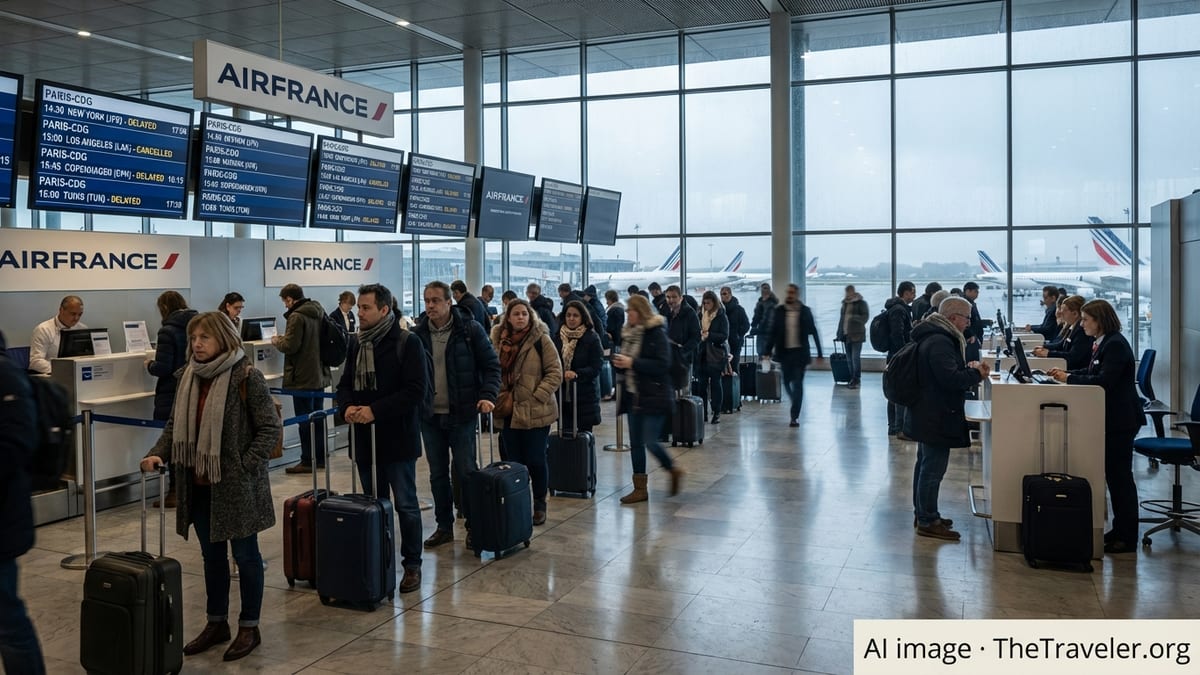
While France’s major airports have largely remained open, the combination of extreme heat and subsequent thunderstorms has caused pockets of disruption. Coverage from European weather and travel outlets describes storms breaking out over parts of France after days of intense heat, leading to temporary suspensions of ground operations, go-arounds and delays at several airports when lightning and strong gusts moved through.
Industry reporting suggests that heat alone rarely grounds modern aircraft, but very high temperatures can lengthen required takeoff distances, prompting occasional payload restrictions or runway checks. When combined with convective storms that typically follow late-day heating, the result can be sequences of delays, missed connections and knock-on disruption across airline networks serving Paris, Lyon, Marseille and regional hubs.
Rail and road travel have also felt the strain. French media highlight cases of speed restrictions on some rail lines during the hottest afternoons to protect infrastructure, extending journey times on intercity and regional services. On the roads, authorities have warned of elevated breakdown risks and have reported busy service areas as motorists seek shade, water and rest during long drives to and from holiday destinations.
Closures and Adjusted Hours at Key Tourist Sites
The heatwave has significantly altered the visitor experience at some of France’s most famous attractions. Cultural coverage from national newspapers notes that several Paris landmarks, including leading museums and monuments, have adjusted operating hours to protect staff and visitors as temperatures spiked.
Reports indicate that major sites such as the Eiffel Tower and the Louvre opted to close earlier than usual on at least some of the hottest days, with last admissions brought forward and outdoor queues kept as short as possible. Other institutions have promoted cooler indoor galleries and encouraged visitors to spread attendance throughout the day rather than concentrate in the traditional afternoon peak.
Outside the capital, some chateaux, theme parks and open-air heritage sites have also modified schedules, introduced shaded waiting areas or reduced capacity during mid-afternoon periods. Travelers arriving without checking same-day information have occasionally encountered unanticipated early closures, prompting renewed advice from tourism bodies and local media to verify opening hours each morning while the heatwave and associated alerts remain in effect.
Health Risks Mount as Tourists Seek Relief
Health agencies and news outlets across Europe have highlighted the human toll of the French heatwave, citing excess deaths and a sharp rise in heat-related medical incidents. Public health bulletins in France link the intense temperatures to a noticeable increase in emergency room visits for dehydration, heat exhaustion and heatstroke over several consecutive days in late June.
National and European coverage has also drawn attention to a concerning number of drownings as people sought relief in lakes, rivers and unsupervised swimming areas. Reports describe multiple fatalities over a short period, particularly during the hottest weekend, underscoring the risks of entering unfamiliar or unmonitored waters after long exposure to heat.
Hospitals in some regions, including the Paris area, are described in French media as under intense pressure, with staff redeployed and some scheduled procedures postponed to cope with heat-related admissions. For travelers, this means that access to non-urgent care may be slower than usual, and medical services in popular tourist regions may be operating near capacity on the hottest days.
Practical Advice for Travelers Heading to France
Travel and health agencies are urging visitors to treat the 2026 heatwave as a serious safety concern rather than a routine spell of summer weather. Guidance commonly emphasizes avoiding outdoor activities in mid-afternoon, seeking shade, and drinking water regularly, even before feeling thirsty. Lightweight clothing, hats and high-factor sunscreen are strongly recommended, along with frequent breaks in air-conditioned or cooled indoor spaces.
For those with upcoming flights to or within France, airlines and airports advise monitoring booking portals and notification channels closely, as thunderstorms linked to the heatwave can trigger rapid schedule changes. Travelers with tight connections may wish to allow longer transfer windows where possible and to keep essential items, medication and a change of clothes in carry-on baggage in case of disruption.
Visitors planning to tour outdoor attractions or historic centers are encouraged to start early in the morning and resume sightseeing in the evening, using the hottest hours for rest. Publicly available information from cultural institutions suggests that checking day-of opening times and any exceptional closure notices is particularly important during the current heatwave period.
Finally, travelers with underlying health conditions, very young children or older companions may want to review whether their itineraries can be adjusted, shortened or postponed. With French and international analyses characterizing the June 2026 heatwave as both record-breaking and a sign of increasingly frequent extreme events, trip planning that fully accounts for heat risk is becoming an essential part of summer travel to France.