


More news on this day
France has joined Spain, Greece, Italy and other EU countries in backing urgent high-level talks with airlines and airports as the European Union’s new Entry/Exit System triggers mounting border chaos, long queues and missed flights across the Schengen area at the height of the summer travel season.
Get the latest news straight to your inbox!
Mounting Pressure Over EES as Summer Peak Arrives
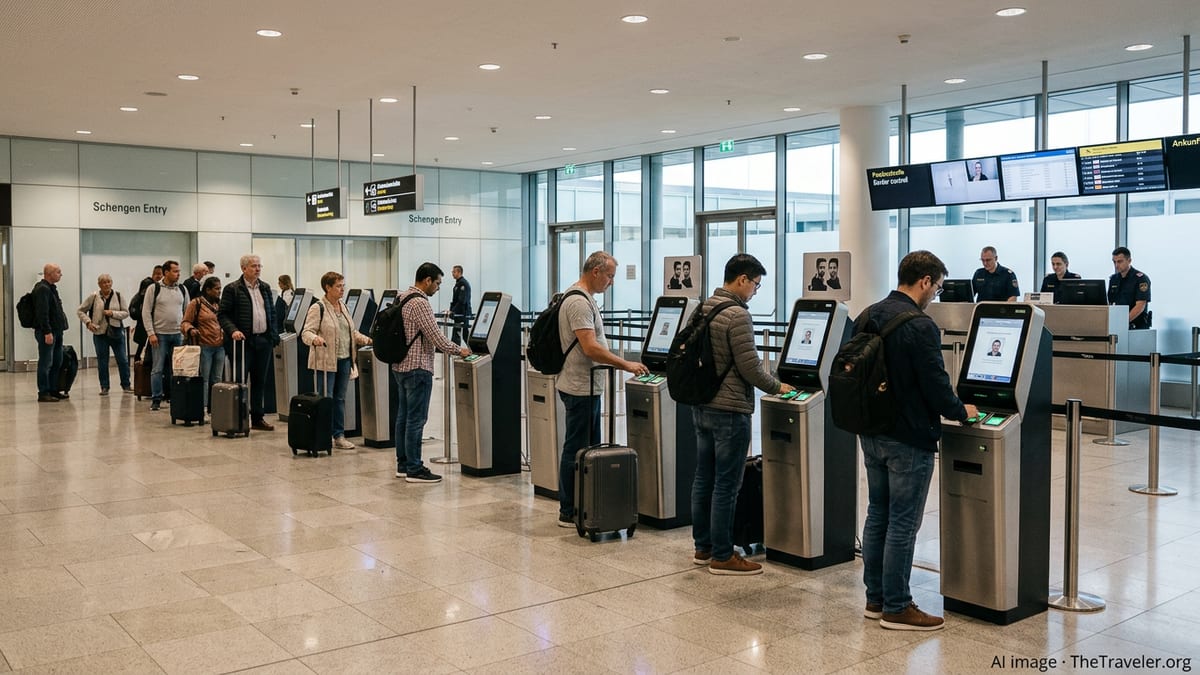
The rollout of the Schengen Entry/Exit System, which records non-EU travellers’ fingerprints, facial images and passport data at border crossings, has collided with peak summer demand to create severe congestion at major airports and land checkpoints. Reports from aviation industry groups and European media describe queues stretching to between four and five hours at some border posts during busy periods, with passengers missing connections while aircraft depart with empty seats.
The system, fully activated across most Schengen states in April 2026, was intended to replace manual passport stamping with a faster, digitised process. Instead, a combination of biometric enrolment times, technical glitches and staffing constraints at border control points has produced what airport and airline associations describe as a critical operational situation. Airports in Spain, Italy, France and Greece are among those highlighted as particularly strained on peak summer weekends.
Aviation trade bodies representing European airports and carriers have issued several joint appeals calling for greater flexibility in how EES is applied during the 2026 summer period. Their open letters warn that without rapid intervention, border bottlenecks will continue to ripple through flight schedules, leading to delays, diversions and increased costs just as international demand for European holidays returns to pre-pandemic levels.
Publicly available information from these groups indicates that queues for first-time EES registration are proving especially problematic at leisure-focused airports where non-EU holidaymakers arrive in waves on short-haul flights. The cumulative effect has been to push border control areas beyond design capacity, with some terminals forced into temporary crowd-management measures.
France Aligns With Southern Partners on EES Flexibility
Against this backdrop, France has increasingly aligned itself with Spain, Greece, Italy and other southern member states in urging Brussels to adjust the EES framework in time for the busiest travel weeks. French media coverage notes that authorities at Paris-region airports and key regional gateways have raised concerns about the length of biometric processing for non-EU visitors, particularly from the United Kingdom and other long-haul markets.
In practice, this alignment has taken the form of coordinated calls at EU level for emergency tools that would allow member states to temporarily relax or suspend certain EES procedures when passenger flows exceed border-control capacity. Spain and Italy have been especially vocal about the risk to tourism economies along the Mediterranean if queues persist at major holiday airports such as Malaga, Alicante and Rome Fiumicino, while Greek officials have expressed similar worries for the islands’ seasonal gateways.
France, which relies heavily on summer visitors transiting through Paris Charles de Gaulle, Orly and regional hubs serving the Riviera and Atlantic coast, shares many of these exposure points. Industry briefings suggest that French stakeholders are backing proposals for a clearer mechanism enabling frontier police at airports, seaports and key land crossings to switch to fallback manual checks when biometric systems become overwhelmed.
This emerging bloc of states is also pushing for a more generous use of transition provisions built into the EES legislation, which allow partial suspensions at specific crossing points for set periods. Advocates argue that such measures should be easier to trigger during July and August, when charter flights, cruise arrivals and holiday road traffic all peak simultaneously.
EU Officials Call Urgent Meeting With Airlines and Airports
As operational problems intensified in late June and early July, the European Commission responded by inviting airline and airport representatives to an urgent meeting in Brussels. According to published coverage, the session, scheduled for early July, is intended to assess the scale of the disruption and discuss concrete options for easing the pressure on front-line border facilities before the mid-summer rush.
Industry reports indicate that participants are expected to present data on average and peak waiting times, missed connections, flight punctuality and passenger throughput at key Schengen gateways. The aim is to build a detailed picture of where EES processes are working as intended and where new bottlenecks have emerged, from major hubs such as Frankfurt, Paris and Amsterdam to seasonal leisure airports on the Spanish and Greek coasts.
The meeting follows a series of high-profile warnings from individual carriers. Low-cost giants operating large networks into southern Europe have publicly cautioned customers about what they call potential “queue chaos” at certain airports due to fingerprint and facial enrolment under EES. Some airlines have advised travellers to arrive significantly earlier than usual and to leave additional buffer time between connecting flights within the Schengen area.
Airports, for their part, have signalled that they are reallocating staff, reconfiguring queuing areas and increasing signage to manage the new procedures, but maintain that structural constraints make it impossible to absorb sustained four to six-hour wait times without wider policy changes. The Brussels meeting is therefore seen within the sector as a critical test of how far EU institutions are prepared to adjust implementation rules to protect summer operations.
Long Queues, Missed Flights and Uneven Impacts Across Schengen
While early disruption was concentrated around the initial launch in April, recent accounts from travellers and staff indicate that long queues have now become a recurring feature at many high-volume entry points into Schengen. British passengers, now subject to full third-country checks post-Brexit, appear particularly affected at popular holiday airports in Spain, Portugal, France and Italy, according to UK and European media reports.
Some airports have recorded situations where passengers remain stuck in EES registration queues even as their outbound flights complete boarding. Industry briefings describe aircraft taking off with rows of empty seats because ticketed passengers were unable to clear border control in time, a scenario that increases costs for airlines and adds to customer frustration during what is typically marketed as a stress-free beach or city break.
The impact, however, is not uniform across the Schengen zone. Larger hubs with extensive automated-gate infrastructure and more flexible staffing models have in some cases managed to keep average waiting times closer to pre-EES levels, particularly for returning travellers who have already been enrolled in the system. In contrast, airports with more constrained terminal layouts or limited ability to expand border control areas have reported repeated surges during bank-holiday weekends and school-vacation peaks.
Front-line staff and passenger accounts compiled in public forums suggest that technical issues such as failed fingerprint captures, repeated enrolments and system timeouts are exacerbating delays. These problems appear especially acute for travellers who transit through Schengen multiple times in a short period and then discover that their original biometric data cannot be retrieved quickly, forcing a full re-registration.
What Summer Travellers to France and Southern Europe Should Expect
With the EES system still bedding in and institutional responses evolving, travellers heading to France, Spain, Greece, Italy and other Schengen destinations this summer are being urged by airlines, airports and travel advisors to treat border control as a potential pinch point in their plans. Guidance circulating in the sector typically recommends allowing extra time at departure and on arrival, particularly for families, older passengers and those unfamiliar with biometric kiosks.
For visitors making tight connections through major hubs such as Paris Charles de Gaulle, Amsterdam Schiphol or Frankfurt, publicly available advice increasingly points to longer minimum connection times than many travellers may be used to. Travel specialists note that itineraries which once worked with 60 to 90 minutes between flights may now be risky if EES queues stretch into multiple hours at peak times.
Within France itself, reports from airport operators and travel media indicate that conditions vary day by day and airport by airport. Some regional gateways have seen relatively modest delays, while others report flaring congestion when several UK or long-haul arrivals land in quick succession. Rail alternatives, including cross-border high-speed services, are attracting interest from travellers seeking to avoid repeat airport queues within Europe.
For now, the focus of both national governments and EU institutions is on stabilising operations during the 2026 summer season and refining EES procedures before travel demand builds again in the autumn. The outcome of the urgent talks between Brussels, France and its southern partners, and the aviation industry will shape whether current measures are enough to bring queues down, or whether more sweeping temporary suspensions are needed to keep Europe moving.