


More news on this day
Passengers travelling through Manchester Airport are facing major disruption after a significant power issue led to mass flight cancellations and delays, with knock-on effects continuing across parts of the UK and Europe.
Get the latest news straight to your inbox!
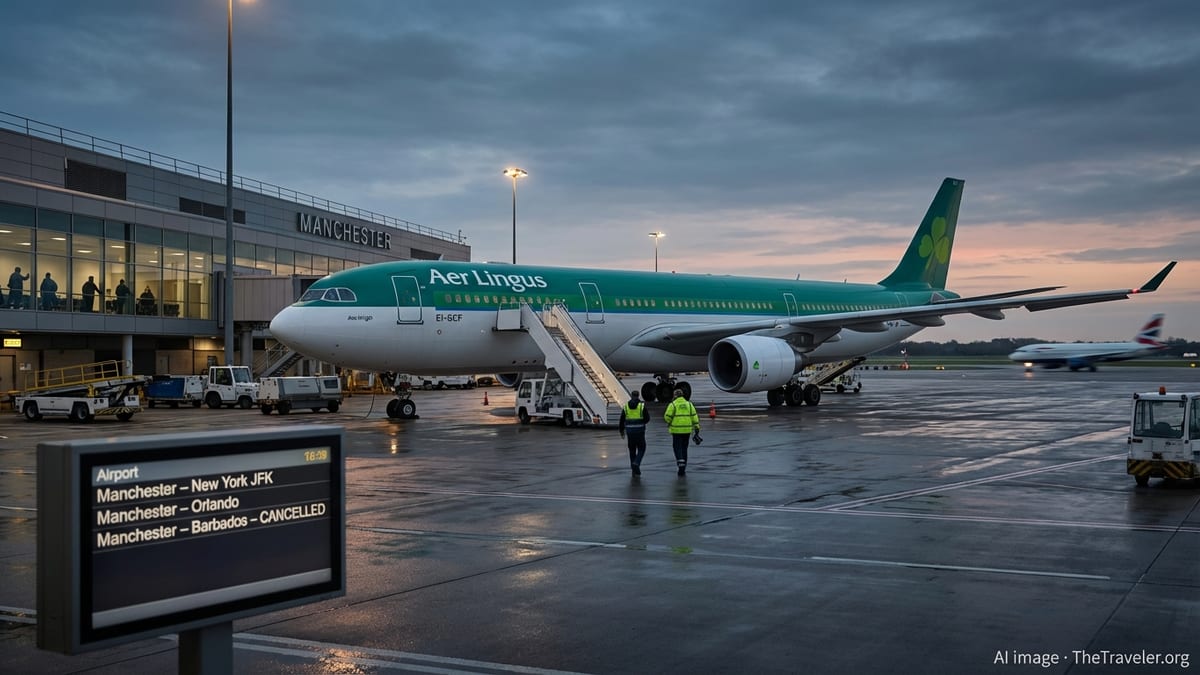
Power problem halts departures and fuels cancellations
Published reports indicate that a major power disruption at Manchester Airport in recent days forced a halt to many early-morning operations, with departures from multiple terminals temporarily suspended. Initial accounts describe check-in and security systems going offline for a period, preventing aircraft from boarding and pushing back on schedule.
According to coverage from regional and international outlets, flights were grounded while airport teams worked to restore systems, creating queues in terminal halls and at security checkpoints. Images shared on social media show crowded departure areas and long lines building as passengers waited for further information about their services.
Operational data from live flight-tracking services suggests that the most acute disruption occurred in a concentrated window, with a high proportion of scheduled departures either cancelled outright or significantly delayed. As systems came back online, airlines began to restart operations, but many aircraft and crews were out of position, extending the disruption well beyond the initial outage period.
Industry analysis notes that at a large hub such as Manchester, even a short interruption to core infrastructure can trigger a cascade of problems across the wider network, as missed slots, diverted aircraft and duty-time limits combine to constrain recovery.
Knock-on effects ripple across routes and airlines
The disruption has affected a wide mix of carriers and routes, from leisure services to Mediterranean holiday destinations to flights linking Manchester with other major European hubs. Reports from Cyprus-based media, for example, highlight delays to services from Manchester to Larnaca and Paphos, illustrating how quickly operational issues can spread across borders.
Live departure boards and third-party data providers show that many flights have been rescheduled for later in the day or moved onto alternative aircraft where possible. Some services have been combined, while others were cancelled altogether, forcing passengers to rebook for future dates or accept routings via other airports.
Publicly available information from Manchester Airport’s travel updates page continues to advise passengers that a smaller number of flights remain affected as airlines work through the backlog. Travellers are being urged to consult their airline’s app or website before setting out, as flight statuses can change at short notice while the schedule stabilises.
Analysts point out that summer is already a pressured period for European aviation, with high passenger volumes and limited spare capacity in aircraft and crew. When an outage occurs at a large regional hub like Manchester, those underlying constraints can slow the return to normal operations and increase the likelihood of late-evening delays as airlines attempt to complete as much of the day’s programme as possible.
Passenger experience marked by queues and missed connections
Accounts shared online by travellers describe long waits at check-in and security, with some passengers spending several hours in the terminal before learning whether their flights would operate. For those with onward connections, particularly on multi-leg itineraries via European hubs, even relatively modest delays at Manchester created the risk of missed onward flights and disrupted holiday or business plans.
Travel forums indicate that some passengers were rebooked onto services from other UK airports or offered hotel accommodation when overnight stays became unavoidable. Others opted to abandon trips altogether, seeking refunds where cancellations made their original plans unworkable.
Consumer advocacy groups emphasize that disruption of this scale often produces uneven experiences. Some travellers are re-accommodated quickly, especially if there are frequent services on their route, while those bound for less common destinations or tight cruise and tour departures can face more complex re-routing challenges.
Observers also note that the disruption at Manchester has coincided with a period of elevated delay and cancellation rates across several European hubs, increasing the risk that passengers who do make it out of Manchester could still encounter further issues at connecting airports.
Travel rights and what passengers can do now
Passenger-rights specialists point out that travellers departing from Manchester on affected flights may have entitlements to care and assistance under UK and European air passenger regulations. The specific compensation available depends on factors such as the length of delay, distance of the journey and the underlying cause of the disruption.
Guidance documents from aviation regulators stress that, irrespective of compensation, airlines generally remain responsible for providing meals, refreshments and hotel accommodation that is reasonable in relation to the delay. Passengers are often advised to keep boarding passes, booking confirmations and receipts for any out-of-pocket expenses that could later be reclaimed.
Travel industry coverage recommends that affected passengers check the latest status of their flight using official airline channels and avoid travelling to the airport until they have confirmation that their service is operating. For those already at the terminal, airline customer-service desks, mobile apps and call centres typically remain the primary avenues for rebooking, though response times may be slow during peak disruption.
Experts also suggest considering alternative routing, including departures from different UK airports or connections via other European hubs, while remaining mindful that any voluntary changes could alter compensation eligibility. Flexible ticket policies, where offered, may give passengers more options to adjust their plans without additional fees.
Outlook for operations at Manchester Airport
Recent statements on Manchester Airport’s public channels indicate that core power and passenger-processing systems are now functioning, and that the majority of flights are operating close to schedule. However, residual delays and occasional cancellations are still being reported as airlines reposition aircraft and crew and work to clear the backlog created by the outage.
Industry commentary suggests that airports and airlines will review the incident as part of wider efforts to strengthen resilience, especially around critical infrastructure and backup systems. Previous episodes of power loss at major airports have prompted investment in redundancy measures and revised contingency plans designed to limit the scale and duration of future disruptions.
For travellers planning to use Manchester Airport in the coming days, aviation analysts recommend building extra time into journeys, monitoring flight information closely and having contingency plans for accommodation or alternative transport. With peak summer travel under way, any further operational strain, such as adverse weather or air-traffic restrictions, could interact with existing pressures to create fresh bottlenecks.
While the disruption has been significant for many passengers, traffic statistics show that Manchester remains one of the UK’s busiest gateways, with strong demand across both short-haul and long-haul markets. As airlines and the airport operator work to restore normal patterns of service, the focus will be on maintaining passenger confidence heading into the heart of the holiday season.