


More news on this day
Lebanon’s fragile tourism recovery is facing renewed headwinds after updated UK travel advice sharply delineated no-go districts in Beirut, carved out a single permitted airport access corridor along Route 51, and warned of volatile flashpoints in the country’s south, prompting tour operators and travelers to reassess plans for the peak summer season.
Get the latest news straight to your inbox!
UK Advisory Redraws the Risk Map in Beirut
The latest guidance from the United Kingdom’s Foreign, Commonwealth and Development Office categorises large parts of Beirut and its southern suburbs as areas where travel is not advised, while explicitly excluding Route 51 between central Beirut and Rafic Hariri International Airport from those restrictions. Publicly available updates emphasise that this road corridor is treated as a functional lifeline for inbound and outbound traffic, even as surrounding districts are marked as higher risk.
Revisions published over the first half of 2026 highlight neighbourhoods of particular concern, including sections of Bir Hassan and the broader southern suburbs, where the advisory notes a combination of political tensions, potential militant activity and exposure to spillover from the regional conflict. The changes refine earlier blanket language around the capital, offering more granular mapping of streets and junctions, but the overall message to British nationals remains notably cautious.
Travel analysts following these updates say the new wording sends a dual signal. On one hand, carving out Route 51 suggests that the UK expects the main airport link to remain prioritised for security and access. On the other, the expansion of areas classified as no-go effectively narrows the parts of Beirut that international travellers are encouraged to use as a base, reinforcing a perception of a city divided between managed corridors and districts considered too volatile for tourism.
Industry observers note that such distinctions are closely watched by insurers and corporate risk managers, who often calibrate coverage and duty-of-care policies directly against official advisories. Any shift that enlarges no-go zones around the capital can therefore have an outsized impact on travel planning, even for visitors who might not intend to enter those specific neighbourhoods.
Airport Access and Route 51 Under the Spotlight
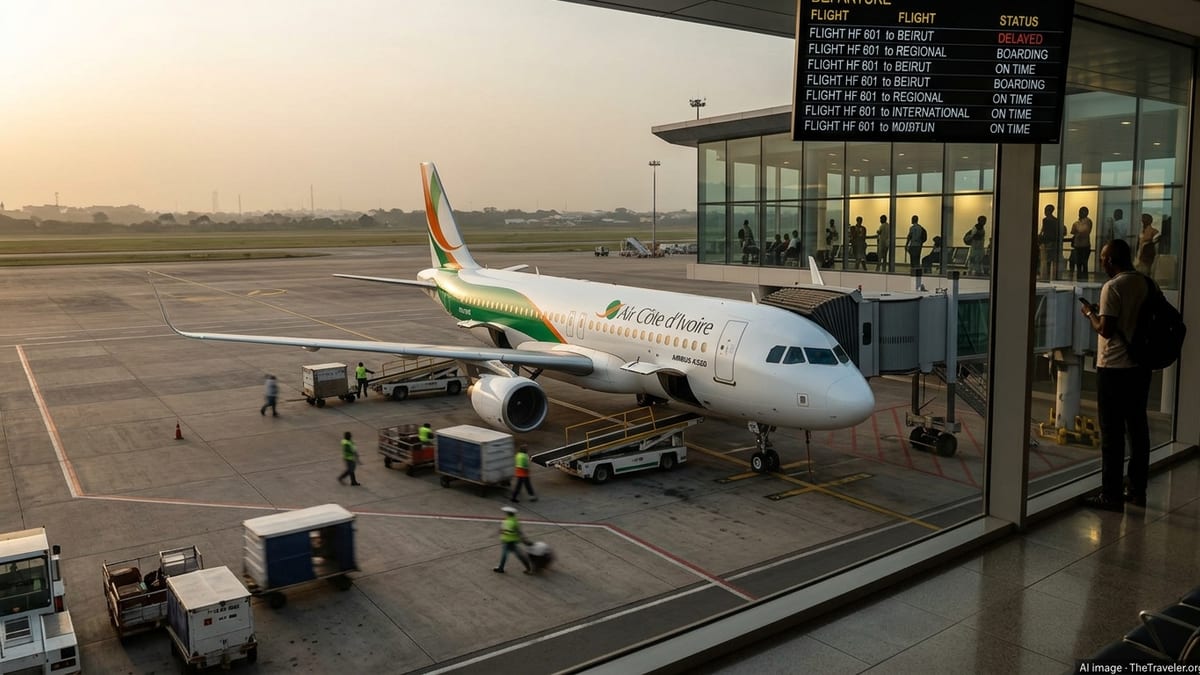
Beirut’s Rafic Hariri International Airport remains the principal gateway for foreign visitors, and the explicit mention of Route 51 in the UK advisory reflects its importance. Travel guidance and security bulletins describe periodic disruptions around the airport in recent years, including roadblocks, protest activity and security closures that have temporarily cut or delayed access to flights. The latest UK wording urges travelers to monitor conditions closely and to build in significant time buffers for the airport transfer.
Risk briefings from aviation and insurance specialists also point to a broader vulnerability around airport operations and surrounding infrastructure. While the facility has continued to function, reports of nearby strikes and heightened military activity in previous phases of the regional conflict have kept the air hub under constant review by carriers and regulators. This environment has encouraged some airlines to trim schedules or adjust operating times, adding another layer of unpredictability for prospective tourists.
Destination planners say the formal acknowledgment of Route 51 as an exception to Beirut’s wider no-go status underlines the delicate balancing act facing Lebanese authorities and partners. Safeguarding the airport corridor is seen as essential to keeping the country connected to global tourism flows, yet any renewed turbulence along the route could quickly reinforce perceptions that even the most carefully controlled access points are exposed to wider instability.
For now, many tour operators continue to present Beirut as the primary arrival and departure node but are increasingly advising clients to maintain flexible itineraries, consider daylight transfers wherever possible and stay in close contact with carriers or local partners for last-minute routing changes.
Southern Flashpoints Deter Coastal and Heritage Tourism
Beyond the capital, southern Lebanon remains the focus of some of the most severe travel warnings. The UK, alongside several other governments, advises against visiting areas south of the Litani River, a swathe that includes key sections of the coastal highway and communities that once anchored beach, cultural and pilgrimage tourism. Publicly available coverage notes that intermittent hostilities and the presence of armed groups continue to generate acute security risks in these zones.
Recent conflict episodes and ceasefire violations have produced a pattern of localized flare-ups and evacuations in the south, with reports of cross-border fire, airstrikes and movements of armed forces. These incidents have periodically forced residents to leave frontline villages and disrupted basic infrastructure. For would-be visitors, this has translated into the virtual suspension of leisure travel to destinations that previously offered seaside resorts, historic sites and access to rural landscapes.
Tourism professionals say the southern closures are especially damaging for Lebanon’s efforts to diversify beyond a Beirut-centric model. Prior to the current crisis cycle, towns along the southern coast and inland valleys were gradually developing boutique hospitality projects, cultural festivals and eco-tourism routes. The latest round of advisories effectively freezes that momentum and channels any remaining demand northward or into higher-altitude regions seen as comparatively insulated from the main frontlines.
Travel risk consultancies add that the south’s status is unlikely to change quickly, given the density of unexploded ordnance, the proximity of military infrastructure and the fragile nature of ceasefire arrangements. Even limited improvements on the ground may not immediately translate into upgraded advisory levels, leaving local tourism businesses facing a prolonged period of uncertainty.
Tourism Confidence Falters Amid Layered Crisis Planning
The sharpened UK advisory arrives at a moment when Lebanon’s tourism sector had begun to show modest signs of recovery after years of economic turbulence, pandemic disruptions and political instability. International arrivals, especially from Europe and the Lebanese diaspora, had been edging upward, supported by a perception that much of Beirut and the northern coast remained accessible despite ongoing regional tensions. The new warnings risk reversing some of those gains.
Travel agencies tracking bookings for the 2026 summer period report a cooling of demand from risk-sensitive markets as soon as advisory levels are tightened or maps are updated to show more extensive no-go areas. Package tours, group trips and corporate travel are particularly exposed, since they tend to be bound by strict risk thresholds and insurance requirements. Independent travelers may still proceed, but often shorten stays, restrict movements to a narrow set of neighbourhoods or pivot to alternative Eastern Mediterranean destinations.
Publicly available guidance from Western governments increasingly urges citizens to develop personal crisis plans if they do choose to visit Lebanon, including identifying fallback accommodation, exit routes and communication arrangements that do not rely solely on diplomatic missions. This framing underscores a shift away from viewing Lebanon as a straightforward holiday destination and towards treating any trip as inherently contingency-driven.
For local tourism operators, the rhetorical shift can be just as damaging as the legal effect of the advisories themselves. Marketing a city where certain districts are explicitly delineated as no-go, the main airport road is singled out as a critical corridor and large parts of the south are off-limits presents formidable challenges when competing with beach and city-break destinations elsewhere in the region.
Industry Response: Adapting Itineraries and Messaging
In response to the updated guidance, many inbound operators are revisiting their product design and safety protocols. Itineraries that once incorporated day trips to southern coastal towns or routes passing near sensitive suburbs of Beirut are being reworked to focus on central districts deemed relatively calmer and on northern or mountain destinations that currently sit outside the strictest warning zones. Some companies are foregrounding private transfers on vetted routes, smaller group sizes and closer coordination with local security advisers as selling points.
Hospitality businesses in Beirut and beyond are also sharpening their communication strategies. Hotel and guesthouse managers are increasingly transparent about security procedures, backup power and water supplies and their ability to help guests adjust plans if the situation changes. While this approach acknowledges the country’s challenges, it also aims to reassure visitors that operators are actively engaged in risk mitigation rather than minimising concerns.
Tourism boards and private-sector coalitions are simultaneously lobbying for balanced messaging that recognises both the gravity of the security situation and the pockets of relative stability that continue to host visitors. They argue that clear, nuanced advisories are essential to preventing a blanket perception of Lebanon as entirely off-limits, while accepting that the south and designated parts of Beirut will remain beyond the scope of leisure travel for the foreseeable future.
The coming months will test whether these adaptations can sustain a trickle of confident travelers in the face of stark official warnings. With the UK and other governments urging detailed crisis planning, and with Route 51, southern flashpoints and Beirut’s no-go areas firmly in the spotlight, Lebanon’s tourism industry faces another season defined as much by risk calculations as by its renowned culture, cuisine and landscapes.