


More news on this day
Rail passengers across France faced cancellations, delays and packed platforms on Thursday as walkouts by national rail workers coincided with a new wave of nationwide protests over wages, public services and the rising cost of living.
Get the latest news straight to your inbox!
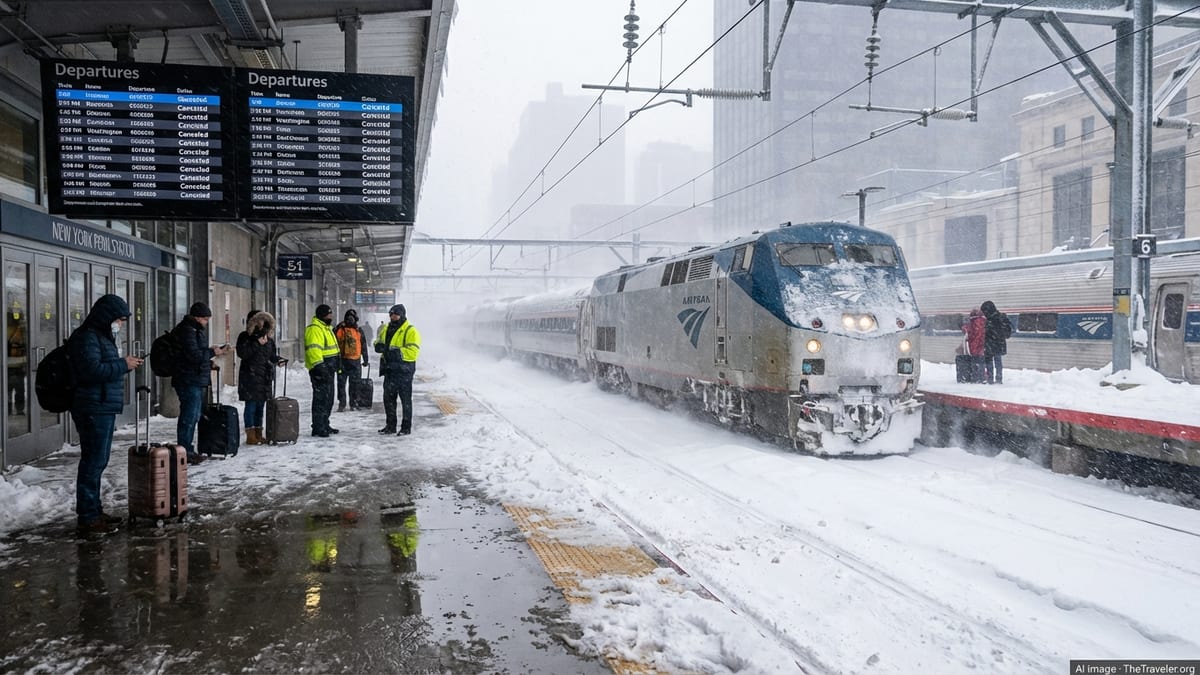
Rail services curtailed as unions stage coordinated walkout
Publicly available information from France’s national rail operator indicates that industrial action on 5 November is affecting services on high speed TGV routes, Intercités, regional TER trains and suburban lines in the wider Paris region. On many axes, reduced timetables and slower journeys are being reported, with some regional departures cancelled outright on short notice.
Service forecasts released via SNCF’s passenger platforms ahead of the strike pointed to limited disruption on core long distance TGV routes but more substantial impact on regional and intercity traffic. Early morning travel reports from regional networks highlight partial cancellations on links such as Saumur to Le Mans and cuts on several TER corridors serving medium sized cities, illustrating how the walkout is hitting local mobility beyond the main Paris hubs.
Strike notices filed by the four representative SNCF unions called for stoppages from Wednesday 4 November at 19:00 until Friday 6 November at 08:00, covering both peak weekday travel windows. Travellers holding tickets for affected trains are being offered fee free exchanges or refunds under SNCF’s disruption measures, but many commuters and tourists are still facing longer journeys, crowded replacement services and uncertainty around last minute timetable changes.
In the Paris region, information posted by transport operators and strike tracking services points to normal operations on the Metro, bus and tram networks, while RER and Transilien suburban rail lines are experiencing more visible disruption. RER D and several Transilien branches have reduced frequencies during the morning and evening peaks, with operators advising travellers to check real time apps before heading to stations.
Nationwide protests swell as cost of living anger grows
The rail walkout is part of a broader national strike day backed by multiple union confederations, including CFDT, CGT, FO, UNSA and FSU. Union calls and media coverage describe demonstrations planned in dozens of cities, from Paris and Lyon to Marseille, Toulouse and smaller regional centers, following several weekends of mass protests over wages and the cost of living.
Reports from French and international outlets on Thursday describe large, largely peaceful marches in major urban areas, with banners and slogans focusing on purchasing power, support for students and the defense of public services. The latest mobilisation follows a series of autumn protest days that have drawn hundreds of thousands of people nationwide, amid heightened political tensions after unrest in October.
Education, health care and postal workers have joined the action, alongside rail staff and public sector employees. France’s education ministry has published advance estimates indicating significant participation among primary school teachers, while hospital and local government services are also operating with reduced staffing in some areas. Travel and daily life are being disrupted in a patchwork pattern that varies by region and sector.
The November demonstrations reflect overlapping grievances, from pay that unions argue is lagging behind inflation to concerns about budget plans for 2027 and the long term future of public services. Protest organisers have also encouraged participation from gilets jaunes networks and student groups, pointing to a convergence of social movements that is increasing turnout on the streets.
Advice and real time tools for affected travelers
Foreign embassies and travel advisory services have issued alerts urging visitors in France to plan around the strikes and protests. Guidance circulated on Thursday recommends avoiding demonstration routes, allowing extra time for all journeys and monitoring live transport updates on official channels such as SNCF Connect and Transilien for suburban services around Paris.
Rail passengers with imminent journeys are being encouraged to verify whether their specific train is running rather than relying on overall percentages of cancelled services. SNCF’s disruption pages detail which TGV, Intercités and TER routes are most affected and set out the commercial measures available, including free exchanges for tickets on cancelled trains and reimbursement options in cases of significant delay.
Urban travelers in Paris and other large cities are being advised to consider alternative routes that combine Metro or tram services, which are less affected, with walking or cycling for the final leg of trips. Local transport alerts compiled by traffic monitoring sites list dozens of disruptions tied to strikes and marches, from slowed tram services to diverted bus lines in cities such as Toulouse, Brest, Quimper, Montpellier and Mulhouse.
With union calls already circulating for further mobilisations on 6 November and for a new protest day on Saturday 7 November, passengers planning weekend travel are being urged to check for rolling updates. Accommodation providers and tour operators are also updating guests about likely delays in transfers between airports, rail stations and city centers.
Economic and political backdrop to the rail unrest
The latest strike highlights enduring tensions within France’s rail sector. Recent financial and regulatory documents from the SNCF group have underscored that repeated industrial actions linked to reforms and investment constraints can weigh on operating costs, network maintenance and the perceived reliability of rail as a mode of transport. The current walkout brings those concerns back into focus as passengers face another day of disruption.
The November mobilisation follows several years of stop start disputes over pension reforms, staffing levels and the opening of parts of the French rail network to competition. While some earlier conflicts centered on retirement age changes, this week’s action is more closely tied to purchasing power, working conditions and broader anxiety about public spending plans for 2027, according to union communiqués and policy commentary.
Economic analyses published during earlier waves of strikes suggested that national protest days often have a limited immediate impact on overall growth, but can still hit sectors such as tourism, hospitality and retail if transport disruptions deter travel or spending. With the autumn 2026 protest cycle coinciding with a busy period for city breaks and trade fairs, business groups are monitoring potential knock on effects on bookings and event attendance.
Politically, the government faces pressure to prevent a repeat of the more violent episodes seen during some October demonstrations while also responding to workplace grievances. Officials have signaled a willingness to continue talks with unions on wages and public service funding, while regional authorities and mayors are focused on maintaining essential services and public order as the protest calendar unfolds.
What travelers can expect in the coming days
For now, published rail plans indicate that high speed connections such as Paris to Lyon, Marseille, Bordeaux and Lille are operating with reduced but still functional timetables, allowing most long distance passengers to complete their journeys, albeit with fewer choices of departure times. The situation is more uncertain on regional lines, where train cuts and last minute cancellations are more frequent.
Airports are reporting that core flight schedules are broadly maintained, though passengers may encounter longer transfer times to and from terminals if rail or suburban services are disrupted. In some regions, local authorities have coordinated additional bus or coach capacity to cover key commuter corridors, but these measures vary widely by area and are not always sufficient to absorb all displaced rail passengers.
Travelers due to arrive in France over the weekend are being advised by embassies and travel information services to keep flexible plans where possible, especially for tight rail connections and same day onward trips. Booking slightly later trains, leaving greater margins for transfers and keeping hotel reception numbers to hand in case of late arrival are among the practical steps being recommended.
With unions signaling that further actions remain possible if wage and budget disputes are not resolved, transport users may face an extended period of occasional disruption over the coming weeks. For now, those already on the move are relying on a combination of real time apps, station announcements and on the ground adjustments as France’s rail strikes and nationwide protests continue to reshape travel plans.