


More news on this day
A Canadian National freight train derailed in the Le Gardeur sector of Repentigny, northeast of Montreal, on Sunday afternoon, sending dozens of cars off the tracks near homes and leading to precautionary evacuations, according to early information from regional and national news outlets.
Get the latest news straight to your inbox!
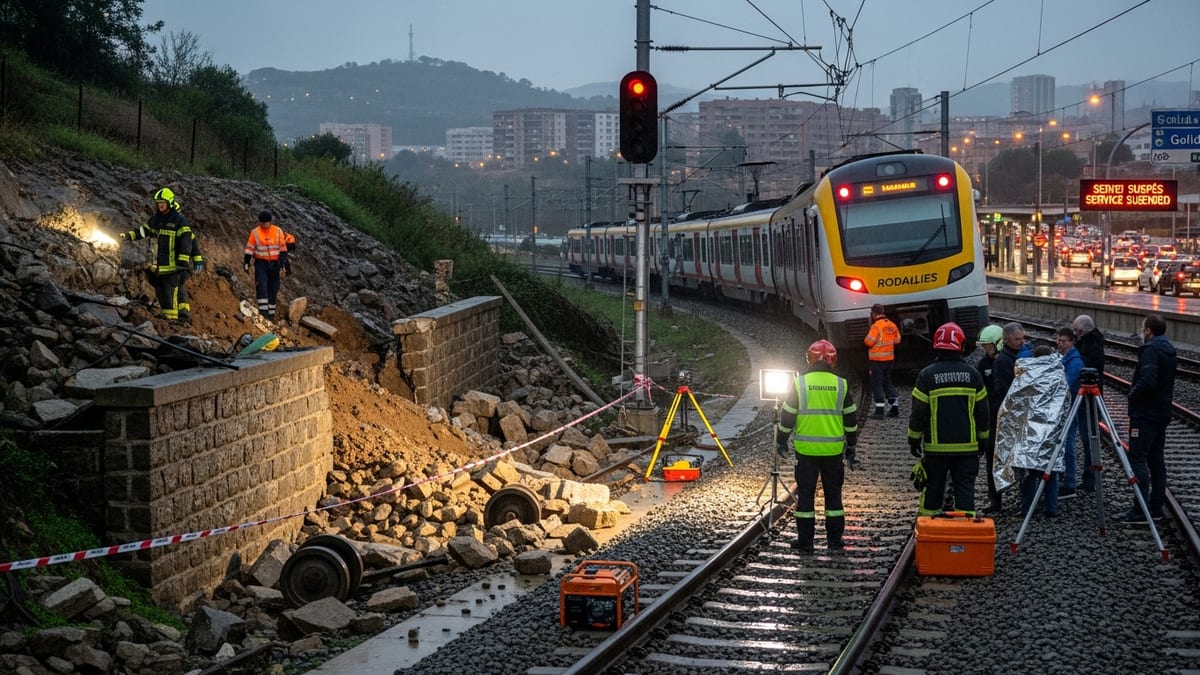
Residential neighborhood rattled by afternoon derailment
Publicly available information indicates that the derailment occurred on Sunday, July 5, 2026, at around 4:30 p.m. local time in a residential area of Le Gardeur, a district on the north shore of the St. Lawrence River. Reports describe the incident site near local streets and low-rise homes, where freight traffic shares space with everyday neighborhood life.
Coverage from Quebec news media indicates that more than twenty cars of the Canadian National (CN) freight train left the tracks, with some coming to rest only a short distance from nearby properties. Images carried by local outlets show railcars leaning at sharp angles, twisted track, and torn-up ballast, underscoring how narrowly the neighborhood appears to have avoided a more serious outcome.
Residents in the immediate vicinity described on social platforms and in local reporting that they initially mistook the impact and noise for an earthquake or explosion. The visual evidence from the scene, including toppled cars and disrupted infrastructure, highlights how disruptive a derailment of this scale can be even when it does not involve fire or visible leaks.
Rail operations through the corridor were halted following the incident, and roads that intersect or run alongside the line were blocked off while emergency teams and railway crews moved in. The interruption has affected both rail logistics and local traffic patterns, with detours reported around key neighborhood arteries.
Evacuations ordered, no injuries or leaks reported
According to published coverage from Quebec news organizations, roughly 200 residents were evacuated from homes close to the tracks as a precaution while officials assessed the train’s cargo and the stability of the derailed cars. The evacuation zone appears to have covered a cluster of streets immediately bordering the railway right of way.
Information made public by municipal channels and regional media indicates that there were no reported injuries among train crew or local residents. A summary from national news coverage notes that several of the derailed cars had previously transported diesel fuel but were not loaded at the time of the incident, reducing the risk of a hazardous spill.
By Sunday evening, municipal updates cited in news reports indicated that evacuated residents were allowed to return home once initial safety checks were completed and the risk of a leak or structural collapse was considered low. The return of residents, however, did not signal an immediate end to the disruption, as cleanup and recovery operations remained in the early stages.
Specialized rail contractors and CN response teams have been working to stabilize and rerail the cars, a process that can take days for a derailment involving dozens of freight wagons. Heavy equipment has been brought in to clear damaged rolling stock and repair sections of track and ballast before freight operations can safely resume through the corridor.
Investigation launched into cause of derailment
Reports from Canadian media indicate that CN and relevant transportation safety bodies have opened an investigation into the derailment. At this early stage, publicly available information does not identify a definitive cause, and investigators are expected to examine track conditions, train handling, mechanical factors, and any recent work on or near the line.
Some local commentary has pointed to recent road and crossing work in the Le Gardeur sector, though there is no formal confirmation that infrastructure changes played any role in the incident. Standard investigative practice in such derailments typically involves reviewing data recorders, track inspection logs, and maintenance records, as well as interviewing crew and gathering eyewitness accounts.
The scale of the derailment, with more than twenty cars off the rails and numerous wagons visibly displaced, suggests that the forces involved were substantial. Analysts following the incident note that freight trains passing through suburban Quebec communities can be long and heavy, magnifying the consequences when something goes wrong on the main track.
Once the immediate recovery is complete, a fuller picture of the sequence of events is expected to emerge through formal investigation summaries and technical reports. Those findings often inform recommendations on infrastructure, operating practices, and regulatory oversight across the wider rail network.
Local disruption and regional rail impacts
The derailment in Repentigny has interrupted a key freight route northeast of Montreal, with rail traffic rerouted or temporarily suspended while crews work on-site. According to early logistics assessments referenced in national coverage, freight movements in and out of the region are expected to face delays as operators adjust timetables and routing.
Road closures near the derailment site have also affected local mobility. Detours have been set up around level crossings and streets adjacent to the rail line, complicating access for residents and businesses in the immediate area. Public information notes that these restrictions are likely to remain in place until heavy machinery is removed and the track structure is stabilized.
The presence of large recovery cranes, ballast tampers, and other specialized rail equipment has turned part of the neighborhood into a work zone. Noise, dust, and bright lighting for overnight operations are adding to the disturbance for residents, even as many express relief in local reporting that the incident did not result in injuries or a major fire.
Publicly shared statements from regional transport observers indicate that rail operators will face pressure to restore service quickly while also demonstrating that repairs meet safety requirements. Balancing those priorities is expected to shape how long rail disruptions persist through the early part of the week.
Renewed questions about freight rail safety in Quebec
The Repentigny derailment is unfolding in a province that carries vivid memories of past rail disasters, including the catastrophic oil train accident in Lac Mégantic in 2013. While the current incident differs significantly in scale and consequences, comparisons in media analysis underscore the ongoing sensitivity around heavy freight movements near populated areas.
Transportation safety summaries for Canada indicate that freight derailments are not uncommon, though most involve a smaller number of cars, occur in rail yards or industrial sidings, and do not lead to major injuries. Events that occur in dense residential districts, as in Repentigny, tend to draw heightened attention to land-use planning, route selection, and risk mitigation.
Urban planners and community advocates cited in existing debates over rail safety have long raised concerns about freight corridors that run close to homes, schools, and local businesses in the Montreal region and elsewhere in Quebec. The images from Le Gardeur, showing long strings of derailed cars flanking backyards and neighborhood streets, are likely to intensify those discussions.
In the coming weeks, the Repentigny incident is expected to feed into broader conversations about infrastructure investment, train speeds through suburban areas, and the level of transparency communities receive about the cargoes that move past their doors. While early reports emphasize the absence of injuries or hazardous leaks, the proximity of the derailment to everyday residential life is emerging as a central concern for residents and policymakers following the case.