


More news on this day
Rail traffic through western Illinois faced major disruption on June 17 after a freight train derailed near Monmouth, leaving multiple cars on the ground and forcing Amtrak to halt service along a key cross-country route.
Get the latest news straight to your inbox!
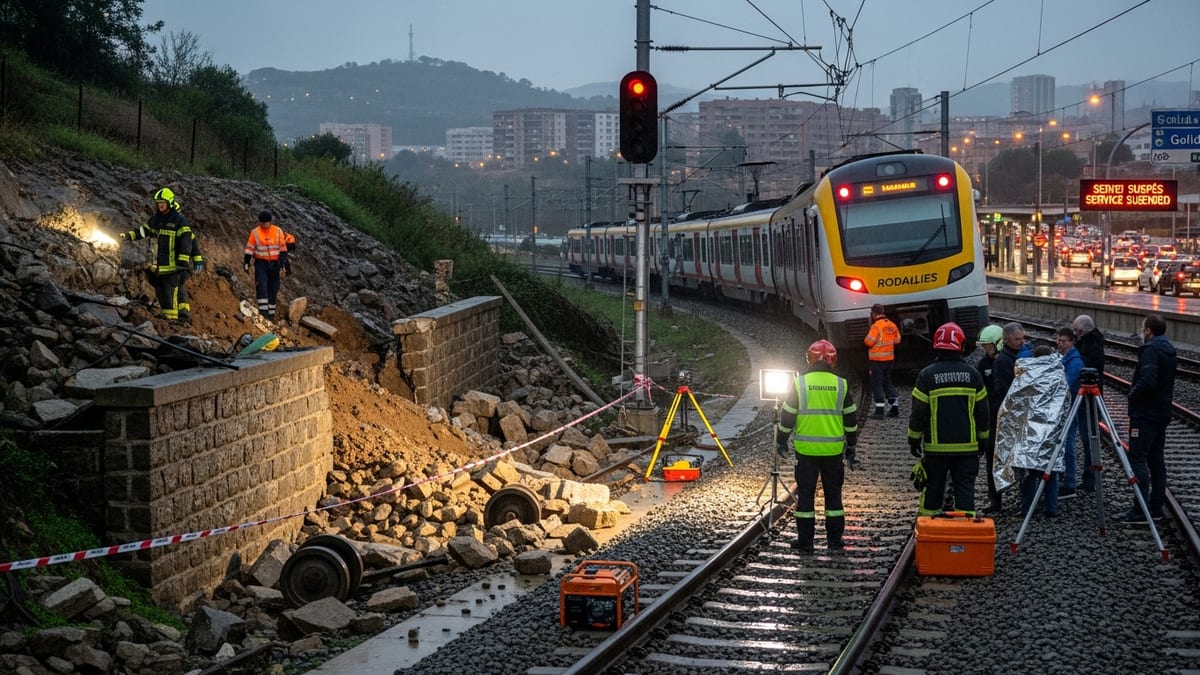
Derailment near Monmouth leaves cars off the tracks
Initial reports from passenger accounts and local coverage describe a significant freight train derailment on a line near Monmouth, Illinois, with several rail cars off the tracks and lying on the ballast and adjacent ground. Images shared on social platforms indicate a portion of the consist has jackknifed, while other cars appear to be fully overturned beside the right of way.
The incident occurred along a corridor widely used for both long-distance passenger trains and heavy freight traffic across the Midwest. According to publicly available tracking data and rider reports, at least one Amtrak train traveling on the former Santa Fe main line came to an extended stop after the derailment, with passengers advised that a blockage ahead near Monmouth was preventing further movement.
As of Wednesday afternoon, there were no widely reported indications of serious injuries associated with the derailment. Available information suggests the incident primarily involved freight equipment, with passenger trains delayed rather than directly involved in the crash.
Emergency responders and railroad personnel converged on the area to secure the site and begin assessing damage to rolling stock and track infrastructure. Early images showed maintenance vehicles positioned near the scene as crews evaluated how many cars would need to be re-railed or removed.
Passenger journeys disrupted as line is blocked
The derailment has caused substantial disruption for travelers on one of the country’s most important east to west rail routes. Publicly accessible comments from passengers on board an affected Amtrak service describe the train coming to a halt and remaining stationary for an extended period while rail dispatchers assessed the situation ahead.
Trip-tracking tools widely used by rail passengers showed long delays and service irregularities in the area around Monmouth. Some trains were listed as stopped for hours, while others appeared to be held at distant points to avoid adding congestion near the blocked segment.
According to published coverage and timetable data, this section of railroad is a crucial link between Chicago and points to the southwest, meaning disruptions can ripple outward across multiple states. Travelers connecting to other long-distance services or regional routes may face missed connections and rebooked itineraries while the line remains impaired.
Rail observers note that when derailments occur on single or limited track corridors, there are often few immediate alternatives. Even where parallel freight lines exist, signaling, capacity limits, and crew availability can constrain how many trains can be re-routed in the short term.
Investigation and cleanup likely to extend over days
Based on the scale visible in early images, rail incident specialists indicate that clearing multiple derailed cars and repairing any underlying track damage is likely to be a multi-day effort. Freight cars that have come fully off the rails typically require heavy lifting equipment, including cranes and side-boom tractors, to safely reposition or dismantle.
Standard practice after a derailment of this type usually involves an initial safety sweep to confirm there are no active fires, hazardous leaks, or immediate risks to nearby communities. Once that assessment is complete, railroad engineering teams document the position and condition of the cars and track before beginning the physical cleanup.
In cases where the cause of a derailment is not immediately apparent, federal investigators may review data from locomotive event recorders, examine rail and wheel conditions, and analyze train handling in the moments before the incident. Track geometry, recent maintenance history, and weather at the time of the event are also commonly evaluated during follow-up inquiries.
Publicly available information on comparable freight derailments in recent months shows that partial service is sometimes restored within a day on undamaged adjacent tracks, while full repairs to all infrastructure and signaling equipment can take significantly longer. The timeline near Monmouth will depend on how extensive the damage proves to be once the site is fully inspected.
Community and regional implications of another Midwest derailment
The derailment near Monmouth adds to a series of recent rail incidents across the United States that have drawn renewed public attention to freight safety and infrastructure resilience. While available reports suggest no large-scale release of hazardous materials in this case, the sight of multiple cars on the ground near a rural community is likely to reinforce existing concerns about freight traffic passing close to homes, farms, and local roads.
Communities situated along busy rail corridors in Illinois and neighboring states often rely on these lines for economic activity, with grain, manufactured goods, and consumer products moving by rail to distant markets. At the same time, each disruption underscores how closely local quality of life is tied to the safe and reliable functioning of that infrastructure.
Residents in the broader Monmouth area may encounter temporary road closures, detours, or noise from heavy equipment while the cleanup and repairs proceed. Nearby businesses that depend on just in time rail deliveries could also experience delays, especially if cars carrying key commodities are among those derailed.
Transportation analysts note that while derailments have declined over the long term relative to overall rail traffic, high profile events highlight the need for ongoing investment in track maintenance, inspection technology, and operational safeguards. The incident outside Monmouth is likely to be reviewed in that broader context as more definitive information about its causes and consequences becomes available.
Next steps for rail travelers and local residents
For passengers planning to travel through western Illinois over the next several days, publicly available advisories recommend checking train status frequently and preparing for potential bus substitutions or re-routed journeys. Some long-distance services may be turned at alternate cities or experience extended journey times while the main route near Monmouth remains constrained.
Travelers who rely on this corridor for regular commuting or seasonal trips may also see temporary changes in departure times or onboard services as rail operators adjust schedules to fit whatever capacity is available. Those with flexible plans may opt to shift trips by a day or more to avoid the initial period of disruption.
Local residents can expect a visible presence of work crews, ballast trucks, and heavy lifting machinery along the affected stretch while recovery operations progress. Once the immediate cleanup is complete, further work may continue with tamping and track alignment equipment, followed by test runs before full traffic levels resume.
As additional details emerge through official summaries and regulatory filings, the Monmouth area derailment is expected to provide yet another case study in how a single incident on a busy freight and passenger line can send ripples across a broad swath of the national rail network.